
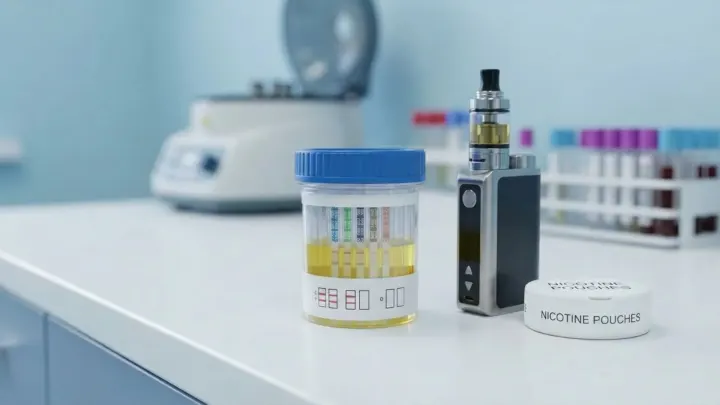
Drug testing has become a routine part of hiring, compliance, probation monitoring, athletic screening, and DOT-regulated safety programs. Yet many individuals still worry about one critical question: can nicotine cause false positive drug test results?
With over 34 million Americans using e-cigarettes and millions more using nicotine pouches, patches, or gum, this concern affects a significant portion of the workforce. People fear that using legal nicotine products might accidentally trigger a positive result for controlled substances like amphetamines or THC potentially costing them a job, insurance coverage, or career opportunity.
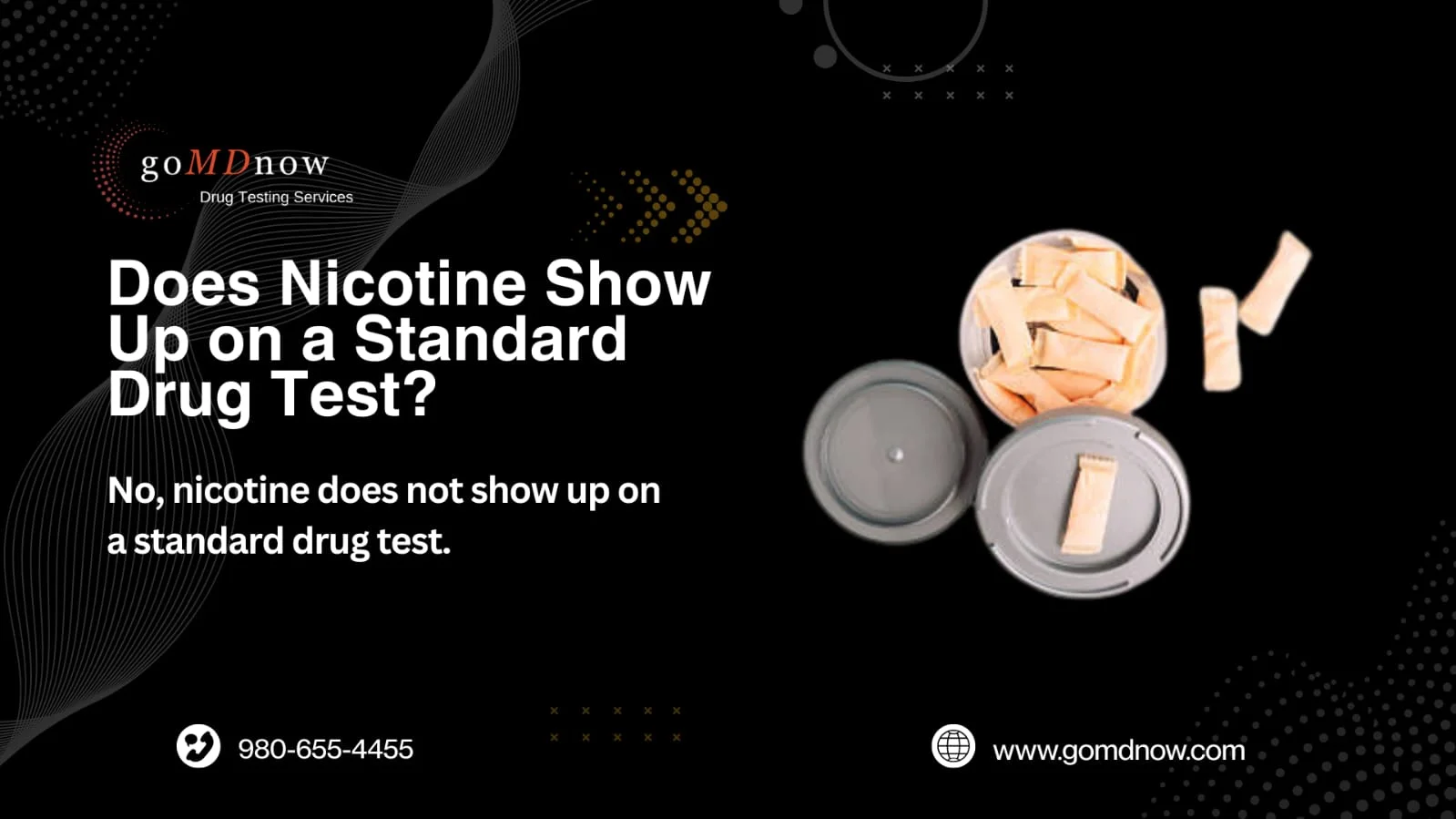
Does Nicotine Show Up on a Standard Drug Test?
The short answer: No, nicotine does NOT cause false positives for illegal drugs. But there's more to the story, especially when it comes to cotinine testing and workplace tobacco policies. This comprehensive guide examines the science behind drug testing myths and provides clear, evidence-based answers.
Most routine workplace drug screenings including 5-panel and 10-panel drug tests screen for substances such as:
- Marijuana (THC)
- Cocaine
- Opiates
- Amphetamines
- Phencyclidine (PCP)
- Benzodiazepines (in expanded panels)
Nicotine is not included in these standard drug panels.
For example, employers regulated under the U.S. Department of Transportation (DOT) only test for federally mandated substances. Nicotine is not part of those regulated panels.
However, there is an exception.
What Is Cotinine and When Do Employers Test for It?
While nicotine itself clears the body relatively quickly, it metabolizes into a compound called cotinine.
A cotinine drug test is specifically designed to detect nicotine use.
Why Cotinine?
Cotinine stays in the body longer than nicotine:
- Nicotine detection window: 1–3 days
- Cotinine detection window: up to 7–10 days (sometimes longer in heavy users)
Because cotinine remains detectable longer, it is the preferred marker when employers, insurance companies, or medical programs want to verify tobacco use. Understanding detection windows and cutoff levels is essential for both employers and employees.
When Is a Cotinine Drug Test Used?
Employers may test for cotinine in situations such as:
- Tobacco-free workplace policies
- Health insurance premium discounts
- Pre-surgical screening
- Wellness incentive programs
But it is important to understand:
A cotinine drug test is separate from a standard drug screening.
So if you're asking, "will nicotine fail a drug test?" the answer depends entirely on whether the test includes nicotine/cotinine.
- If it's a standard 5-panel or 10-panel test → No
- If it's a nicotine-specific screening → Yes, it can show tobacco use
Cotinine Testing Statistics:
- Cotinine detection accuracy: 98%+ in laboratory testing
- Approximately 15-20% of U.S. employers include nicotine/cotinine screening
- Insurance companies use cotinine testing for 30%+ of life insurance policies
- Detection sensitivity: as low as 10 ng/mL in some tests
Can Nicotine Vapes Trigger a False Positive for Other Drugs?
This is where many misconceptions begin.
With the popularity of e-cigarettes and vape devices, people frequently ask: can vaping cause false positive drug test results?
The scientific answer is:
Nicotine itself does NOT cause a false positive for amphetamines, THC, cocaine, or opioids.
There is no chemical similarity between nicotine and:
- Amphetamine compounds
- THC metabolites
- Cocaine metabolites
- Opiates
Therefore, a properly administered and confirmed laboratory drug test should not mistake nicotine for another controlled substance.
What About the "Nicotine False Positive Amphetamine" Myth?
Some online discussions claim that nicotine can cause a nicotine false positive amphetamine result. This is not supported by clinical toxicology evidence.
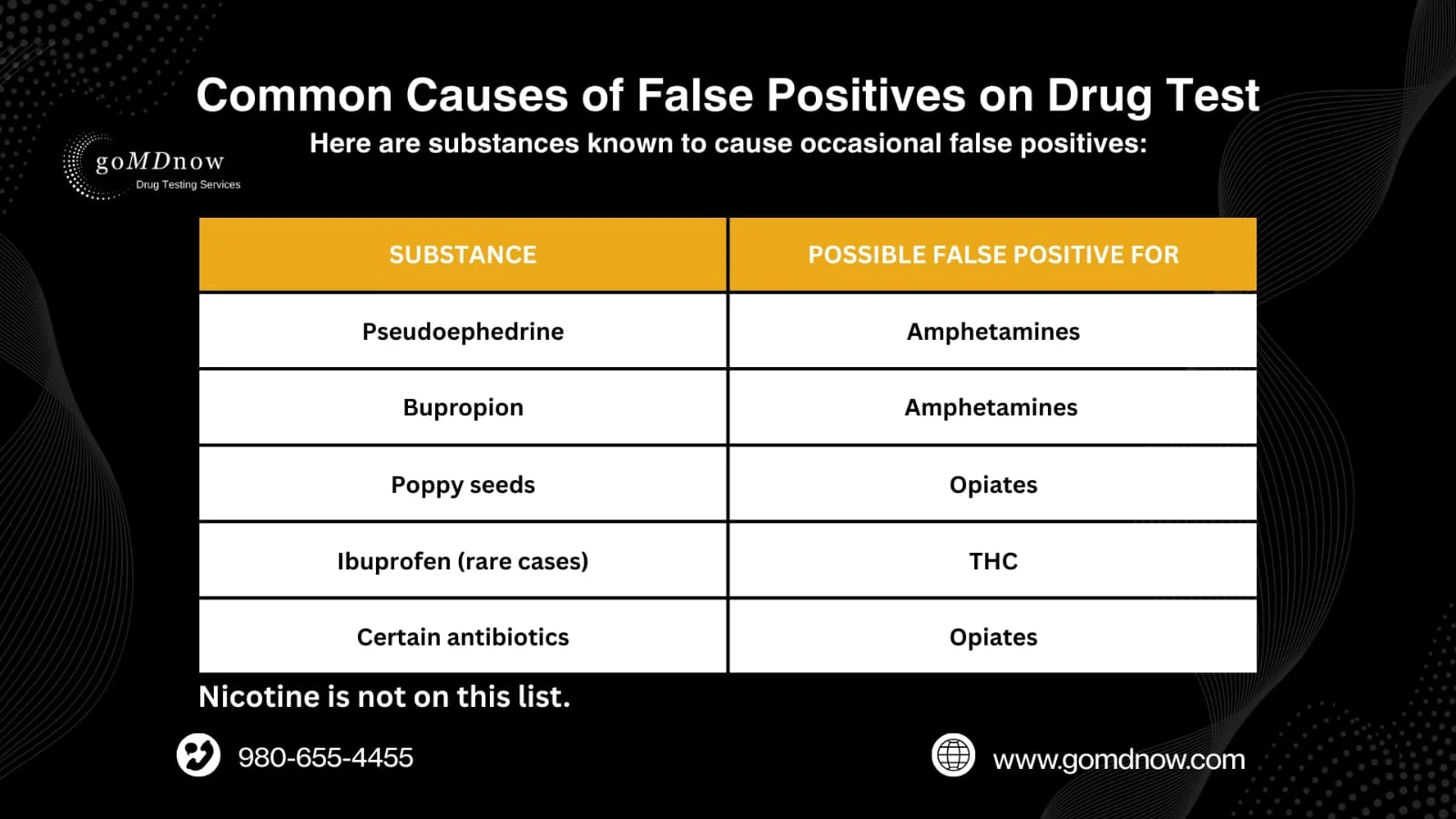
False positives for amphetamines are usually linked to:
- Certain cold medications (pseudoephedrine)
- ADHD medications
- Some antidepressants
- Certain weight-loss supplements
Nicotine does not share the molecular structure that triggers amphetamine immunoassay cross-reactivity.
If a positive result occurs, confirmatory testing (GC/MS or LC/MS) will clearly distinguish substances.
What Actually Causes False Positives on Drug Tests?
To truly understand this topic, we need to examine how drug testing works.
Most initial drug tests use immunoassay screening, which detects substances based on antibody reactions. These tests are fast and cost-effective but can sometimes cross-react with similar chemical structures.
Why Confirmation Testing Matters
If an initial screen is positive, certified laboratories perform confirmatory testing using:
- Gas Chromatography-Mass Spectrometry (GC-MS)
- Liquid Chromatography-Tandem Mass Spectrometry (LC-MS/MS)
These confirmatory tests are highly specific and eliminate false positives caused by cross-reactivity.
This is why regulated programs (such as DOT testing) require confirmation before reporting a verified positive.
Will Nicotine Fail a Drug Test?
Let's answer this clearly:
- If it's a standard drug test → No
- If it's a cotinine drug test → Yes, if you use nicotine
Nicotine use alone does not cause a failed result in drug tests designed to detect illegal or controlled substances.
However, if an employer specifically includes nicotine screening, it can affect eligibility for:
- Health insurance incentives
- Tobacco-free hiring policies
- Certain medical procedures
So the key is knowing what type of test is being administered. Always clarify with your employer or testing provider about what substances are being tested.
Can Vaping Cause a False Positive Drug Test?
Another common search term is: can vaping cause false positive drug test results?
If the vape contains only nicotine and standard e-liquid ingredients (propylene glycol, vegetable glycerin, flavorings), it should not cause a positive result for controlled drugs.
However, caution is necessary in cases involving:
- Unregulated or black-market vape products
- THC-containing vape cartridges
- CBD products contaminated with THC
Some CBD products have been found to contain trace amounts of THC, which can trigger a marijuana positive result. Understanding the difference between CBD and THC is crucial for anyone using these products.
In those cases, it is not nicotine causing the result it is THC contamination.
What Should You Do If You Get a False Positive?
If you receive a positive drug test result and you believe it is incorrect:
1. Stay Calm
False positives are rare but possible during initial screening.
2. Request Confirmation Testing
Ask whether the result was confirmed using GC-MS or LC-MS/MS. All DOT tests follow strict chain of custody and confirmation procedures.
3. Provide Prescription Documentation
If you take medications that could cross-react, provide documentation to the Medical Review Officer (MRO).
4. Avoid Home Remedies or Detox Myths
Attempting to "flush" your system can lead to:
- Diluted specimen results
- Observed retesting
- Suspicion of tampering
Understanding the consequences of tampering is critical for anyone facing drug testing.
5. Work Through Official Review Channels
For regulated programs, the MRO will verify legitimate medical explanations before final reporting. Learn more about what happens after a positive test.
Understanding Different Testing Methods
It's important to understand that different testing methods have different detection capabilities:
- Urine testing – Most common, cost-effective method
- Lab-based vs rapid tests – Understanding accuracy differences
- Hair follicle testing – Longer detection window
- Oral fluid testing – Detects recent use
Each method has specific applications, and understanding how long results take helps manage expectations during the testing process.
Frequently Asked Questions
Can nicotine cause false positive drug test results?
No. Nicotine does not cause false positives for amphetamines, THC, cocaine, or opioids in certified laboratory testing.
Does nicotine show up on a drug test?
Not on standard 5-panel or 10-panel drug tests. It only shows up if the test specifically includes cotinine screening.
What is a cotinine drug test?
A cotinine drug test detects nicotine use by identifying cotinine, the primary metabolite of nicotine.
Can vaping cause false positive drug test results?
Nicotine vaping alone does not cause false positives. However, THC-containing or contaminated products can.
Will nicotine fail a drug test?
Only if the test is specifically designed to detect nicotine or cotinine.
How long does cotinine stay in your system?
Typically 7–10 days, depending on frequency of use.
Can secondhand smoke cause a positive test?
No. Learn more about secondhand smoke and drug testing.
What substances commonly cause false positives?
Common medications and foods can trigger initial positives. For example, poppy seeds can initially trigger opiate screening.
Final Thoughts
The concern that can nicotine cause false positive drug test results is understandable especially for employees in regulated industries.
But the science is clear:
- Nicotine does not cross-react with standard drug panels
- It does not mimic amphetamines or THC
- It will not cause a failed DOT drug test
The only time nicotine becomes relevant is when an employer specifically orders a cotinine drug test.
Understanding the difference between a general drug screen and a nicotine-specific test eliminates confusion and unnecessary anxiety.
If you are preparing for a workplace or compliance drug test, always confirm:
- What substances are being tested
- Whether nicotine screening is included
- What confirmation procedures are used
Accurate information protects both employees and employers and ensures that testing remains fair, scientific, and compliant.
At goMDnow, we provide comprehensive drug testing services with SAMHSA-certified laboratories, professional MRO review, and full compliance support. Whether you need DOT or non-DOT testing, we ensure accurate, reliable, and legally defensible results. Contact us today to learn more about our testing services.