
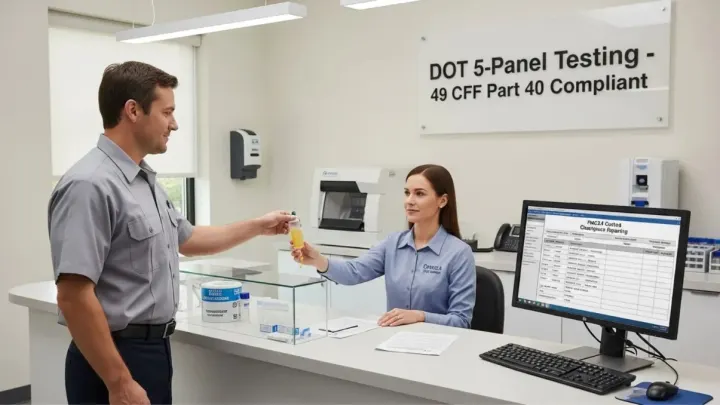
In the transportation industry, public safety depends on the reliability, alertness, and responsibility of safety-sensitive employees. Employers rely on pre-employment drug testing to ensure new hires are fit for duty and compliant from day one. Even a brief lapse in judgment caused by substance use can lead to catastrophic accidents, injuries, or federal violations. This is why the DOT 5-Panel Urine Drug Test remains a cornerstone of workplace safety and federal compliance under 49 CFR Part 40.
For ongoing safety and regulatory adherence, transportation companies must also implement random drug testing throughout the year. The DOT 5-Panel test is required for CDL drivers, transit operators, pipeline workers, aviation personnel, and all DOT-regulated employees. It ensures employers maintain a compliant, drug-free workforce and protects the general public. For individuals returning to duty after a violation, the FMCSA Return-to-Duty (RTD) process and observed DOT drug testing further verify that the employee is fully eligible and safe to resume safety-sensitive responsibilities.
Nationwide providers such as goMDnow help employers and drivers complete DOT drug testing, RTD testing, SAP coordination, and Clearinghouse reporting ensuring accuracy, chain-of-custody integrity, and full federal compliance every step of the way.
You can also get information about 10-panel drug testing .
What the 5-Panel DOT Urine Test Screens For
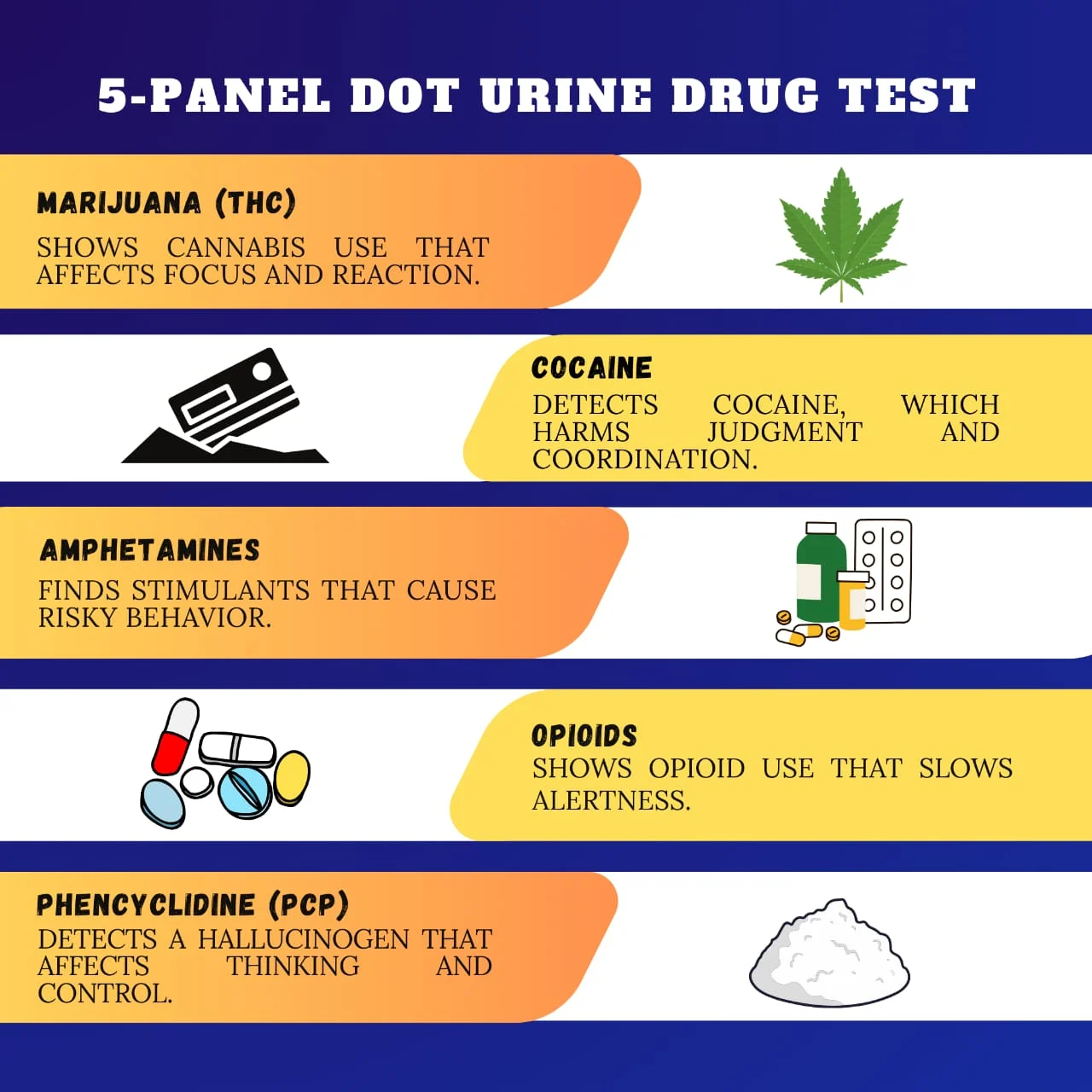
The DOT-regulated 5-Panel test identifies five major drug categories known to impair judgment, coordination, and reaction time. Each category includes multiple substances:
- Marijuana (THC) – Impairs decision-making, reaction time, and concentration.
- Cocaine – A stimulant that affects judgment and increases risky behavior.
- Amphetamines – Includes methamphetamine and similar stimulants known to trigger impulsiveness and decreased awareness.
- Opioids – Includes morphine, codeine, heroin, and prescription opioids that cause drowsiness and slow reaction time.
- Phencyclidine (PCP) – A hallucinogen that severely affects perception and motor functions.
These five drug categories form the federally mandated testing standard for all DOT safety-sensitive positions.
How the DOT 5-Panel Test Works
The testing process follows strict procedural guidelines to ensure accuracy, integrity, and federal compliance:
- Visit a DOT-Qualified Collection Site
goMDnow provides access to nationwide certified collection Sites. - Provide a Urine Sample
Collection follows DOT Part 40 protocols, including temperature checks, privacy rules, and verification procedures. - Chain-of-Custody Documentation
Samples are sealed, tracked, and documented to maintain legal defensibility. - Laboratory Analysis
HHS-certified labs conduct screening and confirmatory GC/MS or LC/MS tests. - MRO Review
A licensed Medical Review Officer reviews all non-negative results for accuracy and fairness.
This ensures the final reported result is accurate, compliant, and legally defensible.
Why the 5-Panel DOT Test Is Required
The DOT 5-Panel test is not optional it is required by federal law under 49 CFR Part 40 and enforced by the FMCSA. This ensures uniform testing and prevents inconsistencies across different industries.
Key Benefits:
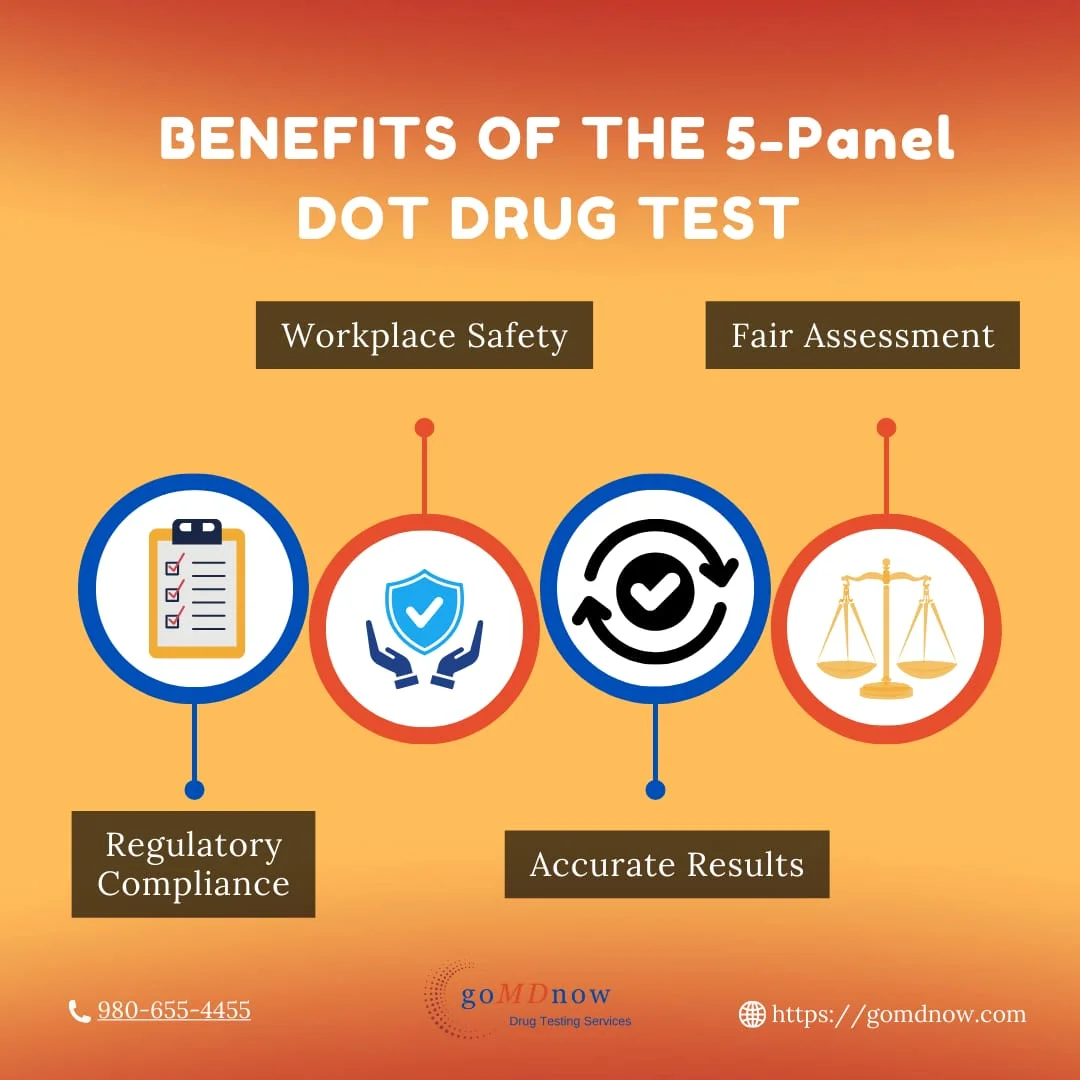
- Regulatory Compliance
Ensures employers and employees meet DOT and FMCSA requirements for safety-sensitive roles. - Workplace Safety
Reduces workplace risks by identifying prohibited drug use before it becomes a safety hazard. - Accurate & Legally Defensible Results
All DOT tests must be processed at HHS-certified laboratories with full MRO oversight. - Fair and Standardized Procedures
DOT rules prevent false positives and protect employees through uniform testing, clear documentation, and confirmatory analysis.
The 5-Panel DOT test is used for pre-employment, random testing, post-accident testing, reasonable suspicion, Return-to-Duty, and follow-up testing.
Where to Get a DOT 5-Panel Test
Employers and drivers can schedule DOT urine tests conveniently through goMDnow’s DOT drug testing services, which offer:
- 25,000+ DOT-certified collection sites nationwide
- Fast and accurate lab results
- MRO review and secure reporting
- Full compliance support for employers and CDL drivers
For assistance or scheduling:
Get a DOT 5-Panel Test
980-655-4455
The Role of the 5-Panel Test in the Return-to-Duty (RTD) Process
For any DOT-regulated employee who fails or refuses a drug or alcohol test, the Return-to-Duty process is mandatory before resuming safety-sensitive work. This process includes:
- Observed Return-to-Duty Testing
An observed DOT test ensures the employee is drug-free before returning to duty (DOT Direct Observation Rule). - SAP Evaluation and Recommendations
A Substance Abuse Professional (SAP) provides assessment and education/treatment per 49 CFR Part 40 Subpart O. - Follow-Up Testing
A long-term testing plan dictated by the SAP ensures continued compliance.
These steps ensure employees return to safety-sensitive duty responsibly and legally.
Why goMDnow Is a Trusted Provider
goMDnow offers a compliance-focused, nationwide testing solution built specifically for DOT-regulated employers and CDL drivers. Key advantages include:
- Full DOT & FMCSA compliance management
- SAP evaluation coordination
- Access to 20,000+ testing sites
- Accurate testing with certified laboratories
- Observed RTD and follow-up testing
- Automated Clearinghouse reporting
- Transparent pricing with no hidden fees
By partnering with goMDnow, employers ensure that testing is accurate, timely, and compliant with federal law.
Conclusion
The DOT 5-Panel Urine Drug Test plays a vital role in maintaining safety and compliance across all transportation and safety-sensitive industries. It ensures employees are fit for duty, protects public safety, and helps companies avoid costly violations.
Organizations that partner with nationwide providers like goMDnow benefit from accurate results, secure chain-of-custody procedures, and complete regulatory compliance. Whether for routine DOT testing or the Return-to-Duty process, the 5-Panel test remains a crucial part of building a responsible, reliable, and drug-free workforce.