

Introduction
A safe, productive, and healthy work environment is essential for every organization. One of the most effective ways to achieve this is by implementing a drug-free workplace program. Substance misuse in the workplace can negatively impact employee safety, productivity, morale, and overall business performance. It can also increase the risk of workplace accidents, absenteeism, legal issues, and higher operational costs.
A drug-free workplace is more than just drug testing. It involves clear workplace policies, employee education, supervisor training, and access to support programs that encourage employees to make healthy choices while maintaining compliance with company and industry regulations.
Whether your business operates in transportation, construction, manufacturing, healthcare, or office settings, creating a drug-free workplace benefits both employers and employees.
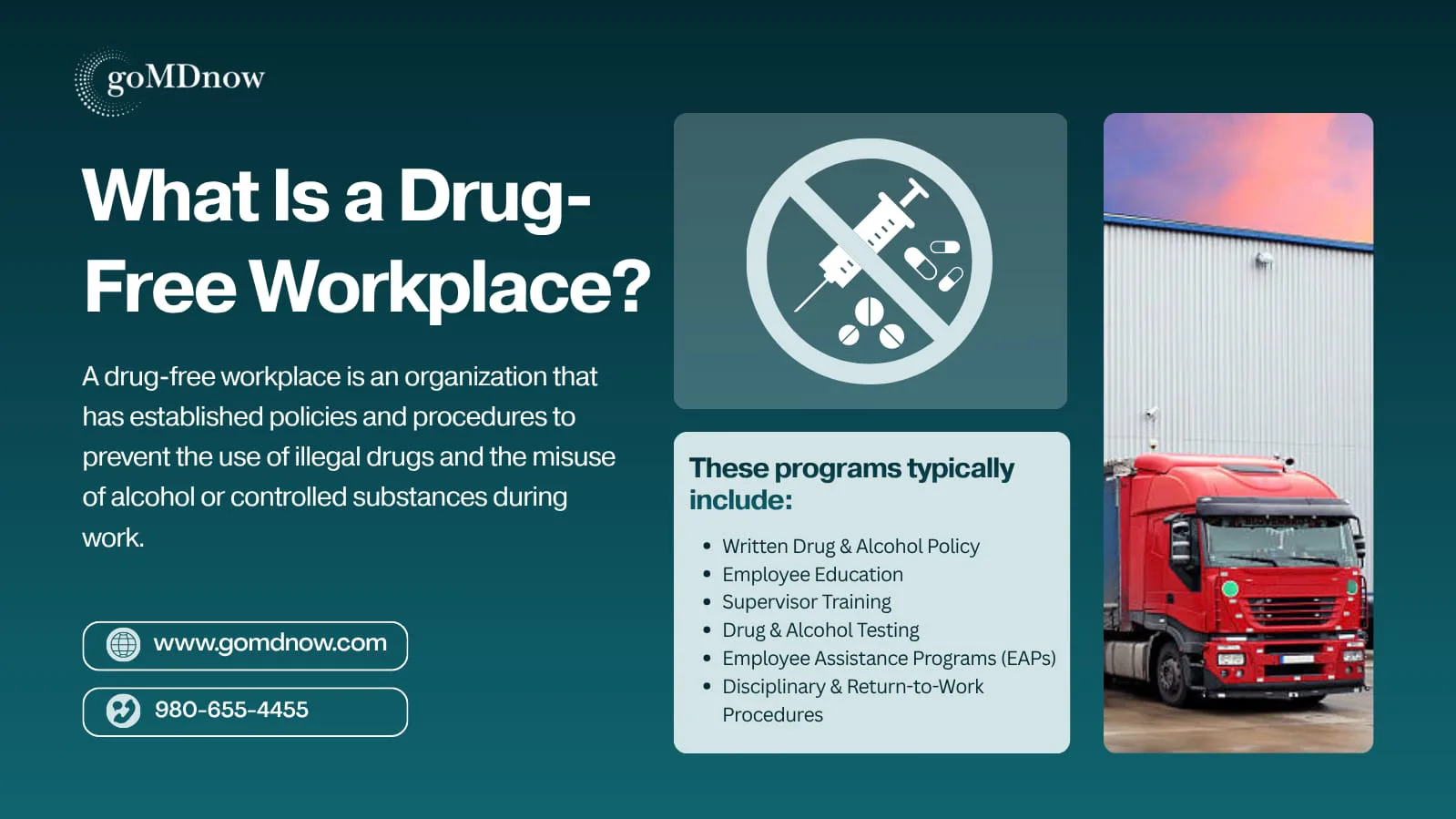
What Is a Drug-Free Workplace?
A drug-free workplace is an organization that has established policies and procedures to prevent the use of illegal drugs and the misuse of alcohol or controlled substances during work. These programs typically include:
- Written drug and alcohol policies
- Employee education and awareness
- Supervisor training
- Drug and alcohol testing when applicable
- Employee Assistance Programs (EAPs)
- Clear disciplinary and return-to-work procedures
The goal is to create a safer, healthier, and more productive workplace while protecting employees, customers, and the public.
Why Is a Drug-Free Workplace Important?
Employees who are under the influence of drugs or alcohol may experience:
- Slower reaction times
- Poor judgment
- Reduced concentration
- Increased risk-taking behavior
- Lower productivity
- More workplace conflicts These issues not only affect individual performance but can also put coworkers and the public at risk, particularly in safety-sensitive industries.
Top Benefits of a Drug-Free Workplace
1. Improves Workplace Safety
Safety is the biggest advantage of maintaining a drug-free workplace. Employees performing their duties while impaired are more likely to make mistakes that can result in:
- Workplace injuries
- Equipment damage
- Vehicle accidents
- Property loss
- Fatal incidents
A comprehensive drug-free workplace program significantly reduces these risks by helping ensure employees are fit for duty.
2. Increases Employee Productivity
Employees who are alert and focused complete their work more efficiently. A drug-free workplace helps organizations:
- Improve work quality
- Increase efficiency
- Meet deadlines
- Reduce costly errors
- Maintain consistent performance Higher productivity directly contributes to better business growth and customer satisfaction.
3. Reduces Absenteeism
- Substance misuse often leads to:
- Frequent sick days
- Tardiness
- Missed shifts
- Unscheduled absences
A drug-free workplace promotes accountability and reliability, reducing absenteeism and improving workforce stability.
4. Lowers Workers' Compensation Costs
Workplace accidents are expensive.
Employers may face costs including:
- Medical expenses
- Workers' compensation claims
- Equipment repairs
- Legal fees
- Lost productivity Reducing workplace incidents through drug-free workplace initiatives can significantly lower these expenses.
5. Improves Employee Health and Well-Being
Drug-free workplace programs often include educational resources and employee assistance programs that encourage healthier lifestyles. Employees benefit from:
- Better physical health
- Improved mental well-being
- Access to support services
- Reduced substance-related risks Healthy employees are generally more engaged and productive.
6. Enhances Employee Morale
Employees appreciate working in a safe and respectful environment. A drug-free workplace:
- Builds trust among coworkers
- Encourages teamwork
- Reduces workplace conflicts
- Creates a positive company culture
Higher morale often leads to stronger employee engagement and job satisfaction.
7. Reduces Employee Turnover
Unsafe or unhealthy work environments often experience higher turnover. Maintaining a drug-free workplace helps businesses retain skilled employees by promoting:
- Safer working conditions
- Better workplace culture
- Fair and consistent policies
- Greater employee satisfaction Lower turnover also reduces hiring and training costs.
8. Protects Company Reputation
Customers, partners, and stakeholders expect businesses to operate responsibly. A strong drug-free workplace program demonstrates a company's commitment to:
- Safety
- Professionalism
- Compliance
- Employee well-being This can strengthen customer confidence and improve the organization's public image.
9. Supports Legal and Regulatory Compliance
Many industries must comply with workplace drug and alcohol regulations. Employers should understand the difference between DOT and non-DOT testing; for example, employers regulated by the U.S. Department of Transportation must follow strict testing requirements for safety-sensitive employees.
Maintaining a drug-free workplace helps organizations:
- Meet regulatory obligations
- Reduce compliance risks
- Avoid penalties
- Maintain required certifications
10. Reduces Workplace Violence
Substance misuse can contribute to poor decision-making, aggressive behavior, and workplace conflicts. A drug-free workplace helps reduce:
- Employee disputes
- Threatening behavior
- Violence
- Harassment incidents This creates a more secure environment for everyone.
11. Improves Customer Service
Employees who are focused and dependable provide better customer experience. Businesses often see:
- Faster service
- Improved communication
- Higher customer satisfaction
- Better client retention A productive workforce directly benefits customers.
12. Encourages Early Intervention
Many organizations include education and employee support services within their drug-free workplace programs. These resources can help employees:
- Recognize substance misuse issues
- Seek assistance early
- Access counseling
- Return to work safely when appropriate Early intervention benefits both employees and employers.
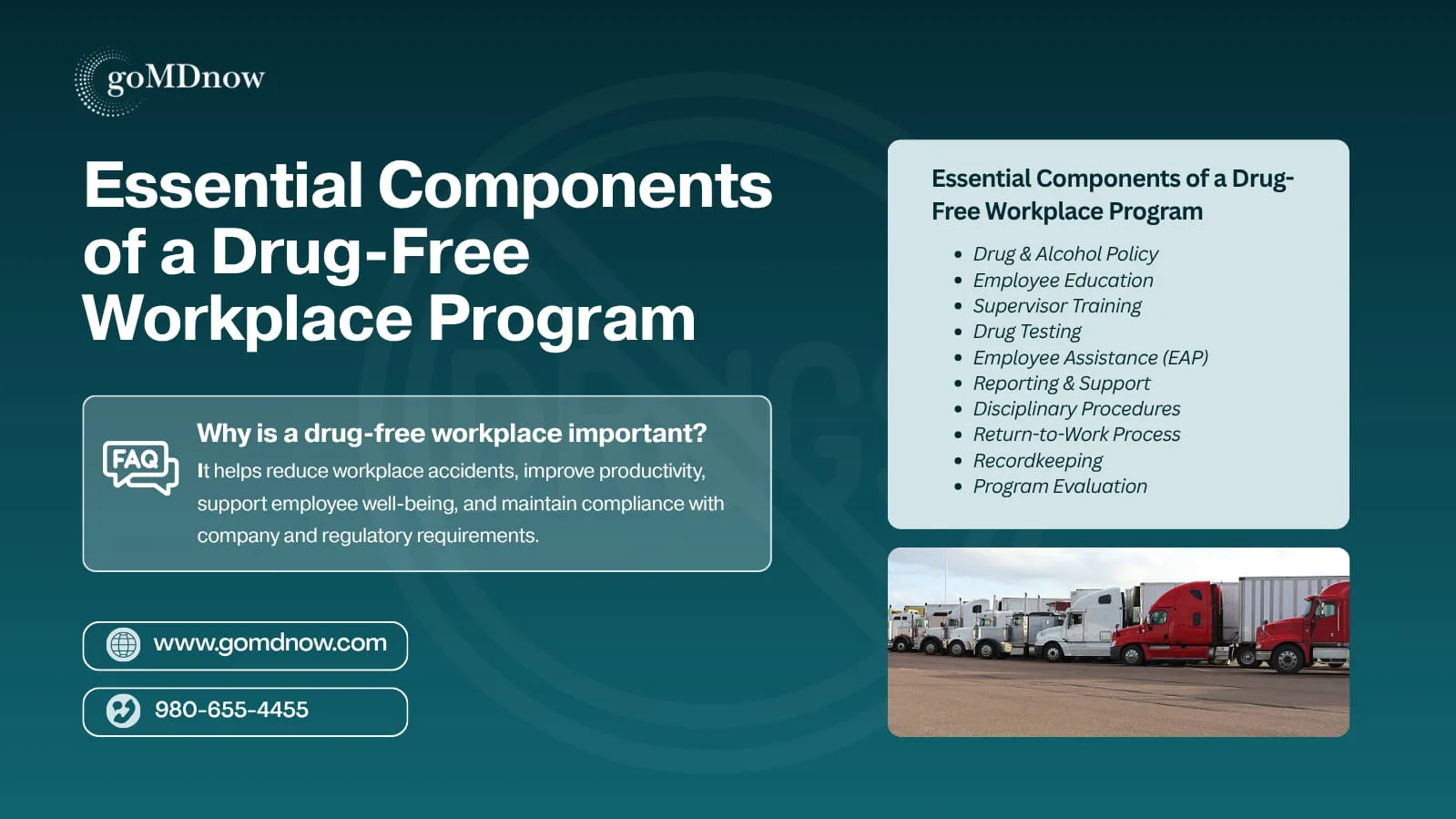
Essential Components of a Drug-Free Workplace Program
An effective program typically includes:
Written Policy
A clear policy should identify who administers the program, including the responsibilities of the Designated Employer Representative when that role applies.
Employees should clearly understand company expectations regarding drug and alcohol use.
Employee Education
Training helps employees understand:
- Workplace policies
- Health risks
- Safety concerns
- Available support resources
Supervisor Training
Managers should know how to identify signs of possible impairment and respond appropriately according to company policy.
Drug and Alcohol Testing
Depending on company policy and applicable regulations, testing may include:
- Pre-employment testing
- Random testing
- Reasonable suspicion testing
- Post-accident testing
- Return-to-duty testing
- Follow-up testing
Employee Assistance Programs (EAP)
Confidential support services encourage employees to seek help before problems escalate.
Industries That Benefit Most from DrugFree Workplace Programs
Although every workplace benefits, these industries often see the greatest impact:
- Transportation
- Trucking
- Construction
- Manufacturing
- Healthcare
- Warehousing
- Oil and gas
- Public safety
- Aviation
- Logistics
These industries frequently involve safety-sensitive positions where impairment can have serious consequences.
How Employers Can Build a Successful Drug-Free Workplace
Organizations should:
- Develop a clear written policy.
- Educate employees regularly.
- Train supervisors consistently.
- Apply policies fairly.
- Conduct testing when appropriate.
- Encourage employees to seek help.
- Review and update policies periodically.
Consistency is key to maintaining an effective workplace program.
How goMDnow Can Help
Creating and maintaining a compliant drug-free workplace requires reliable testing services and expert guidance.
At goMDnow, employers have access to comprehensive workplace drug and alcohol testing solutions designed to support safer workplaces and regulatory compliance. Whether your organization requires pre-employment, random, post-accident, reasonable suspicion, return-to-duty, or follow-up testing, goMDnow provides dependable testing services through an extensive nationwide network of collection sites.
By partnering with goMDnow, businesses can simplify workplace testing, strengthen compliance programs, and promote a safer, more productive workforce. Employers should also establish a consistent process for interpreting workplace drug test results.
Conclusion
A drug-free workplace benefits every organization by improving safety, increasing productivity, reducing absenteeism, lowering costs, and creating a healthier work environment. Beyond compliance, it demonstrates a company's commitment to protecting employees, customers, and the communities it serves.
By implementing clear policies, educating employees, providing access to support resources, and partnering with trusted testing providers like goMDnow, employers can build a workplace culture centered on safety, accountability, and long-term success.
Frequently Asked Questions (FAQs)
1. What is a drug-free workplace?
A drug-free workplace is an organization that maintains policies and programs to prevent workplace substance misuse while promoting safety, health, and productivity.
2. Why is a drug-free workplace important?
It helps reduce workplace accidents, improve productivity, support employee well-being, and maintain compliance with company and regulatory requirements.
3. What are the main benefits of a drug-free workplace?
Key benefits include improved safety, lower absenteeism, higher productivity, reduced costs, better employee morale, and a stronger business reputation.
4. Which industries need drug-free workplace programs?
Industries with safety-sensitive positions-such as transportation, construction, manufacturing, healthcare, logistics, and aviation-benefit significantly from these programs.
5. How can employers create a drug-free workplace?
Employers should establish clear policies, educate employees, train supervisors, conduct appropriate drug and alcohol testing, and provide access to employee support programs.
For help selecting or scheduling a compliant test, review testing options and rates or contact goMDnow.