

Random drug testing pools are a critical component of workplace compliance programs, especially for safety-sensitive industries regulated by the Department of Transportation (DOT). When managed correctly, they help maintain fairness, deter substance misuse, and ensure regulatory adherence. However, many organizations make avoidable mistakes in how they create, manage, and audit these pools errors that can lead to compliance violations, legal risks, and compromised workplace safety.
This guide breaks down the most common errors in random drug testing pool selection and management, along with practical strategies to avoid them.
What Is a Random Drug Testing Pool?
A random drug testing pool is a group of employees subject to unannounced drug and/or alcohol testing throughout the year. Employees are selected using a scientifically valid random method, ensuring everyone has an equal chance of being tested every time selections are made.
For DOT-regulated employers, random testing is mandatory and must meet specific annual testing rates. For non-DOT companies, implementing random pools is considered best practice for maintaining a drug-free workplace.
2026 Random Testing Rate Update
The Federal Motor Carrier Safety Administration (FMCSA) has confirmed that for calendar year 2026, the minimum random drug testing rate remains at 50% for controlled substances and 10% for alcohol for all safety-sensitive CDL drivers the same rates in effect since 2020. These are regulatory minimums, not targets. Employers may test at higher rates if company policy supports it, but no carrier may fall below these thresholds.
Additionally, DOT proposed adding Fen and norFen to the standard drug testing panel (September 2025 NPRM), with implementation expected following final rule publication. Employers should monitor Federal Register updates and prepare to revise their drug and alcohol testing policies once finalized. Learn more about the DOT drug testing panel.
Oral fluid testing, authorized under updated DOT Part 40 regulations effective December 5, 2024, is another emerging option but it requires HHS-certified laboratories and that certification process is still ongoing as of 2026. Urine testing remains the required standard until labs are fully certified. Do not substitute oral fluid for urine testing without confirming your lab meets current HHS standards.
Why Proper Pool Management Matters
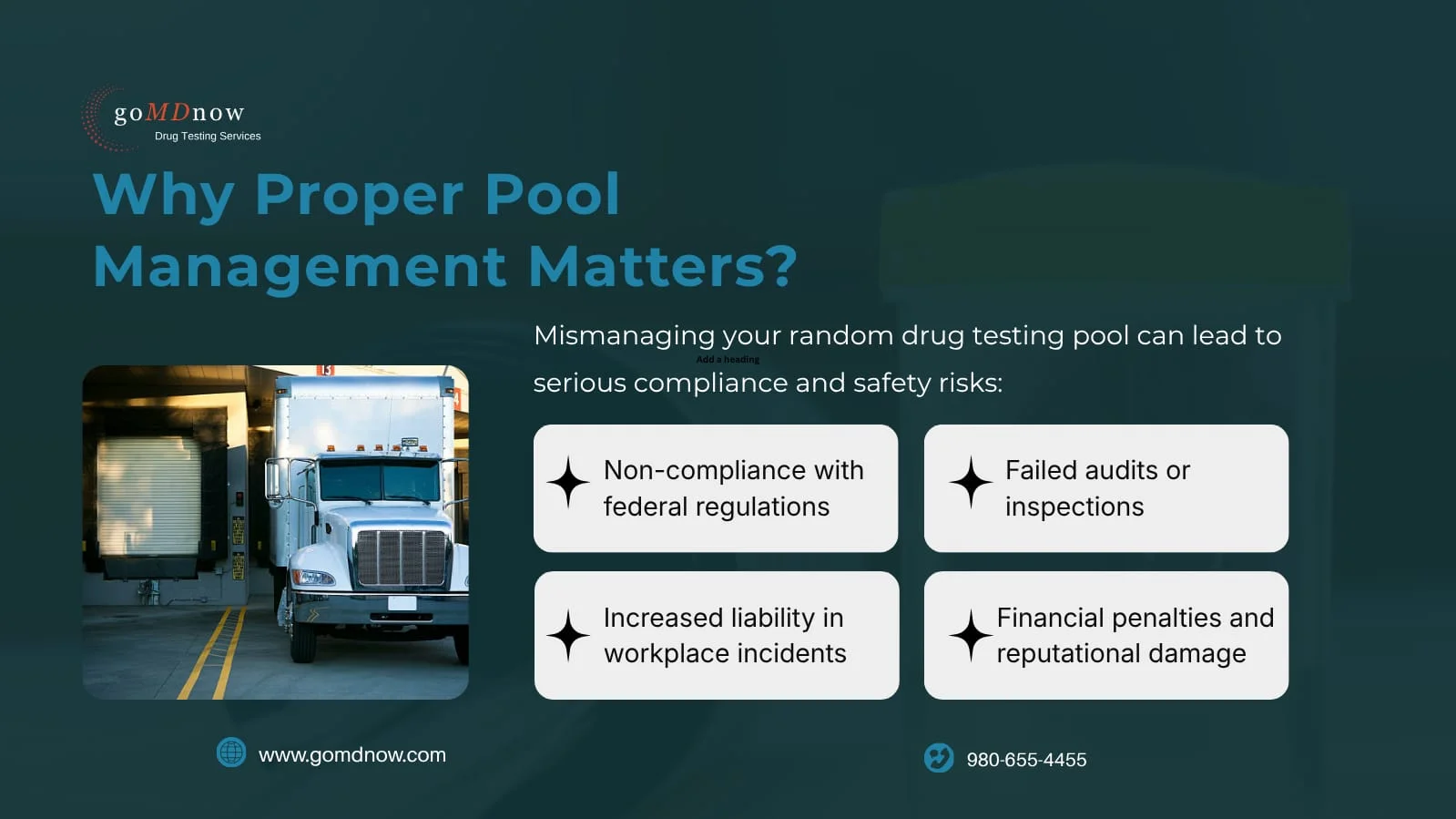
Mismanaging a random testing pool can result in non-compliance with federal regulations, failed audits or inspections, increased liability in workplace incidents, loss of employee trust due to perceived bias, and financial penalties and reputational damage. Even small administrative errors can escalate into major compliance issues if not corrected early.
Common Mistakes in Random Drug Testing Pools
1. Using a Non-Random Selection Method
One of the most serious mistakes is failing to use a truly random selection process. Some companies manually select employees or rely on predictable patterns, which violates compliance standards. Random testing must be scientifically valid if employees can predict selections, the deterrent effect disappears and audits may fail.
Solution: Use automated, software-based randomization tools that ensure unbiased selection and maintain proper records. Learn how a random testing consortium works to understand compliant selection processes.
2. Incorrect Pool Setup
Many employers either include the wrong employees or exclude those who should be part of the pool. Common errors include including non-safety-sensitive employees in DOT pools, excluding eligible drivers or operators, and mixing DOT and non-DOT employees in the same pool. Note that employees on approved leave must remain in the pool and are still subject to random selection removing them during leave is a compliance error.
Solution: Clearly define which employees are DOT-covered and maintain separate pools where required. Regularly review your roster to ensure accuracy.
3. Failing to Meet Required Testing Rates
DOT-regulated employers must meet minimum annual testing rates confirmed at 50% for drugs and 10% for alcohol in 2026. Not conducting enough tests throughout the year or miscalculating percentages can lead to violations during audits and potential fines. Understand how frequently random drug and alcohol testing is required to stay on track.
Solution: Schedule selections evenly across the year and monitor testing percentages monthly to stay compliant.
4. Poor Recordkeeping
Incomplete or inaccurate documentation is a frequent issue. Examples include missing selection records, lack of testing logs, and incomplete chain of custody forms. During an audit, documentation is everything without proper records, even compliant programs can appear non-compliant. Understand the role of chain of custody in drug testing and why every form matters.
Solution: Implement a centralized system to store and manage all testing records securely and in an audit-ready format.
5. Delayed Testing After Selection
Once an employee is selected, testing must occur promptly. Delaying notification or allowing employees too much time before testing increases the chance of tampering or evasion. Notify employees immediately and ensure testing is conducted as soon as possible after selection.
6. Not Updating the Pool Regularly
Employee rosters change frequently due to hiring, terminations, and role changes. Failing to update the pool leads to testing inactive employees and missing eligible ones. Update the pool continuously, or at minimum before each selection cycle. Compare consortium pools versus stand-alone pools to find the right structure for your organization.
7. Lack of Supervisor Training
Supervisors play a key role in the testing process but are often undertrained. Issues include mishandling notifications, failing to recognize compliance requirements, and improper communication with employees. Provide regular training on drug testing policies, procedures, and compliance standards including reasonable suspicion testing protocols, which require separate supervisor documentation.
8. Combining Random and Reasonable Suspicion Testing
Some companies confuse random testing with reasonable suspicion testing, using observable behavior to influence random selections. Random testing must be completely unbiased and cannot be influenced by suspicion. Keep these testing categories strictly separate with clear procedures for each. Learn more about reasonable suspicion drug testing and its distinct documentation requirements.
9. Ignoring Consortium / Third-Party Administrator (C/TPA) Support
Managing a random pool internally can be complex, especially for small to mid-sized companies. Trying to handle everything without expert support leads to errors that are easily avoided. Understand the difference between a C/TPA and a drug testing clinic and why partnering with a qualified third-party administrator is the smarter choice for most fleets.
10. Not Preparing for Audits
Many companies only review their program when an audit is scheduled reacting instead of planning ahead. Conduct internal audits regularly to identify and fix issues before regulators do. Understand what DOT safety auditors look for and keep records audit-ready year-round.
11. Ignoring FMCSA Clearinghouse Reporting Requirements
A frequently overlooked obligation: any verified positive result, refusal, or other violation from random testing must be reported to the FMCSA Drug and Alcohol Clearinghouse within two business days. With Clearinghouse II fully implemented as of November 2024, state DMVs now have real-time access to Clearinghouse data unresolved violations can trigger automatic CDL downgrades. Learn how the FMCSA Clearinghouse affects CDL status and what reporting obligations apply to employers.
Best Practices for Effective Pool Management
To avoid these mistakes, use automated random selection systems and maintain separate DOT and non-DOT pools. Monitor testing rates continuously and keep detailed, organized records. Train supervisors and HR teams regularly, conduct periodic internal audits, and partner with compliance experts when needed. Joining a DOT random testing consortium is one of the most efficient ways for smaller carriers to stay compliant without administrative burden.
The Role of Technology in Random Testing
Modern compliance platforms streamline the entire process by automating random selections, tracking testing rates in real time, managing documentation securely, sending instant notifications, and generating audit-ready reports. Investing in the right technology reduces human error and improves overall efficiency. This is especially valuable as DOT moves toward electronic chain of custody forms (eCCFs) and digital recordkeeping in upcoming regulatory updates.
How goMDNow Simplifies Random Drug Testing
Managing random drug testing pools doesn't have to be complicated. goMDNow provides end-to-end compliance solutions designed specifically for DOT and non-DOT employers. With goMDNow, you can automate random pool selections using compliant algorithms, ensure accurate employee pool management, track testing percentages and stay audit-ready, maintain secure digital records, and receive expert support for compliance and reporting.
Whether you're a small business or a large fleet operator, goMDNow helps eliminate the guesswork and ensures your program runs smoothly and efficiently. Explore our nationwide testing network or contact us today to get started.
Conclusion
Random drug testing pools are more than a compliance requirement they are a critical safeguard for workplace safety and integrity. Improper selection methods, poor recordkeeping, and lack of oversight can quickly turn a well-intentioned program into a liability. With 2026 bringing confirmed testing rates, the proposed addition of Fen to the DOT panel, and expanded Clearinghouse enforcement, staying current matters more than ever.
By understanding the common mistakes and implementing best practices, organizations can build a reliable, compliant, and effective drug testing program. Leveraging technology and expert support such as goMDNow further strengthens your compliance framework and ensures long-term success.
FAQs
1. What is a random drug testing pool?
A random drug testing pool is a group of employees subject to unannounced drug and alcohol
testing, selected through a scientifically valid random process. All safety-sensitive
employees, including those on leave, must remain in the pool at all times.
2. What are the 2026 DOT random drug testing rates?
FMCSA has confirmed the 2026 minimum rates remain at 50% for controlled substances and
10% for alcohol. These rates have been in effect since 2020 and are tied to industry-wide
positive test data.
3. Can DOT and non-DOT employees be in the same pool?
No. DOT and non-DOT employees must be managed in separate pools to comply with federal
regulations. Learn the differences between DOT and non-DOT drug testing programs.
4. What happens if a company fails to meet testing rates?
Failure to meet required testing rates can result in compliance violations, fines, and failed
audits. Understand what qualifies as a DOT violation and the penalties that follow.
5. Why should companies use a third-party administrator (C/TPA)?
A C/TPA helps manage random selections, maintain compliance, handle documentation, and reduce
administrative burden. Learn why every company needs a TPA or C/TPA
for their random testing program.
6. Is Fen being added to the DOT drug test panel?
DOT issued a Notice of Proposed Rulemaking in September 2025 to add Fen and norFen
to the standard testing panel. Final implementation is pending rule publication. Employers
should monitor updates and prepare to revise their testing policies once finalized.