

Drug testing is a cornerstone of workplace safety, pre-employment screening, and regulatory compliance especially in DOT-regulated industries such as transportation, logistics, and construction. While most discussions focus on substances, detection windows, and testing methods, one critical variable is often overlooked: hydration level.
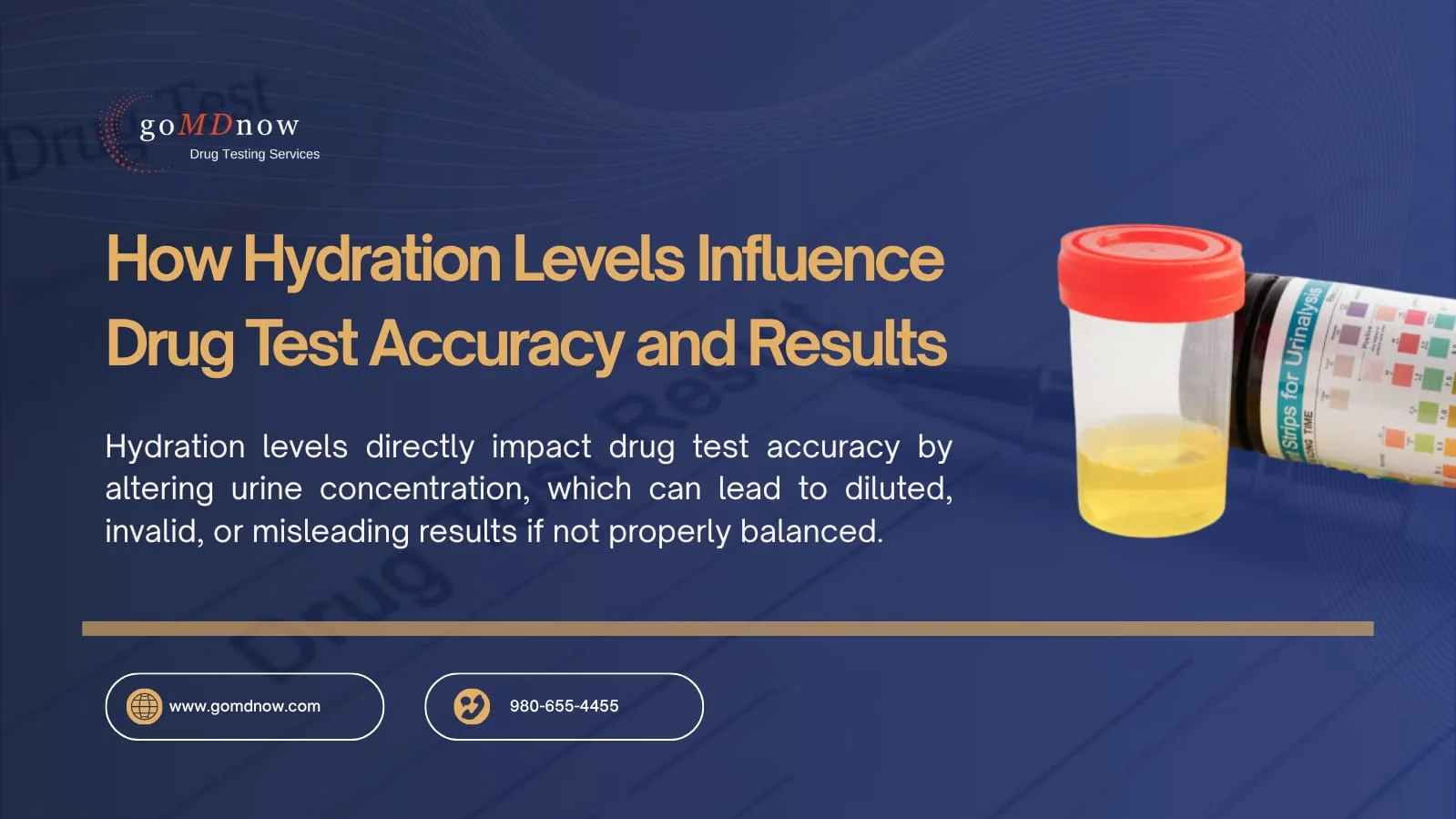
Hydration directly affects how drug metabolites appear in the body, particularly in urine, and can significantly influence the accuracy, validity, and interpretation of drug test results. Whether intentional or accidental, improper hydration can lead to diluted samples, mandatory retesting, and serious compliance complications under DOT regulations.
Understanding Drug Testing: A Technical Overview
Drug tests detect either parent drugs (the original substance) or metabolites (byproducts formed after the body processes the drug). The most commonly used drug testing methods each respond differently to hydration:
Urine Drug Testing is the most widely used method, detecting recent drug use typically within 1–7 days depending on substance. It is highly sensitive to hydration levels and is the central focus of this discussion. Learn about the DOT 5-panel urine drug test required for all safety-sensitive transportation workers.
Blood Testing detects active drug presence in the bloodstream with a short detection window and minimal influence from hydration. Saliva (Oral Fluid) Testing detects recent use within hours to 48 hours and is slightly affected by hydration (dry mouth vs fluid balance). Hair Follicle Testing detects long-term drug use up to 90 days and is completely unaffected by hydration though it is not approved for DOT-regulated testing programs.
What Does Hydration Mean in Drug Testing?
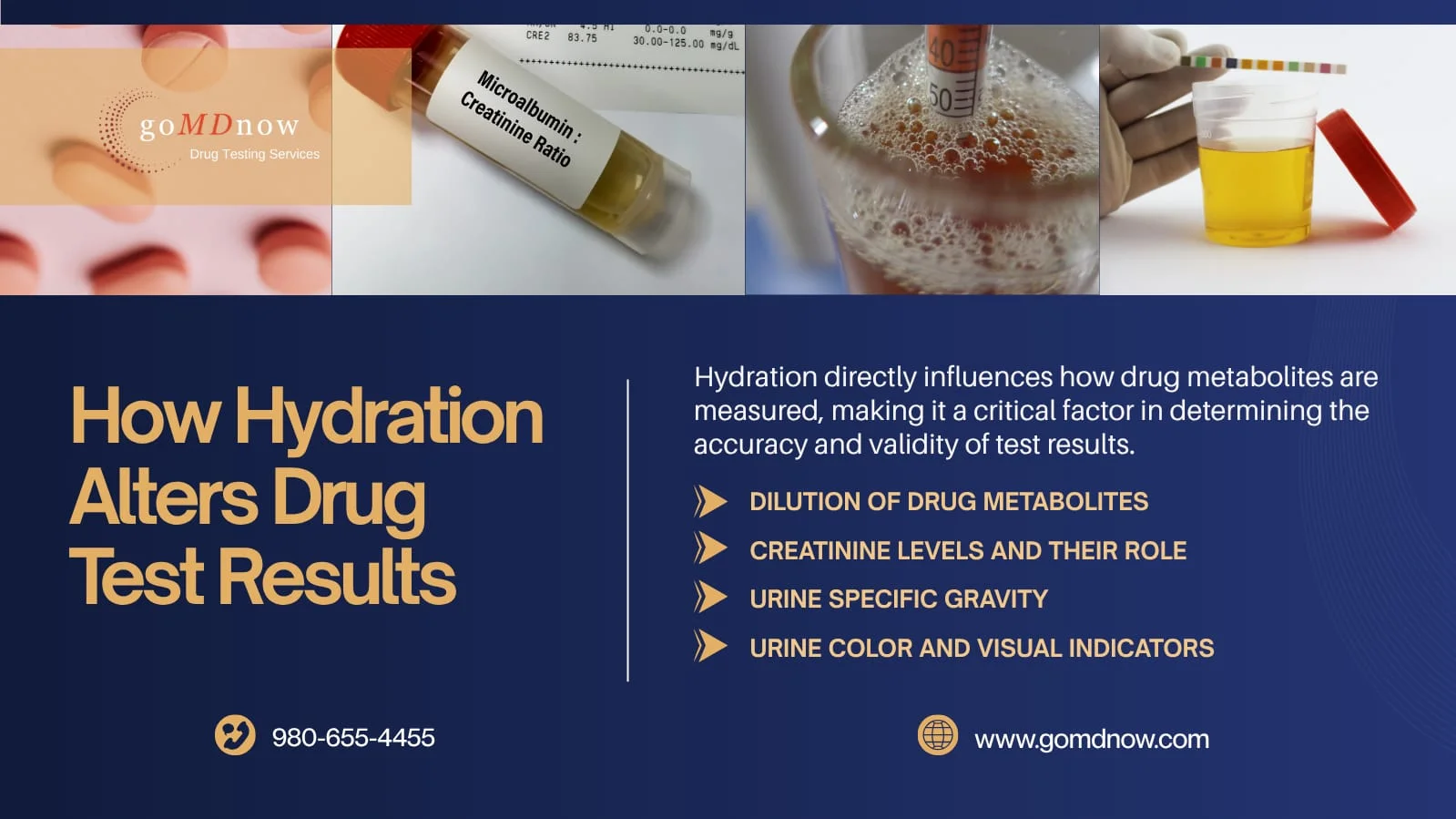
Hydration refers to the body's fluid balance. In the context of drug testing, it specifically affects urine concentration, creatinine levels, specific gravity, and urine color and clarity. Laboratories use these parameters to determine whether a sample is valid, diluted, adulterated, or substituted. Understanding these markers is essential for both employers managing drug-free workplace programs and employees preparing for testing.
The Science: How Hydration Alters Drug Test Results
1. Dilution of Drug Metabolites
When a person consumes excessive fluids before a urine drug test, the urine becomes diluted, reducing the concentration of drug metabolites. Metabolite levels may fall below cutoff thresholds, causing results to appear negative despite recent drug use, and labs will flag the sample as "dilute" rather than clean.
Important: Hydration does NOT remove drugs from the body faster it only reduces their concentration temporarily. The body still follows its natural metabolic timeline.
2. Creatinine Levels and Their Role
Creatinine is a natural waste product produced by muscle metabolism and excreted in urine at a relatively stable rate. It acts as a biological marker to verify whether the urine sample is genuine or artificially diluted.
Per DOT regulations (49 CFR Part 40), the accepted ranges for drug testing purposes are:
- Normal creatinine range: 20–300 mg/dL
- Dilute specimen threshold: ≥2 mg/dL but <20 mg/dL (combined with specific gravity criteria)
- 2–5 mg/dL range: MRO must direct the employer to conduct an immediate recollection under direct observation
- Below 2 mg/dL: Classified as substituted treated as a refusal to test, not simply a dilute result
Note: Naturally low creatinine can also result from certain medical conditions, kidney issues, or medications such as diuretics. A low creatinine result alone is not always evidence of intentional tampering.
3. Urine Specific Gravity
Specific gravity measures urine density compared to water. Per 49 CFR §40.88, a specimen is considered dilute when the specific gravity is greater than 1.0010 but less than 1.0030. Overhydration lowers specific gravity; dehydration raises it. Values outside normal ranges prompt further testing or sample rejection.
4. Urine Color and Visual Indicators
Although not a definitive metric, urine color provides initial insight at the collection site. Clear or nearly transparent urine suggests overhydration; pale yellow indicates normal hydration; and dark yellow or amber signals dehydration. Technicians may use this as a preliminary observation before lab analysis, but all final determinations are made by the Medical Review Officer (MRO) based on laboratory results.
Overhydration: Risks and Consequences
Many individuals believe drinking excessive water before a drug test can "flush out" drugs. This is a misconception. Overhydration risks include a diluted sample flagged by the lab, the test being marked as invalid or inconclusive, mandatory retesting, increased scrutiny, and delays in hiring or compliance clearance.
DOT-Specific Consequences of Dilute Results
Under DOT regulations (49 CFR §40.197), the outcome depends on the creatinine level detected:
- Positive dilute result: Treated as a verified positive test. The employer cannot direct the employee to retest the result stands and all standard consequences apply.
- Negative dilute with creatinine 2–5 mg/dL: MRO must direct the employer to conduct an immediate recollection under direct observation. No exceptions.
- Negative dilute with creatinine above 5 mg/dL: Employer may (but is not required to) direct a second test. If recollection is chosen, the employer's written policy must require it consistently selective recollection is not permitted.
- Substituted specimen (creatinine <2 mg/dL): Classified as a refusal to test treated the same as a positive result.
This makes overhydration not only ineffective as a strategy but potentially a career-ending mistake for safety-sensitive workers. Understand what a negative dilute result means and how employers are required to respond.
Dehydration: An Overlooked Risk
While overhydration is more commonly discussed, dehydration can also impact results. Dehydration produces highly concentrated urine with elevated metabolite levels, increasing the likelihood of a positive result. In this case, substances may appear more concentrated than they are, potentially exaggerating drug presence. Balanced, normal hydration is always the safest and most accurate approach.
Laboratory Safeguards Against Hydration Manipulation
Modern drug testing laboratories use Specimen Validity Testing (SVT) to detect abnormal samples. These checks are performed before any drug panel results are released. Key validity checks include creatinine testing to confirm normal metabolic waste levels, specific gravity analysis to detect dilution or concentration anomalies, pH testing to identify chemical adulteration, oxidant testing to detect substances added to mask drugs, and a temperature check to ensure the sample is freshly provided (90°F–100°F within 4 minutes of collection).
These comprehensive safeguards ensure that hydration-based manipulation does not compromise test integrity. Labs must use SAMHSA-certified laboratories for all DOT-regulated testing to ensure these standards are consistently applied.
Best Hydration Practices Before a Drug Test
To ensure accurate and valid results, maintain normal daily water intake and avoid excessive fluid consumption before testing. Do not use detox drinks or dilution products labs are specifically trained to detect these. Eat normally to maintain metabolic balance and schedule tests earlier in the day if possible.
A simple rule of thumb: if you are drinking more water than usual specifically for the test, it is likely too much. If you are naturally a high water drinker, inform the collection site so they can note it on the chain of custody form.
Employer Perspective: Why Hydration Education Matters
For employers, hydration-related issues create real operational challenges: delays in onboarding or compliance clearance, increased testing costs due to retests, regulatory risks during DOT audits, and administrative burden. Educating employees about proper hydration before testing can significantly reduce invalid or dilute results and streamline your overall drug testing program.
Common Myths About Hydration and Drug Testing
Myth 1: Drinking water flushes drugs out of your system.
Reality: It only dilutes urine temporarily. The drug metabolites remain in your body
on the same elimination timeline regardless of fluid intake.
Myth 2: Clear urine guarantees a negative result.
Reality: Clear urine often leads to a flagged dilute sample, not a clean result.
Myth 3: Detox drinks help you pass.
Reality: Labs are specifically trained to detect abnormal samples. Using detox products
can result in a substituted or adulterated result treated as a
refusal to test
with the same consequences as a positive.
Myth 4: A dilute result is just a minor inconvenience.
Reality: Depending on creatinine levels, a dilute result can trigger direct observation
retesting or even be classified as a refusal with career-ending consequences for
safety-sensitive workers.
Why Accuracy in Drug Testing Is Critical
Accurate drug testing ensures workplace safety, fair hiring practices, legal compliance, and reduced liability. Hydration-related inaccuracies can compromise all of these making proper understanding essential for both employers and employees. For DOT-regulated carriers, the stakes are especially high, as compliance failures can impact DOT safety audit outcomes and CSA scores.
goMDNow: Ensuring Reliable and Compliant Drug Testing
At goMDNow, accuracy and compliance are at the core of every testing process. We recognize that factors like hydration can influence results, which is why our services are designed to maintain the highest standards including advanced specimen validity checks, DOT-compliant drug and alcohol testing, fast and accurate reporting, and expert guidance for employers and individuals. Contact us today to learn how we can support your testing program.
FAQs
1. Can drinking water affect a drug test?
Yes excessive water intake can dilute urine and reduce drug metabolite concentration below
detectable thresholds. However, labs perform validity testing to detect dilution, so this
strategy often backfires.
2. What is a dilute drug test result?
A dilute specimen has a creatinine concentration of 2–20 mg/dL and a specific gravity of
1.0010–1.0030, indicating the urine is more watered-down than normal. Learn more about
how negative dilute results are handled
under DOT rules.
3. Can hydration cause a false negative?
It can lower metabolite concentrations, but labs detect dilution through specimen validity
testing and flag the sample accordingly making this unreliable as a masking strategy.
4. Is dehydration better before a drug test?
No. Dehydration concentrates metabolites and can increase the likelihood of a positive result.
Normal, balanced hydration is always the best approach.
5. Which drug test is most affected by hydration?
Urine drug testing is the most affected due to dilution sensitivity. Hair follicle testing
is completely unaffected. Learn more about
DOT vs non-DOT drug testing differences
and which methods apply to your program.
6. What happens if my creatinine is below 2 mg/dL?
Under DOT regulations, a specimen with creatinine below 2 mg/dL is classified as substituted —
treated as a refusal to test, carrying the same consequences as a verified positive result.