
Maintaining a drug-free and safe work environment is a major requirement for industries regulated by the Department of Transportation (DOT). Whether it’s trucking, commercial driving, public transit, aviation, maritime, pipeline, or railroad operations, employers must follow strict testing rules under 49 CFR Part 40. Full-service urine drug testing helps with compliance, reduces safety risks, and supports both employees and employers in meeting federal rules.
For drivers, employees, and owner-operators enrolled in DOT Drug Testing Consortium programs, knowing how urine drug testing works and what federal rules require helps them stay safe, avoid violations, and be ready for random, pre-employment, post-accident, and return-to-duty testing. Full-service programs also ensure proper chain-of-custody handling, lab testing at HHS-certified labs, and Medical Review Officer (MRO) review, all in line with FMCSA and DOT safety rules.
What Is a Urine Drug Test and How Is It Used?
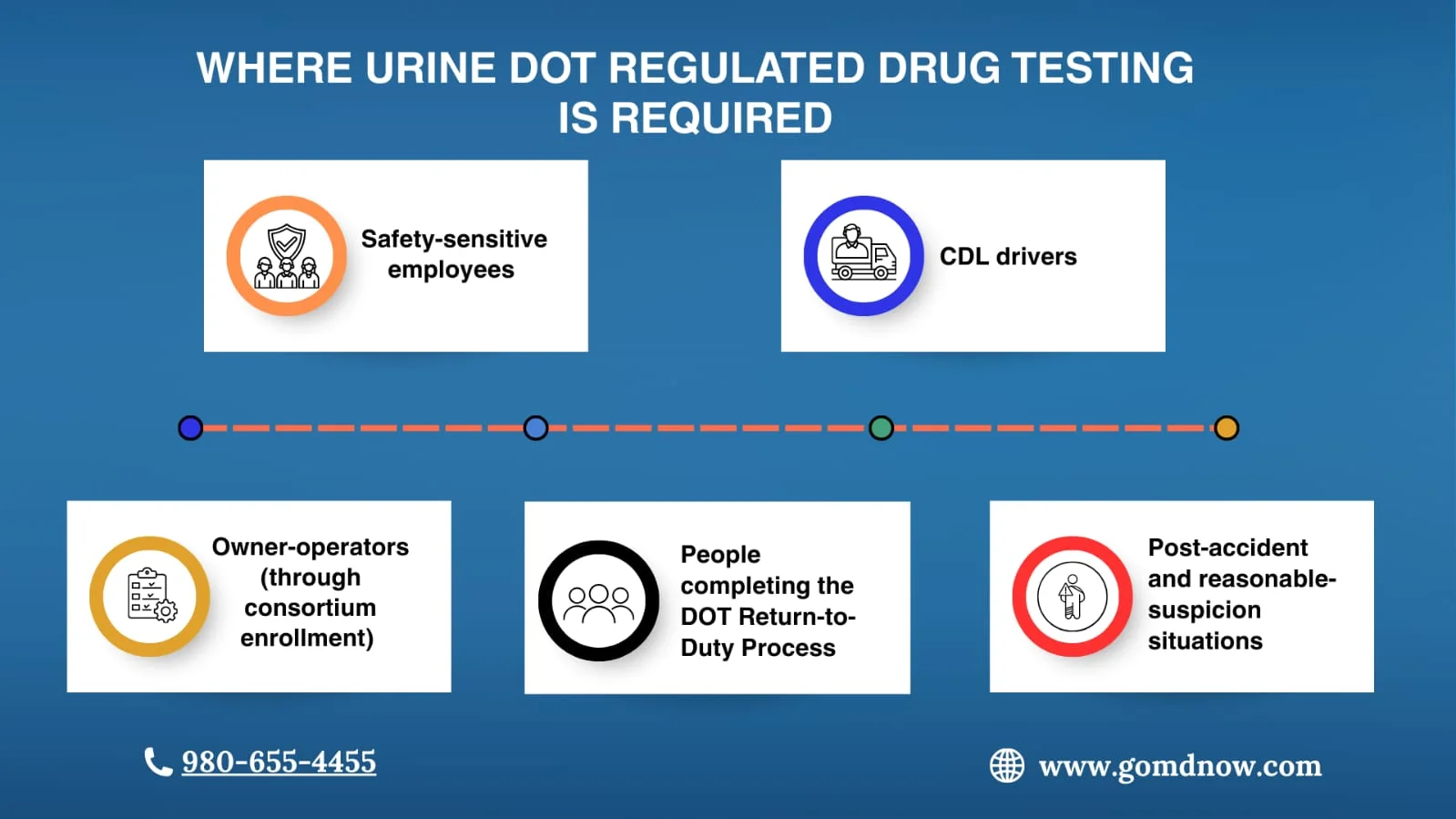
A urine drug test checks for certain controlled substances or their metabolites. In DOT-regulated industries, urine testing is required for:
- Safety-sensitive employees
- CDL drivers
- Owner-operators (through consortium enrollment)
- People completing the DOT Return-to-Duty Process
- Random drug testing pools
- Post-accident and reasonable-suspicion situations
Urine testing is still the only federally approved method until HHS-certified oral fluid labs become fully authorized. Because urine tests are reliable, cost-effective, and follow standard procedures, they remain the preferred method for compliance across all DOT agencies.
What Substances Does DOT Urine Testing Detect? (5-Panel Federal Test)
Under 49 CFR Part 40 Subpart F, the DOT urine drug test checks for five main substance categories:
- THC
- COC
- OPI
- AMP
- PCP
These drugs were chosen because they can impair alertness, judgment, reaction time, and motor coordination skills needed for safety-sensitive work.
For a complete breakdown of what each substance includes and how the screening works, you can read our detailed guide on the 5-Panel DOT Drug Test.
Updated Detection Windows (Based on SAMHSA & Clinical Research)
- THC (Marijuana): 1–30+ days
- Cocaine: 2–4 days
- Amphetamines: 1–4 days
- Opiates/Opioids: 1–3 days
- PCP: Up to 8 days
Knowing detection windows helps employers create strong drug and alcohol policies and helps employees stay compliant with federal rules.
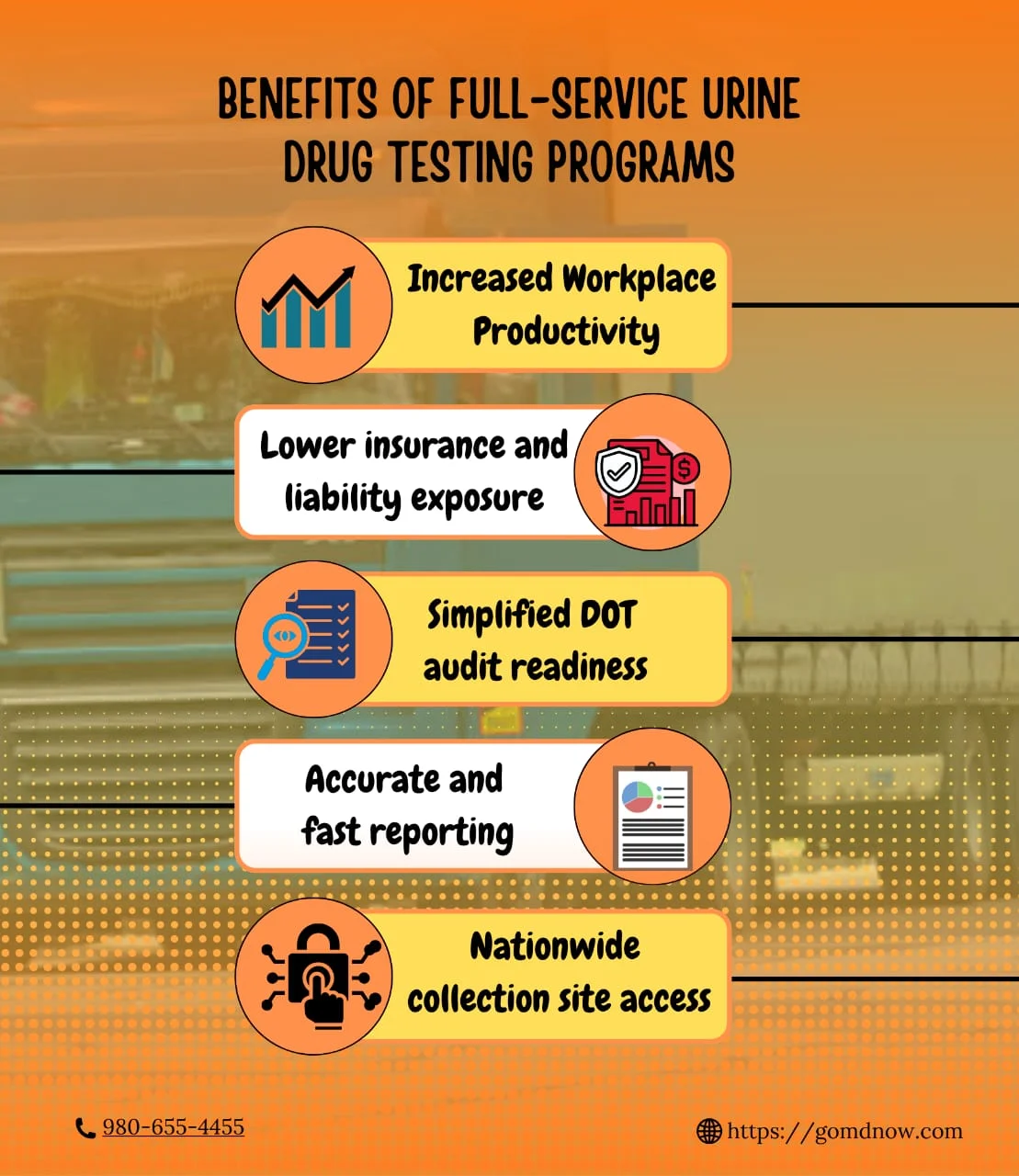
Benefits of Full-Service Urine Drug Testing Programs
- Better workplace safety
- Lower accident risk
- Reduced insurance and liability issues
- Easy DOT audit readiness
- Smooth compliance across all test types
- Access to nationwide collection sites
- Fast and accurate reporting
For drivers and employees, these programs give support and confidence in meeting federal safety rules.
Screening vs. Confirmatory Testing
DOT drug testing uses two scientific steps:
- Initial Screening Test
Shows if a substance may be present.
If the result is negative → the test ends. - Confirmatory Test (GC/MS or LC/MS-MS)
Performed at an HHS-certified lab for all non-negative results.
This ensures accuracy and removes false positives.
Medical Review Officer (MRO) Review
An MRO checks all lab results, contacts the employee if needed, and gives the final verified outcome. This process ensures fairness and compliance.
Understanding the Role of Full-Service Urine Drug Testing Programs
A full-service program like goMDnow provides complete compliance support, including:
- DOT-certified specimen collection
- Chain-of-custody documentation
- HHS-certified lab testing
- MRO review
- FMCSA Clearinghouse reporting
- Random testing management
- Consortium enrollment for owner-operators
- Return-to-duty and follow-up test coordination
This helps employers meet DOT and FMCSA requirements with less stress and paperwork.
Best Practices for Staying Compliant with DOT Urine Drug Testing
Compliance, not “passing,” is the goal. Follow these safe and legal practices:
- Maintain a Healthy Lifestyle
Good rest, hydration, and wellness support safe performance. - Avoid All Prohibited Substances
The only guaranteed way to stay compliant is to avoid illegal drugs and unapproved controlled substances. - Disclose Valid Prescriptions to the MRO
If you take prescriptions, the MRO may verify them during review. - Stay Ready for Random Testing
FMCSA requires a minimum annual random drug testing rate (currently 50%). Owner-operators must join a DOT Consortium. - Follow Federal Procedures During Collection
Tampering, substitution, or dilution leads to violations and RTD procedures.
These practices help maintain safety and compliance.
Conclusion
Full-service urine drug testing is essential for safety and DOT compliance. With federally regulated procedures, certified lab testing, and expert support, drivers and employees in safety-sensitive jobs can stay compliant with 49 CFR Part 40, maintain professional standards, and support safer transportation operations.
Working with a trusted nationwide provider like goMDnow ensures every step from random testing and consortium management to return-to-duty processes is handled correctly, efficiently, and fully aligned with FMCSA and DOT rules.