
Drug testing has long been a topic of debate in workplaces, schools, and regulated industries. Unfortunately, misinformation spreads quickly, leading to confusion and poor decisions. From quick fixes to detox shortcuts, many people believe myths that do not align with scientific evidence. This blog is for informational purposes only and is designed to educate readers about drug testing facts and misconceptions.
Studies show workplace substance misuse costs employers billions annually through lost productivity, healthcare costs, and accidents. Understanding drug testing procedures, accuracy, and compliance is essential for employers, employees, CDL drivers, and safety-sensitive workers.
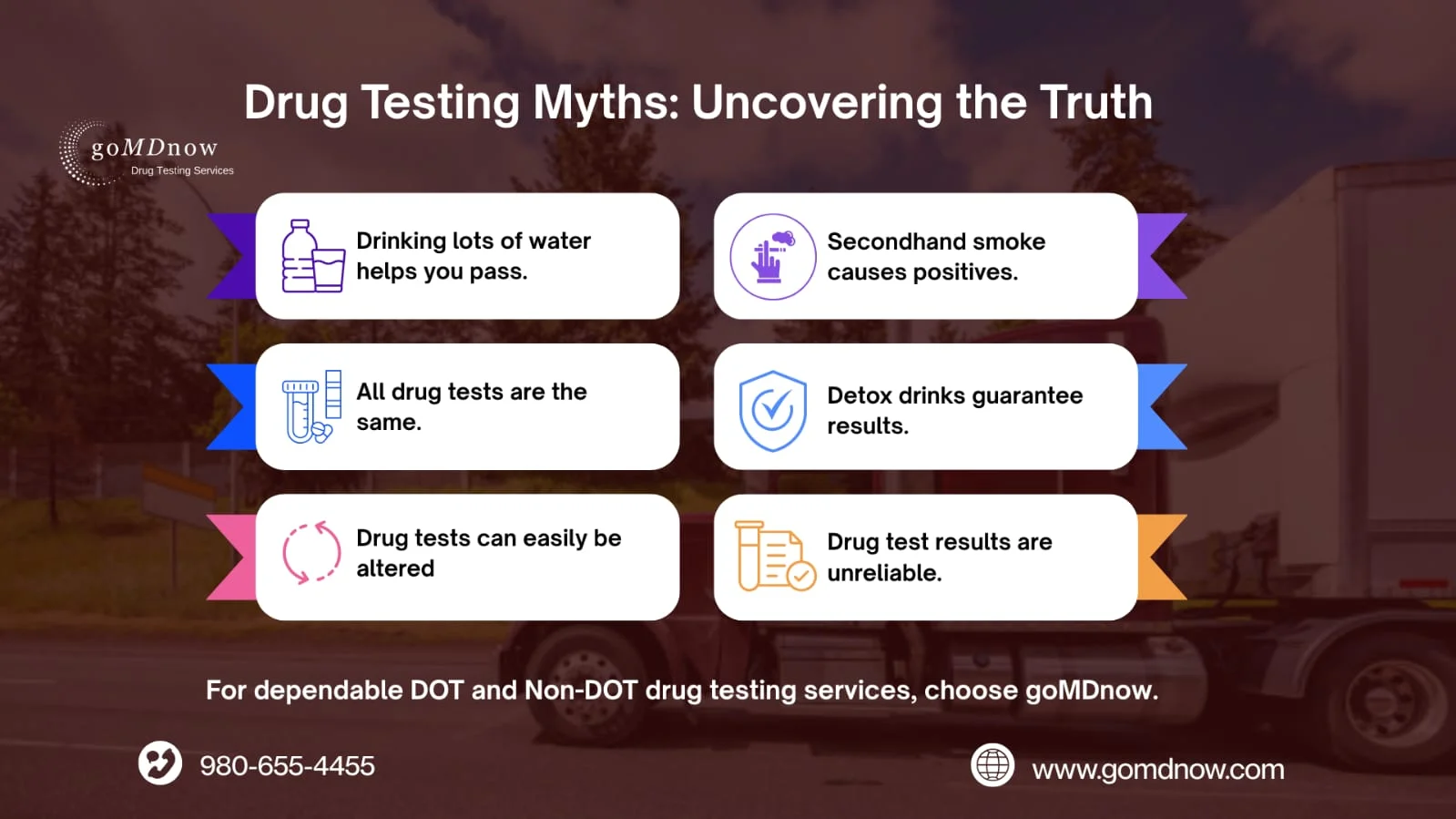
Myth #1: Drinking Lots of Water Will Help You Pass a Drug Test
Fact: Excessive water consumption does not guarantee passing a drug test.
Certified laboratories check creatinine levels, specific gravity, and sample color to detect dilution. A negative dilute result often requires retesting. Overhydration can also pose health risks such as water intoxication.
Myth #2: Secondhand Smoke Can Cause a Failed Drug Test
Fact: Positive results from secondhand exposure are highly unlikely.
Cutoff thresholds are set high enough to prevent positives from incidental exposure. Modern testing identifies intentional substance use rather than passive environmental exposure. Learn more about secondhand smoke and drug testing.
Myth #3: All Drug Tests Are the Same
Fact: Drug testing methods vary widely.
- Urine Test – Common and cost-effective
- Hair Follicle Test – Long detection window
- Saliva Test – Detects recent use
- Blood Test – Highly accurate short window
- Breath Alcohol Test – Alcohol detection
Employers choose testing methods based on safety needs and compliance requirements. Understanding DOT vs non-DOT testing differences is essential.
Myth #4: Detox Products Can Help You Beat a Drug Test
Fact: Most detox products lack scientific validation.
- May cause dehydration
- Can alter urine chemistry
- Often lead to invalid or rejected results
No scientifically proven shortcut exists to bypass proper drug testing. Some individuals even attempt to use synthetic urine, but modern labs can detect these attempts.
Myth #5: You Can Cheat a Drug Test
Fact: Modern labs detect adulteration and substitution.
- Temperature verification
- pH level checks
- Creatinine concentration
- Specific gravity analysis
- Visual inspection
Tampering may lead to serious professional consequences. In DOT-regulated industries, refusing a drug test or attempting to cheat carries severe penalties including immediate removal from safety-sensitive duties.
Myth #6: Drug Tests Are Not Always Accurate
Fact: Drug tests are highly reliable when protocols are followed.
Initial screenings use immunoassay technology. Non-negative samples undergo confirmatory testing such as GC-MS analysis. Medical Review Officer (MRO) confirmatory review ensures accuracy and fairness. Understanding how to interpret drug test results helps employees and employers navigate the testing process.
While false positives are extremely rare with proper confirmatory testing, it's still important to know top reasons for false positive results such as certain medications or foods.
Myth #7: Hair Tests Only Use Head Hair
Fact: Body hair can also be used.
Hair from arms, legs, or chest may be collected if head hair is unavailable. Detection windows may vary slightly due to growth cycles. Hair testing provides one of the longest detection windows available, making it valuable for pre-employment screening.
Myth #8: Legal Substances Won't Affect Your Test
Fact: Some legal substances can cause complications.
For example, poppy seeds can potentially trigger initial positives for opiates (though confirmatory testing distinguishes this). Additionally, vaping products containing THC can cause positive marijuana results even in states where cannabis is legal.
Many people also wonder about CBD vs THC and whether CBD products can cause failed tests. While pure CBD should not cause a positive, many CBD products contain trace amounts of THC that can accumulate with regular use.
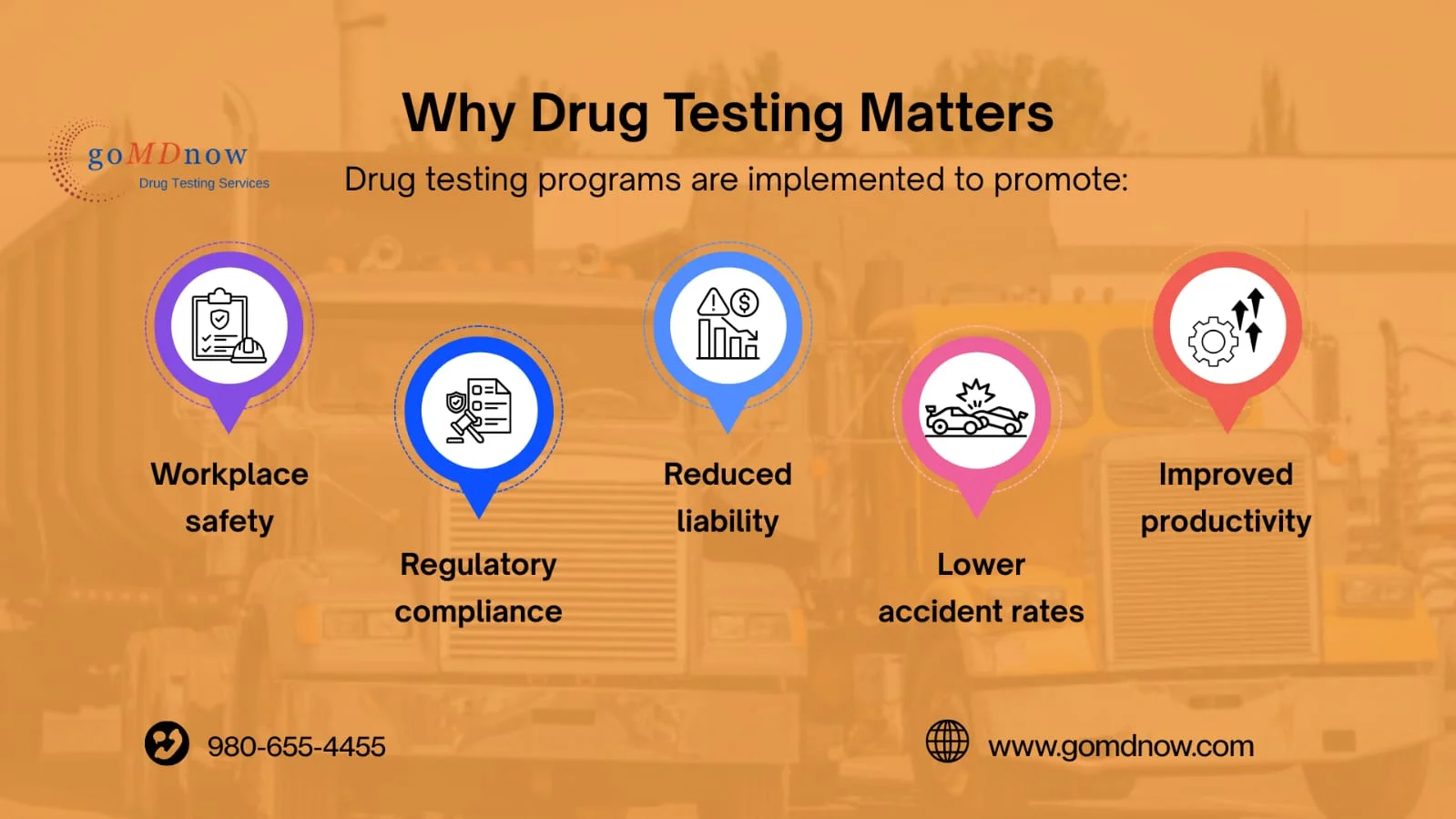
Why Drug Testing Matters
- Improves workplace safety
- Ensures regulatory compliance
- Reduces liability
- Lowers accident risk
- Boosts productivity
In many safety-sensitive industries, drug testing is a regulatory requirement. For DOT-regulated employers, maintaining compliance includes understanding Clearinghouse violations and proper testing procedures. Understanding facts protects employers and employees from misinformation.
Many employers work with a C/TPA to ensure their drug testing program meets all federal requirements and avoids common pitfalls.
Choosing Certified Testing Providers
When selecting a drug testing provider, look for:
- Certified laboratories
- Accurate chain-of-custody procedures
- Professional medical review
- Compliance with DOT workplace standards
- 24/7 support availability
For DOT-regulated testing, providers must follow strict protocols including proper specimen collection. Learn more about specialized procedures like DOT observed collection used in return-to-duty and follow-up testing.
Understanding Different Testing Scenarios
Drug testing occurs in various workplace situations:
- Pre-employment testing – Before starting safety-sensitive work
- Random testing – Unannounced selections throughout the year
- Post-accident testing – After workplace incidents
- Reasonable suspicion testing – When behavior indicates impairment
- Return-to-duty testing – After a violation
Each testing type serves a specific purpose and follows particular protocols. Understanding when and why each test is used helps employees navigate workplace policies and understand their rights.
Frequently Asked Questions
How long do drugs stay detectable?
Detection windows vary by substance and test type. For specific information, see our guide on how long marijuana stays in your system. Typically 1–4 days in urine for most substances, longer for frequent users.
What is a negative dilute result?
A negative test showing excessive dilution; retesting may be required. This occurs when someone drinks excessive water before testing.
Can prescriptions affect results?
Yes, results are reviewed professionally when medications are involved. Learn more about prescription drug use and employer testing.
Are regulated and non-regulated tests the same?
No. DOT tests follow strict federal protocols under 49 CFR Part 40, while non-DOT tests may follow employer-specific policies. The DOT 5-panel test is the federal standard.
What are the cutoff levels for drug tests?
Cutoff levels are specific thresholds that determine positive results. Learn about standard cutoff levels for different substances.
How long does it take to get results?
Timing varies by test type and whether confirmation is needed. Read our guide on how long it takes to get results.
Conclusion
Drug testing myths often create unnecessary confusion. Scientific testing standards ensure fairness, reliability, and safety. Understanding the facts helps individuals and organizations maintain compliance and make informed decisions.
Whether you're an employer implementing a drug-free workplace policy, a CDL driver navigating random consortium requirements, or an employee preparing for testing, accurate information is essential.
At goMDnow, we provide comprehensive drug testing services backed by certified laboratories, professional MRO review, and full DOT compliance support. Contact us today to learn how we can support your testing needs with accurate, reliable, and legally defensible results.