
Phencyclidine (PCP) is one of the five substances mandated for testing under the federal DOT drug testing program — and one of the least understood. While PCP use is less common than other substances on the panel, a positive PCP result carries the same serious career and compliance consequences as any other DOT violation. For CDL drivers, employers, and anyone subject to federal DOT drug testing requirements, understanding how PCP is detected, how long it stays in the system, and — critically — what medications can cause a false positive result is essential.
What Is Phencyclidine (PCP)?
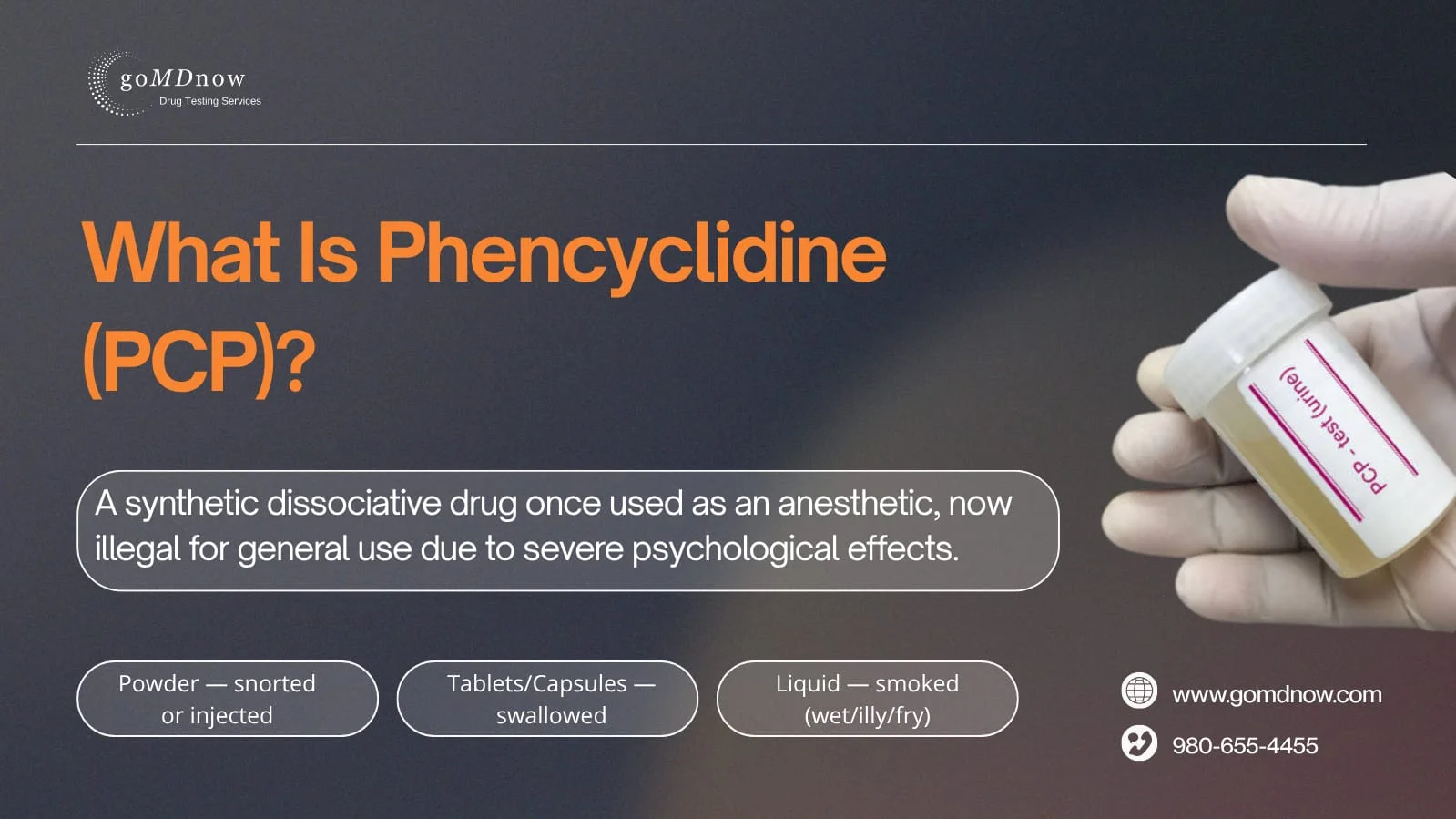
Phencyclidine (PCP) is a synthetic dissociative drug originally developed as an anesthetic in the 1950s. Due to its severe psychological side effects, it was discontinued for human medical use and later classified as a Schedule II controlled substance — meaning it is illegal in the United States except under tightly controlled research conditions.
PCP comes in several physical forms:
- White crystalline powder — typically snorted or dissolved and injected
- Tablets or capsules — taken orally
- Liquid — used to dip or spray marijuana cigarettes, a method sometimes called smoking "wet," "illy," or "fry"
PCP is known by several street names including Angel Dust, Embalming Fluid, Rocket Fuel, Ozone, Wack, Hog, Super Grass, Killer Weed, and Peace Pill.
How PCP Affects the Body
PCP is a dissociative hallucinogen that acts on multiple neural pathways — including cholinergic, adrenergic, serotonergic, and opioid receptors. Its effects vary significantly based on dosage, producing stimulant effects at low doses and severe dissociative, anesthetic effects at high doses.
Common effects include:
- Euphoria and a distorted sense of time and space
- Dissociation — a profound feeling of detachment from oneself and reality
- Hallucinations and distorted sensory perceptions
- Increased alertness and energy at low doses
- Numbness and decreased perception of pain
- At high doses: catatonia, violent behavior, psychosis, seizures, coma, and death from convulsions or heart and lung failure
Long-term PCP use can produce symptoms that closely resemble schizophrenia and other psychotic disorders — making it particularly dangerous and one of the more difficult drugs of abuse to clinically distinguish from mental health conditions without drug testing.
Signs and Symptoms of PCP Abuse
Identifying PCP abuse can be challenging since its symptoms overlap with several mental health conditions. Drug testing remains the most reliable method for accurate detection.
Physical Symptoms
- Profuse sweating
- Dilated pupils
- Increased heart rate and blood pressure
- Fluctuations in body temperature
- Impaired speech and motor coordination
- Rapid, involuntary eye movements (nystagmus)
Behavioral and Psychological Signs
- Delusional or paranoid thinking
- Episodes of aggression or violence
- Disorientation and confusion
- Distorted sense of time, space, and body image
- Extreme mood swings
- Symptoms resembling acute psychosis or schizophrenia
How Long Does PCP Stay in Your System?
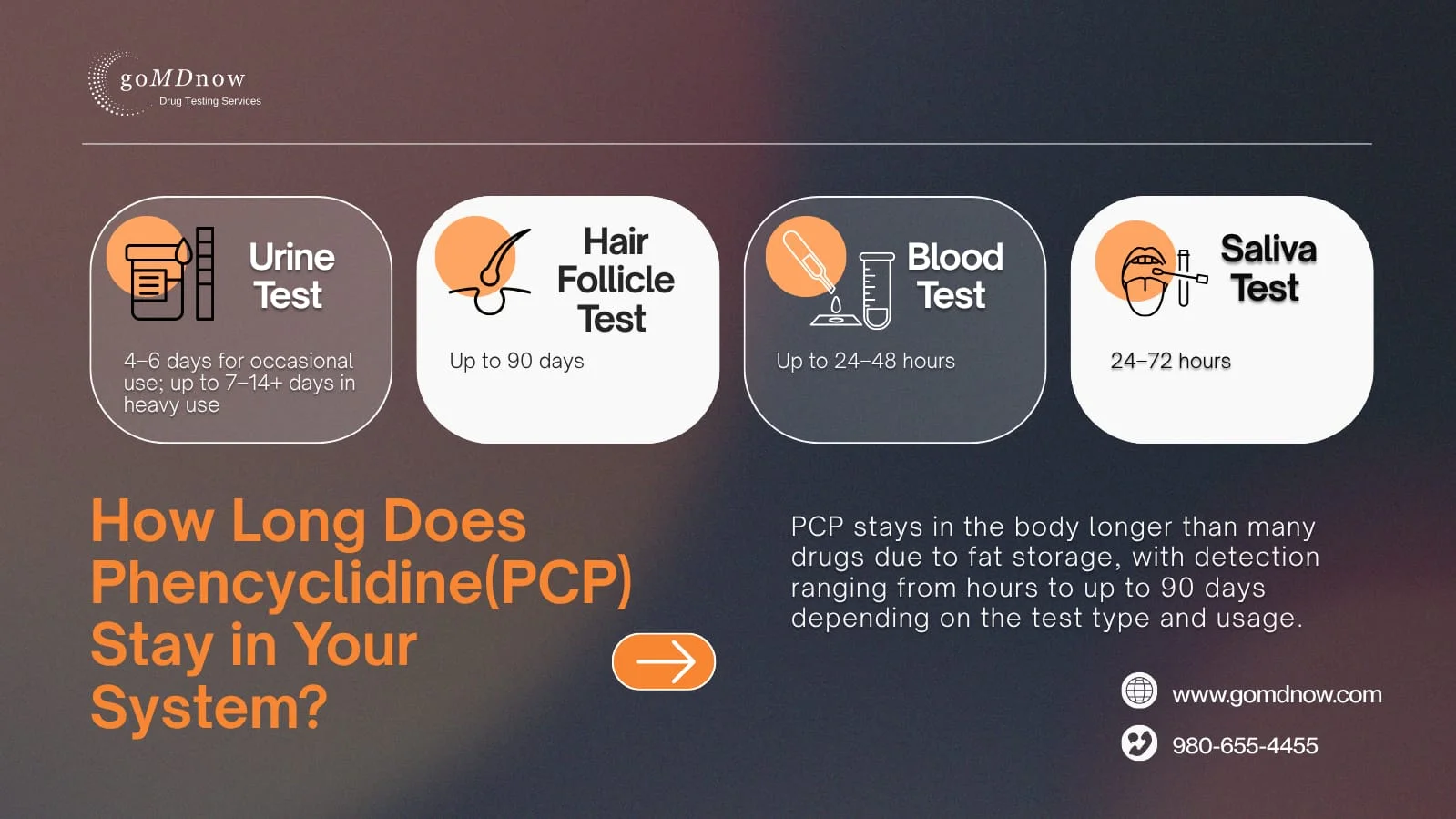
PCP is a fat-soluble substance — it concentrates in fatty tissues and the brain, which significantly extends how long it remains detectable compared to water-soluble drugs. The half-life of PCP ranges from 7 to 46 hours depending on individual metabolism, meaning it takes considerably longer to fully clear than most stimulants or opioids.
An important technical note: urine pH significantly affects PCP detection. Acidic urine accelerates PCP excretion and can shorten the detection window. Alkaline urine slows excretion and can extend it. For this reason, certified labs always record urine pH alongside specimen validity markers — and PCP may be undetectable in highly alkaline samples even when the drug is present.
Urine Test (DOT Standard)
Urine testing is the only specimen type currently approved for DOT drug testing and is the most effective method for detecting PCP. Detection windows:
- Single or occasional use: 4–6 hours after ingestion, remaining detectable for approximately 4–6 days
- Chronic or heavy use: up to 7–14 days or longer due to accumulation in fatty tissues
The DOT cutoff level for PCP in urine is 25 ng/mL on initial immunoassay screening, confirmed by GC-MS at the same threshold. All testing must be conducted through a SAMHSA-certified laboratory and reviewed by a Medical Review Officer (MRO).
Hair Follicle Test
Hair testing extends the detection window to up to 90 days, making it valuable for identifying historical or chronic PCP use. PCP and its metabolites become trapped in hair follicles as the hair grows and remain detectable for the lifetime of that hair segment. Learn about hair drug testing services and how they differ from urine testing.
Blood Test
PCP is detectable in blood within 2 hours of use but has a relatively short blood detection window of up to 24–48 hours. Blood testing is primarily used in emergency or forensic settings, not routine workplace screening.
Saliva Test
Saliva testing can detect PCP within minutes of use and remains detectable for approximately 24–72 hours. The DOT authorized oral fluid testing as an alternative to urine in May 2023, and as this method is implemented, its non-invasive nature and observed collection make it increasingly valuable for workplace programs. Explore urine and alternative drug testing options.
PCP False Positives: Medications That Can Trigger a Positive Result
This is one of the most clinically important — and least publicized — facts about PCP drug testing. PCP has a notably higher rate of false positive results compared to other substances on the standard drug panel. The initial immunoassay screening test uses antibodies that can cross-react with structurally similar compounds found in several common prescription and over-the-counter medications.
Medications confirmed to cause false positive PCP results on urine immunoassay screens include:
- Dextromethorphan (DXM) — found in common OTC cough suppressants including Robitussin, Mucinex DM, Delsym, and Theraflu. One of the most frequently documented causes of false positive PCP results
- Tramadol — a commonly prescribed pain medication; strongly associated with false positive PCP screens in clinical studies
- Venlafaxine (Effexor) and desvenlafaxine (Pristiq) — SNRI antidepressants; multiple published case reports confirm cross-reactivity with PCP immunoassay screens. The FDA warns that false positive PCP results can occur even several days after discontinuing venlafaxine
- Diphenhydramine (Benadryl) — a common OTC antihistamine and sleep aid
- Alprazolam (Xanax) and clonazepam (Klonopin) — benzodiazepines associated with false positive PCP screens particularly in clinical studies
- Ibuprofen — common OTC anti-inflammatory
- Lamotrigine (Lamictal) — an anticonvulsant/mood stabilizer; documented in published case reports
- Ketamine — a related dissociative anesthetic
- Carvedilol — a beta-blocker used for heart conditions
If you are taking any of these medications and face a workplace drug test, it is critical to disclose them to the testing provider. If an initial screen returns positive, the sample is sent for GC-MS confirmatory testing — which is highly specific and will distinguish true PCP from cross-reacting medications. See a full guide to false positive drug test causes and how the MRO verification process protects employees.
PCP Drug Testing in the Workplace
PCP is one of the five substances required by the DOT for all safety-sensitive employee testing. It is included in the mandatory DOT 5-panel urine drug test administered for all FMCSA-regulated CDL drivers across all six required testing categories: pre-employment, random, post-accident, reasonable suspicion, return-to-duty, and follow-up testing.
Non-DOT employers can also include PCP in expanded workplace drug panels. Learn about the difference between DOT and Non-DOT drug testing programs and how to choose the right panel for your workplace. Understand the standard cutoff levels used for all DOT substances.
DOT Consequences for a Positive PCP Test (CDL Drivers)
For CDL drivers and DOT safety-sensitive employees, a confirmed positive PCP result carries the same consequences as any other DOT violation — regardless of how rare or unusual the substance may seem:
- Immediate removal from safety-sensitive duties — effective from the moment the confirmed result is reported
- Reported to the FMCSA Drug and Alcohol Clearinghouse — permanently recorded and visible to all future DOT-regulated employers. Learn about Clearinghouse violations and long-term career impact
- CDL downgrade — as of November 18, 2024, unresolved Clearinghouse violations trigger automatic CDL downgrades through SDLA integration
- Mandatory SAP evaluation and treatment program
- Return-to-duty drug test required with a negative result before resuming safety-sensitive functions
- Minimum 6 unannounced follow-up tests over the first 12 months, up to 60 months total
Employers must verify Clearinghouse status before hiring any CDL driver. Review the full list of DOT violations and their consequences to ensure your compliance program covers all required scenarios.
Frequently Asked Questions (FAQs)
1. Is PCP included in the standard DOT drug test?
Yes. PCP (Phencyclidine) is one of the five substances mandated by the DOT for all safety-sensitive employee testing. It is included in every DOT 5-panel urine drug test alongside marijuana, cocaine, amphetamines, and opioids.
2. How long does PCP stay in your urine?
For occasional users, PCP is detectable in urine for approximately 4–6 days. For chronic or heavy users, detection windows extend to 7–14 days or longer due to PCP's accumulation in fatty tissues. The half-life of PCP ranges from 7 to 46 hours.
3. Can common medications cause a false positive PCP test?
Yes — PCP has one of the highest false positive rates of any substance on the standard drug panel. Medications documented to cause false positives include dextromethorphan (found in OTC cough syrups), tramadol, venlafaxine, diphenhydramine, ibuprofen, lamotrigine, and several others. All positive initial screens must be confirmed by GC-MS testing, which eliminates virtually all false positives.
4. What is the DOT cutoff level for PCP?
The DOT cutoff level for PCP is 25 ng/mL on both initial immunoassay screening and GC-MS confirmation. The full list of DOT cutoff thresholds covers all five panel substances.
5. What should I do if I think my PCP test result is a false positive?
Immediately disclose all prescription and OTC medications to the Medical Review Officer (MRO) reviewing your result. You also have the right to request a split-specimen GC-MS retest within 72 hours of MRO notification. GC-MS testing is highly specific and will distinguish a cross-reacting medication from actual PCP use.
6. How does urine pH affect PCP detection?
PCP excretion is pH-dependent. Acidic urine accelerates PCP elimination and can shorten the detection window. Alkaline urine slows excretion and may extend detection, but can also cause PCP to become undetectable in some cases. Certified labs always record urine pH as part of the specimen validity process.
7. What happens to a CDL driver who tests positive for PCP?
The driver is immediately removed from safety-sensitive duties, the violation is reported to the FMCSA Clearinghouse, and the CDL may be downgraded. The driver must complete the full Return-to-Duty process including SAP evaluation, treatment, a negative RTD test, and a minimum of 6 follow-up tests before returning to safety-sensitive work.
Final Thoughts
PCP may be one of the less commonly encountered substances in workplace drug testing, but its inclusion in the mandatory DOT 5-panel means every CDL driver and safety-sensitive employee needs to understand how it is detected and what a positive result means. Two facts stand out above all others: PCP's fat-solubility makes it detectable for significantly longer than its effects last, and its high false positive rate from common OTC medications makes proper MRO review and GC-MS confirmation essential before any employment action is taken.
PCP testing violations are also a recognized tool for drug abusers who dip marijuana cigarettes in liquid PCP — a practice that means a "marijuana" user may unexpectedly test positive for PCP as well. This underscores why comprehensive, professionally managed testing programs matter.
goMDnow provides nationwide DOT-compliant drug testing including full 5-panel urine testing, hair testing, and instant testing options through a network of 25,000+ certified collection sites. If your drivers or employees are in safety-sensitive roles, make sure your testing program is airtight — explore our drug testing pricing or contact our compliance team today.