
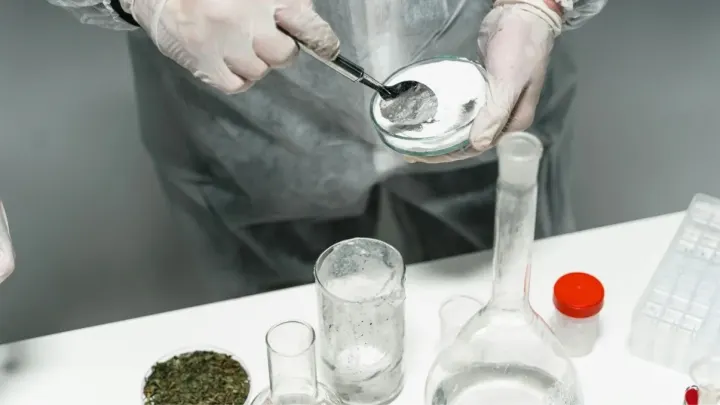
Cocaine remains one of the five substances tested in every DOT-mandated drug screening and for good reason. As a powerful stimulant with a high potential for abuse, cocaine poses serious safety risks in any workplace, but especially in transportation and other safety-sensitive industries. Whether you are a CDL driver, an employer managing a drug-free workplace program, or simply looking to understand how cocaine drug testing works, this guide covers everything you need to know in 2026.
What Is Cocaine?
Cocaine is a powerful stimulant drug primarily extracted from the coca plant, which is mainly found in South America. Due to its highly addictive nature, cocaine is classified as a Schedule II controlled substance under the Controlled Substances Act meaning it is illegal in the United States except when used for specific medical purposes by licensed health professionals.
Cocaine comes in two main chemical forms:
- Cocaine hydrochloride — a fine white powder that is typically snorted or dissolved and injected
- Crack cocaine — a freebase crystallized form that is smoked, producing a faster and more intense but shorter-lasting effect
Cocaine is also commonly known by street names including Coke, Snow, Rock, Blow, and Crack.
How Cocaine Affects the Body
After being ingested, cocaine rapidly enters the bloodstream and alters brain chemistry by blocking the reuptake of dopamine a neurotransmitter associated with pleasure and reward. This causes dopamine to accumulate in the brain's reward circuits, producing an intense but short-lived euphoric state.
The high from cocaine typically lasts only 5–30 minutes depending on the method of use, after which the brain's dopamine levels drop sharply leading to a crash characterized by depression, anxiety, and intense cravings for more of the drug. This cycle is a primary driver of cocaine's highly addictive nature.
An important and often overlooked danger: combining cocaine with alcohol produces a third substance called cocaethylene in the liver. Cocaethylene extends the euphoric effects but significantly increases the cardiovascular risks raising the risk of sudden death from cardiac events compared to cocaine use alone.
Short-Term Side Effects
- Intense euphoria and increased energy
- Reduced appetite
- Dilated pupils
- Increased heart rate and blood pressure
- Heightened alertness
- Anxiety and paranoia
- Increased irritability
Long-Term Side Effects
- Cardiovascular disease, heart attack, and stroke
- Respiratory disorders (especially with crack cocaine)
- Liver and kidney disease
- Severe depression and mental health disorders
- Chronic nosebleeds, loss of smell, and nasal tissue damage (from snorting)
- Disturbed sleep patterns
- Cognitive impairment and memory problems
- Risk of HIV or hepatitis through shared needles
- Seizures and cocaine overdose
- Sexual dysfunction
How Long Does Cocaine Stay in Your System?
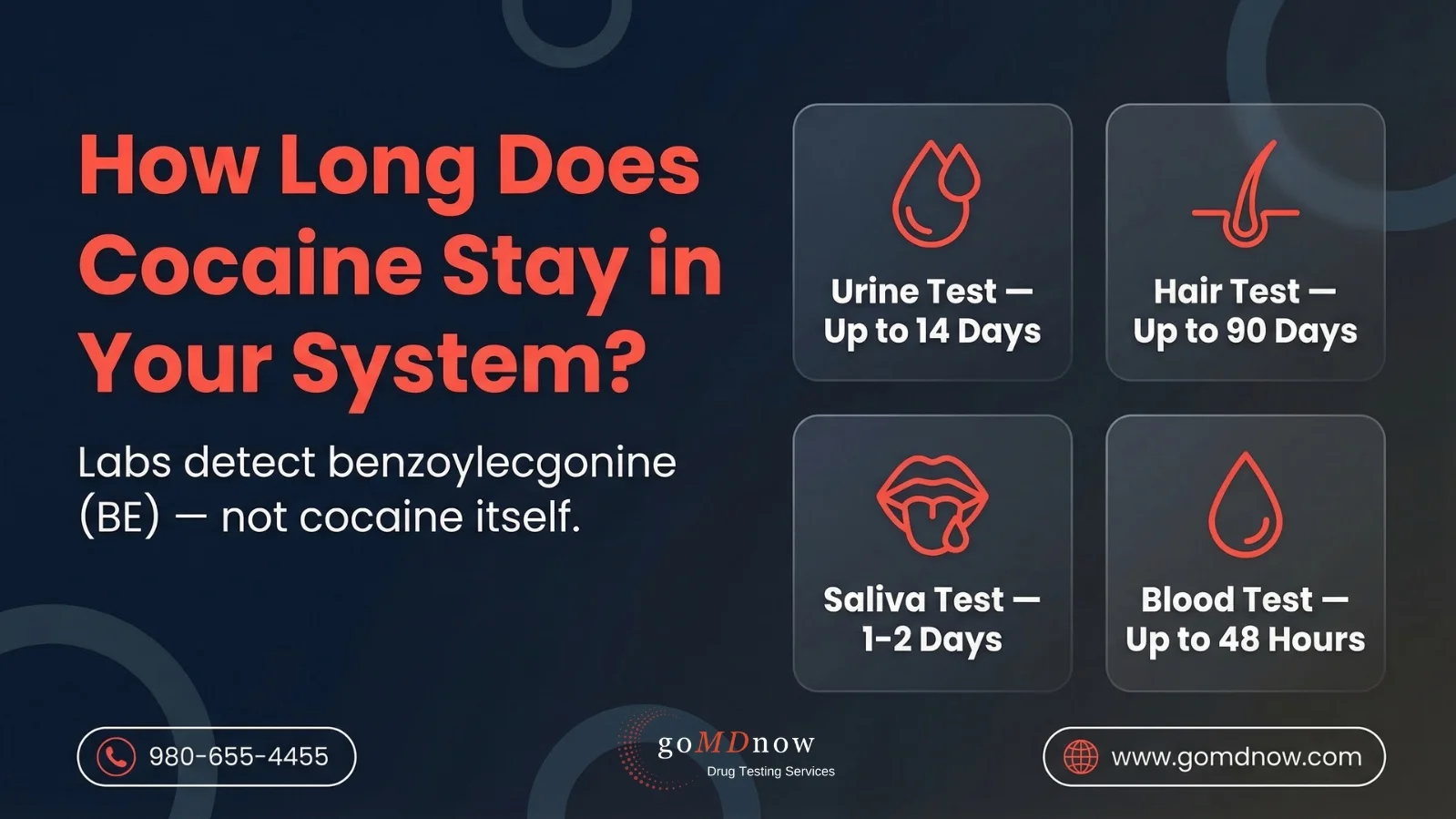
One of the most important things to understand about cocaine drug testing is that standard drug tests do not detect cocaine itself they detect its primary metabolite, benzoylecgonine (BE). After cocaine is consumed, the liver rapidly breaks it down, and benzoylecgonine is produced as a byproduct. Because BE has a much longer half-life than cocaine itself, it remains detectable in the body long after the effects of cocaine have worn off.
The half-life of cocaine itself is approximately 1.5 hours meaning the drug is largely cleared from the bloodstream within several hours. However, benzoylecgonine can remain detectable in urine for up to 4.5 days after a single use, and significantly longer for heavy or chronic users.
Detection windows by test type:
Urine Test (DOT Standard)
Urine testing is the most common workplace method and the only specimen type currently approved for DOT drug testing. Detection windows vary based on frequency of use:
- Single/occasional use: 2–4 days
- Moderate regular use: 5–7 days
- Heavy/chronic use: up to 14 days or longer
The DOT cutoff level for cocaine metabolite (benzoylecgonine) is 150 ng/mL on initial screening and 100 ng/mL on confirmatory GC-MS testing. Learn about all standard DOT drug test cutoff levels.
Hair Follicle Test
Hair testing provides the longest detection window up to 90 days for cocaine metabolites regardless of frequency of use. Hair tests are valuable for identifying chronic or historical patterns of use but cannot detect very recent use (within the first 7–10 days). Learn more about hair drug testing services.
Blood Test
Cocaine itself is detectable in blood for only 12–24 hours. Benzoylecgonine can be detected in blood for up to 48 hours. Blood testing is primarily used in medical emergencies and accident investigations not in routine workplace screening.
Saliva Test
Saliva testing detects cocaine for approximately 1–2 days after last use. Saliva tests are non-invasive and difficult to tamper with since collection is observed. The DOT authorized oral fluid testing as an alternative to urine in January 2025, though widespread implementation is pending final lab certification requirements.
Factors That Affect How Long Cocaine Is Detectable
Detection windows are not fixed — several individual and behavioral factors influence how long cocaine and its metabolites remain in the system:
- Frequency and dose — occasional use clears faster; heavy chronic use causes metabolite accumulation
- Method of use — smoking crack cocaine produces faster onset and clearance than snorting; injecting delivers the highest bioavailability
- Individual metabolism — liver function, age, body weight, and hydration all affect elimination rate
- Body fat percentage — cocaine metabolites can bind to fatty tissue, extending detection in heavier individuals
- Kidney and liver health — impaired organ function slows cocaine metabolism and extends detection windows
- Concurrent alcohol use — combining cocaine with alcohol produces cocaethylene, which has a longer half-life than cocaine and can extend the overall detection window
Cocaine Drug Testing for Workplace Safety
Cocaine is one of the five substances included in the mandatory DOT 5-panel urine drug test, which all FMCSA-regulated employers must administer for:
- Pre-employment testing
- Random testing
- Post-accident testing
- Reasonable suspicion testing
- Return-to-duty testing
- Follow-up testing
All DOT cocaine testing must be processed through a SAMHSA-certified laboratory and reviewed by a Medical Review Officer (MRO) before any result is reported to the employer.
Non-DOT employers may choose their own panel. Companies that want broader coverage can opt for an expanded panel beyond the standard 5. Learn about the difference between DOT and Non-DOT drug testing programs.
DOT Consequences for a Positive Cocaine Test (CDL Drivers)
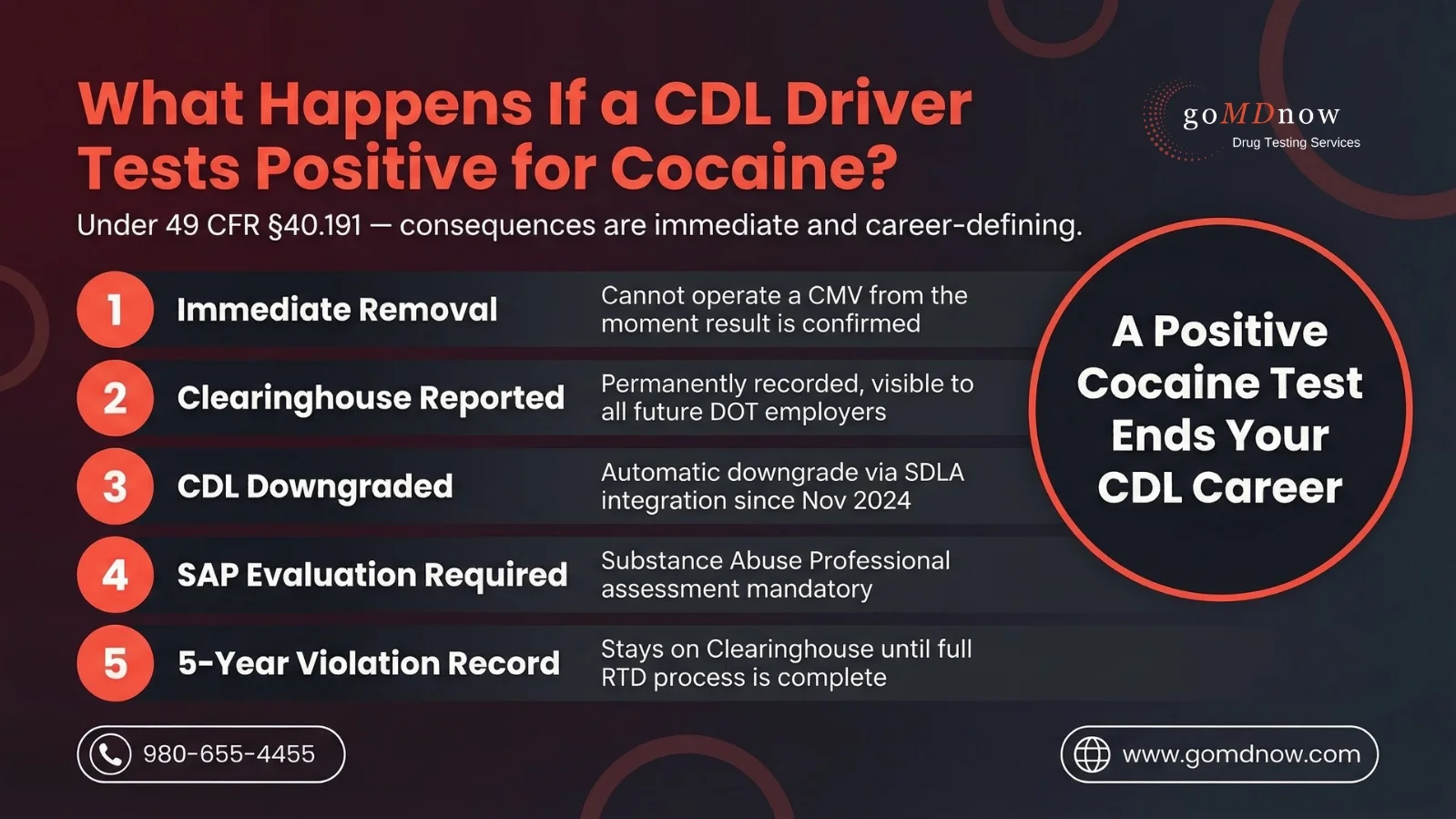
For CDL drivers, a confirmed positive cocaine test has immediate and serious career consequences under DOT regulations:
- Immediate removal from safety-sensitive duties — the driver cannot operate a CMV from the moment the result is confirmed
- Reported to the FMCSA Drug and Alcohol Clearinghouse — permanently recorded and visible to all future DOT-regulated employers. Learn about Clearinghouse violations and their long-term impact
- CDL downgrade — as of November 18, 2024, unresolved Clearinghouse violations trigger automatic CDL downgrades through full SDLA integration
- Mandatory SAP evaluation — the driver must be evaluated by a DOT-qualified Substance Abuse Professional
- Return-to-Duty drug test required — must pass a return-to-duty drug test with a negative result before resuming safety-sensitive duties
- Follow-up testing program — minimum 6 unannounced tests over the first 12 months, up to 60 months
- Violation stays on Clearinghouse for 5 years — or until the RTD process is completed, whichever is longer
Employers must check the FMCSA Drug and Alcohol Clearinghouse before hiring any CDL driver. Failing to do so is itself a federal violation. Review the full list of DOT violations employers must avoid.
Can a Cocaine Drug Test Produce a False Positive?
False positives for cocaine are rare but can occur, particularly with rapid point-of-care immunoassay tests. When an initial screening returns a positive result, the sample is sent to a certified laboratory for confirmatory testing using Gas Chromatography-Mass Spectrometry (GC-MS) which is highly specific and virtually eliminates the possibility of a false positive being confirmed.
If you believe a result is incorrect, you have the right to request a split-specimen retest within 72 hours of MRO notification. See what commonly causes false positive drug test results and how to address them through the MRO process.
Frequently Asked Questions (FAQs)
1. What does a cocaine drug test actually detect?
Standard drug tests do not detect cocaine itself they detect benzoylecgonine (BE), the primary metabolite produced when the liver breaks down cocaine. Because BE has a much longer half-life than cocaine, it remains detectable in urine long after the effects of cocaine have worn off.
2. How long does cocaine show up on a urine drug test?
For occasional users, cocaine metabolites are detectable in urine for 2–4 days. For regular users, 5–7 days. For heavy chronic users, up to 14 days or longer. These windows vary based on metabolism, body weight, hydration, and frequency of use.
3. Is cocaine tested on the DOT 5-panel drug test?
Yes. Cocaine is one of the five mandatory substances in the DOT 5-panel urine drug test required for all FMCSA-regulated CDL drivers. A positive result carries immediate career consequences including Clearinghouse reporting and CDL downgrade.
4. What happens to a CDL driver who tests positive for cocaine?
They are immediately removed from safety-sensitive duties, the violation is reported to the FMCSA Clearinghouse, their CDL may be downgraded, and they must complete the full Return-to-Duty process including SAP evaluation, treatment, a negative RTD test, and minimum 6 months of follow-up testing before returning to work.
5. Can cocaine be detected in a hair follicle test?
Yes. Hair follicle testing can detect cocaine use for up to 90 days. It is particularly useful for identifying patterns of chronic use but cannot detect very recent use within the first 7–10 days.
6. Can a false positive cocaine test occur?
False positives on the initial immunoassay screen are rare but possible. All positive initial results must be confirmed by GC-MS testing at a SAMHSA-certified lab before any action is taken which eliminates virtually all false positives. If you believe your result is incorrect, request a split-specimen retest within 72 hours of MRO notification.
7. Does combining cocaine with alcohol affect drug test results?
Yes indirectly. Combining cocaine with alcohol produces cocaethylene, a metabolite with a longer half-life than cocaine itself. This can extend the overall detection window slightly and significantly increases cardiovascular risks.
Final Thoughts
Cocaine drug testing is a critical component of DOT compliance and workplace safety programs. For CDL drivers, the consequences of a positive cocaine test are severe and long-lasting including immediate removal from duty, Clearinghouse reporting, CDL downgrade, and a mandatory return-to-duty process. For employers, understanding how cocaine is detected, what the testing process involves, and how to maintain a compliant testing program is essential to protecting both their workforce and their operation.
goMDnow provides nationwide cocaine drug testing and full DOT compliance solutions, with access to 20,000+ certified testing centers. Whether you need a single test or a complete program, explore our drug testing pricing or contact us today.