
When employers search for drug testing services, one common point of confusion is the difference between a C/TPA and a drug testing clinic. At first glance, both seem to offer similar services related to workplace drug testing. However, their roles, responsibilities, and importance especially for DOT-regulated businesses are very different.
Understanding CTPA vs drug testing is essential for employers who want to stay compliant, avoid penalties, and protect their workforce. Choosing the wrong option or assuming one replaces the other can lead to serious compliance issues.
This blog explains what a C/TPA drug testing service is, what a drug testing clinic does, and why many businesses need both.
What Is a Drug Testing Clinic?
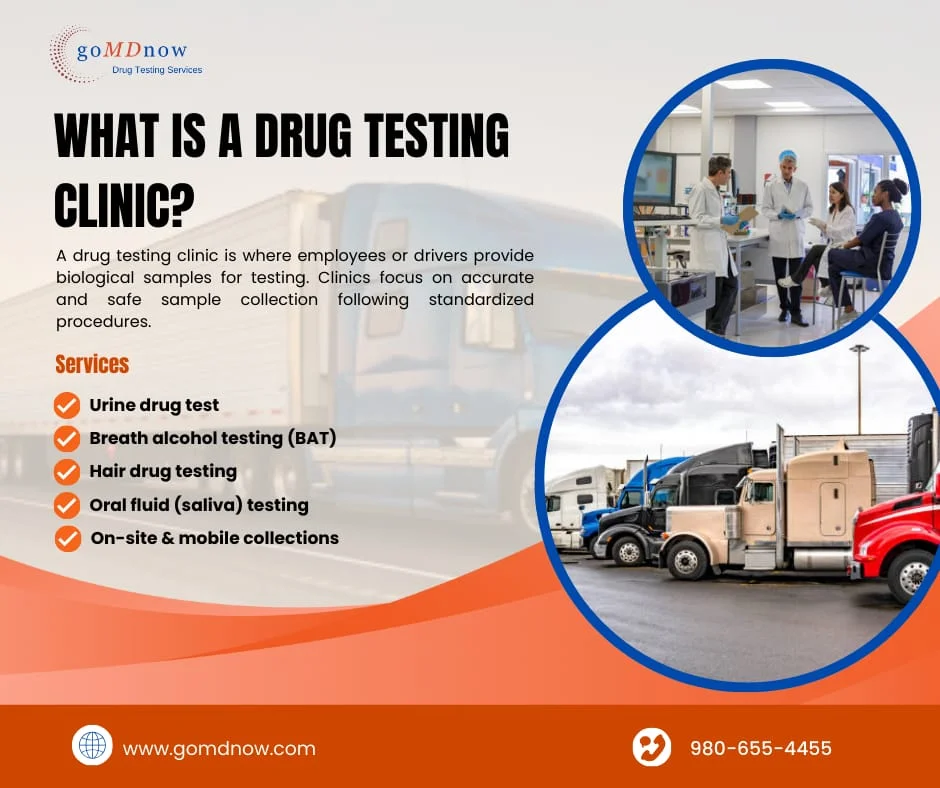
A drug testing clinic is a physical location where employees or drivers go to provide biological samples for testing. Clinics focus strictly on sample collection, following standardized procedures.
Services Provided by a Drug Testing Clinic
Drug testing clinics typically handle:
- Urine drug test collections
- Breathe alcohol testing (BAT)
- Hair drug testing
- Oral fluid (saliva) testing
- On-site or mobile collections (in some cases)
Once the sample is collected, it is sent to a certified laboratory for analysis. The clinic’s role usually ends there.
Limitations of a Drug Testing Clinic
A drug testing clinic does not:
- Manage your drug and alcohol testing program
- Run DOT-compliant random testing programs
- Track testing requirements or deadlines
- Maintain compliance records
- Prepare your company for DOT audits
- Act as an employer representative
This is where many employers misunderstand the process. Clinics provide an important service, but they do not manage compliance.
What Is a C/TPA in Drug Testing?
To fully understand what is a CTPA drug testing, think of a C/TPA as the administrator of your entire drug and alcohol testing program.
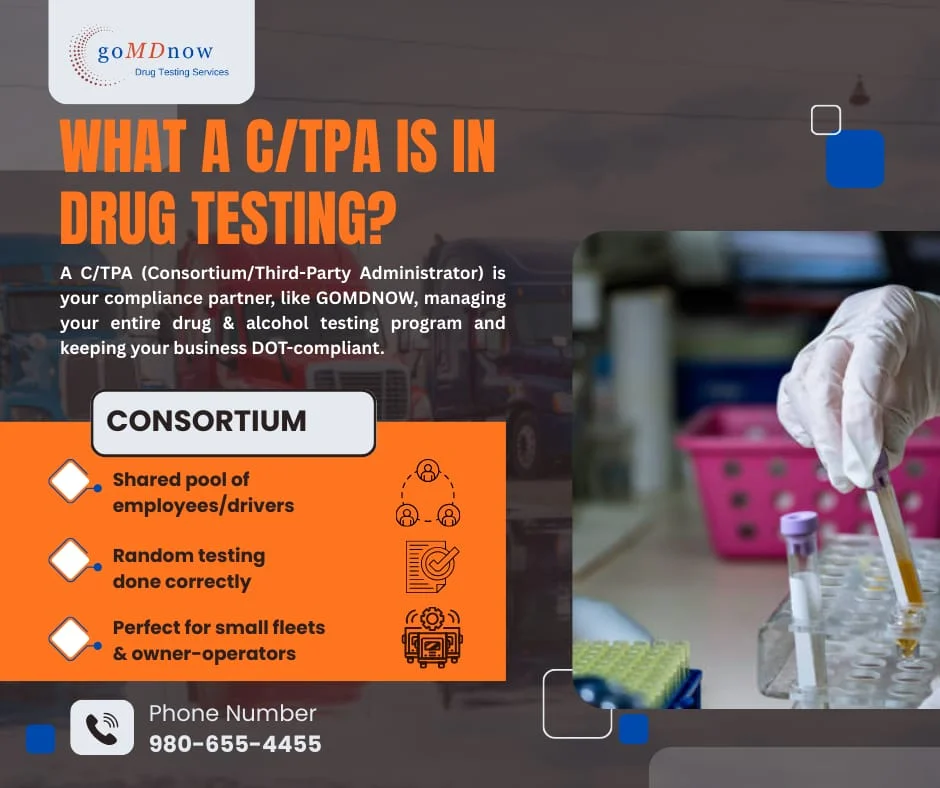
A C/TPA (Consortium/Third-Party Administrator) is responsible for overseeing, managing, and maintaining compliance with federal or DOT drug testing regulations on behalf of employers.
Consortium Third Party Administrator Explained
Consortium
A consortium is a shared pool of employees or drivers from multiple companies. This is especially important for:
- Owner-operators
- Small trucking companies
- Employers with few safety-sensitive employees
DOT regulations require random drug testing, even if you have only one driver. A consortium ensures that random selections are scientifically valid and compliant.
Third-Party Administrator
The third-party administrator manages all administrative tasks related to drug and alcohol testing, including:
- Random testing selections
- Pre-employment testing coordination
- Post-accident testing guidance
- Reasonable suspicion testing procedures
- Return-to-Duty and Follow-Up testing
- Recordkeeping and reporting
In simple terms, a C/TPA ensures your testing program runs correctly and legally from start to finish.
C/TPA vs Drug Testing Clinic: Key Differences
Scope of Responsibility
- Drug Testing Clinic: Collects samples only
- C/TPA: Manages the full drug and alcohol testing program
Compliance Oversight
- Clinic: No responsibility for regulatory compliance
- C/TPA: Ensures DOT and federal compliance
Random Drug Testing
- Clinic: Cannot manage random testing programs
- C/TPA: Conducts and documents compliant random selections
Audit Support
- Clinic: Does not provide audit documentation
- C/TPA: Maintains records required for DOT audits
Employer Representation
- Clinic: Neutral service provider
- C/TPA: Acts on behalf of the employer for program management
This difference is why employers searching for CTPA vs drug testing often realize they need more than just a clinic visit.
Why a Drug Testing Clinic Alone Is Not Enough
Many employers believe that sending employees to a clinic automatically means they are compliant. Unfortunately, this is not true especially for DOT-regulated companies.
DOT compliance requires:
- Enrollment in a random testing consortium
- Documented random selections
- Accurate recordkeeping
- Medical Review Officer (MRO) verification
- Proper handling of positive results
A clinic cannot provide these services. Without a C/TPA, your business may fail a DOT audit even if every test was collected correctly.
Why Most Employers Need Both
How the Process Works
1. C/TPA manages the testing program
Determines when testing is required
Conducts random selections
Notifies the employer
2. Employee visits a drug testing clinic
Sample is collected
Chain of custody procedures are followed
3. Laboratory and MRO review results
Certified lab analyzes the sample
MRO verifies results
4. C/TPA records and reports results
Maintains compliance records
Guides next steps if needed
This partnership ensures both accurate testing and full regulatory compliance.
Who Needs a C/TPA?
You likely need a C/TPA if:
- You operate under DOT regulations
- You manage CDL drivers or safety-sensitive employees
- You are an owner-operator
- Your company is subject to random drug testing
- You want protection during audits
DOT does not accept clinic receipts as proof of compliance. Only a C/TPA can provide complete, audit-ready documentation.
Who May Only Need a Drug Testing Clinic?
A drug testing clinic alone may be sufficient if:
- You require a one-time, non-DOT test
- Testing is strictly for internal company policy
- No random testing or federal regulations apply
However, many businesses eventually transition to a C/TPA as their compliance needs grow.
Final Thoughts
The difference between a C/TPA vs drug testing clinic is not about which one is better it’s about understanding their roles.
- Drug testing clinics collect samples
- C/TPAs manage compliance and protect your business
If your company operates in a regulated environment, relying on a clinic alone can put you at risk. Partnering with a trusted consortium third-party administrator like gomdnow ensures your drug testing program is accurate, fully compliant, and always audit-ready. With gomdnow, you get expert oversight, reliable compliance management, and peace of mind so you can focus on running your business.