
Have you ever wondered how employers can ensure their workforce is performing job duties safely and responsibly? Do you worry about the impact of substance abuse on workplace safety, productivity, and liability?
One proven solution is Reasonable Suspicion Drug and Alcohol Testing, a critical component of many workplace safety and compliance programs, especially for DOT-regulated employers.
This blog explains what reasonable suspicion testing is, how it works, the warning signs employers should recognize, and how goMDnow supports organizations with a professional, compliant, and efficient testing process.
What Is Reasonable Suspicion Drug Testing?
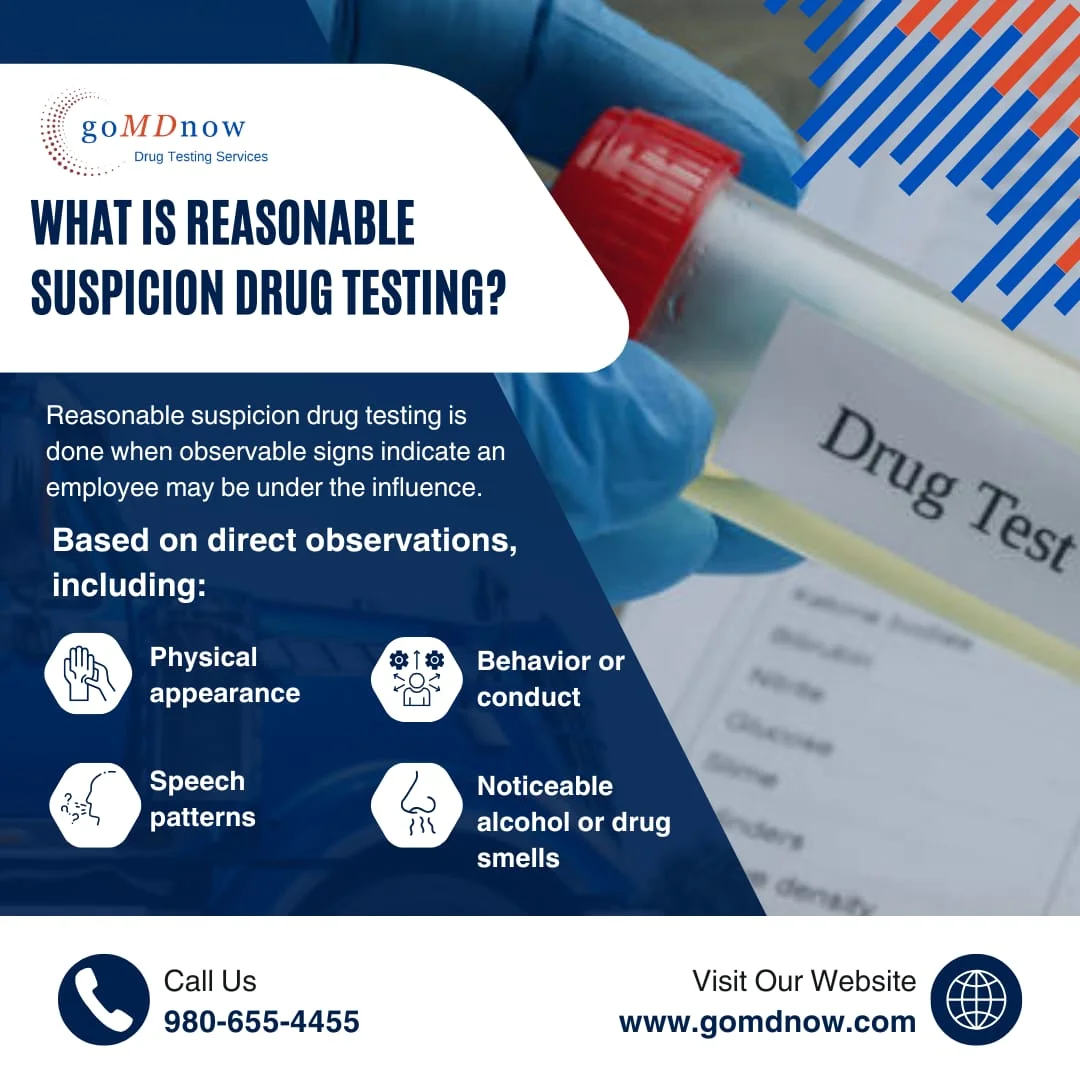
Reasonable suspicion drug testing, sometimes referred to as for-cause testing or probable-cause testing, is conducted when an employer has a legitimate, objective reason to believe an employee may be under the influence of drugs or alcohol while at work.
For DOT-regulated employers, reasonable suspicion testing is mandated under 49 CFR Part 382 and Part 40. Unlike random drug testing, this type of test is not random it is triggered by specific, observable behaviors or physical indicators.
A reasonable suspicion determination must be based on direct observations, such as:
- Physical appearance
- Behavior or conduct
- Speech patterns
- Odors suggesting alcohol or controlled substances
The decision must be made by a trained supervisor and properly documented to remain compliant and defensible.
DOT Reasonable Suspicion Testing Requirements
For DOT-covered safety-sensitive employees (such as CDL drivers), reasonable suspicion testing:
- Must be based on specific, contemporaneous, and articulable observations
- Requires supervisor training on drug and alcohol indicators
- Must be conducted as soon as possible after the behavior is observed
- Must follow DOT chain-of-custody and testing protocols
Failure to conduct reasonable suspicion testing correctly can result in DOT violations, audits, penalties, and increased liability.
How Employers Can Identify Reasonable Suspicion
Recognizing potential substance misuse requires awareness, training, and objectivity. Below are common indicators that may support reasonable suspicion when observed and documented properly.
Physical Signs of Substance Abuse
- Bloodshot or glassy eyes
- Dilated or constricted pupils
- Slurred speech or impaired coordination
- Shaking or tremors
- Sudden weight loss or gain
- Unusual odors on breath, clothing, or body
- Track marks on arms or legs
- Excessive sweating or flushed skin
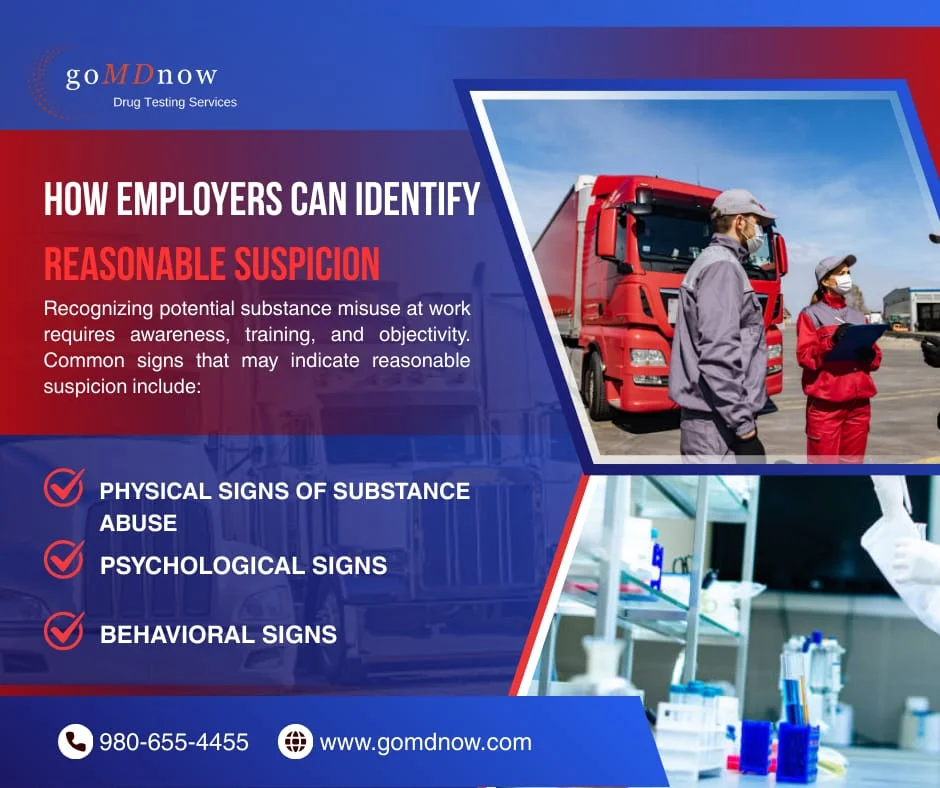
Psychological Signs
- Mood swings or emotional instability
- Anxiety, agitation, or paranoia
- Depression or lack of motivation
- Confusion or disorientation
- Memory issues or blackouts
- Hallucinations or delusional behavior
Behavioral Signs
- Decline in job performance
- Increased accidents or near-miss incidents
- Poor judgment or decision-making
- Changes in attendance or punctuality
- Unexplained absences or extended breaks
- Conflicts with coworkers or supervisors
- Risky or inappropriate workplace behavior
- Neglect of personal hygiene
- Secretive or evasive conduct
Important: One sign alone may not justify testing. Employers must rely on patterns, consistency, and trained observation, not assumptions.
DOT Alcohol vs Drug Reasonable Suspicion Timing Requirements
DOT regulations establish specific timing requirements for reasonable suspicion testing, particularly for alcohol testing. Alcohol tests must be conducted within two hours of the observed behavior and no later than eight hours. If testing is not completed within these timeframes, employers must document the reasons for the delay or failure to test.
Reasonable suspicion drug testing must also be conducted as soon as practicable after the observation. Employers are expected to act promptly to remain compliant and defensible during audits or investigations.
DOT vs Non-DOT Reasonable Suspicion Testing
DOT reasonable suspicion testing is governed by federal regulations and applies to safety-sensitive employees covered under DOT agencies such as FMCSA. Non-DOT reasonable suspicion testing, while similar in purpose, is governed by employer policy and applicable state laws.
Employers must clearly distinguish between DOT and non-DOT testing programs to ensure correct procedures, documentation, and compliance requirements are followed.
Common Employer Mistakes with Reasonable Suspicion Testing
- Delaying testing after observing concerning behavior
- Acting on rumors or secondhand information instead of direct observation
- Failing to properly document observations
- Allowing employees to continue safety-sensitive duties
- Lack of supervisor training
Avoiding these mistakes helps protect employers from regulatory violations, legal disputes, and safety incidents.
Legal and Compliance Protection for Employers
Properly conducted reasonable suspicion testing helps protect employers from wrongful termination claims, discrimination allegations, and compliance failures. Objective observations, trained supervisors, and documented procedures create a defensible process that stands up during DOT audits and legal review.
goMDnow: Professional Reasonable Suspicion Drug Testing Services
At goMDnow, we understand the sensitivity, urgency, and compliance requirements involved in reasonable suspicion testing. Our structured approach ensures employers can act quickly while remaining fully DOT-compliant and legally protected.
Our Reasonable Suspicion Testing Process Includes:
1. Supervisor Training
We provide DOT-compliant supervisor training to help management recognize signs of drug or alcohol misuse and make informed, defensible decisions.
2. Proper Documentation
Accurate documentation is essential. goMDnow assists employers in maintaining clear, objective records that meet DOT and legal standards.
3. Test Coordination
We coordinate drug and alcohol testing promptly through certified laboratories and collection sites, ensuring minimal disruption to operations.
4. Professional Result Analysis
All test results are reviewed following strict compliance guidelines, including Medical Review Officer (MRO) oversight when required.
5. Guidance on Next Steps
We help employers understand appropriate actions after results are received, supporting compliance, policy enforcement, and workplace safety.
Why Employers Trust goMDnow
- DOT-compliant testing solutions
- Nationwide testing coordination
- Experienced compliance support
- Fast, accurate, and confidential processes
- Employer-focused guidance
- Support for both DOT and non-DOT workplaces
Final Thoughts
Reasonable suspicion drug testing plays a vital role in protecting workplaces from the risks associated with substance misuse. When conducted correctly, it safeguards employees, strengthens compliance, and reinforces a culture of responsibility.
By partnering with goMDnow, employers gain a reliable, professional testing partner dedicated to safety, accuracy, and regulatory compliance.
If your organization is looking to implement or strengthen a reasonable suspicion testing program, goMDnow is here to help every step of the way.