
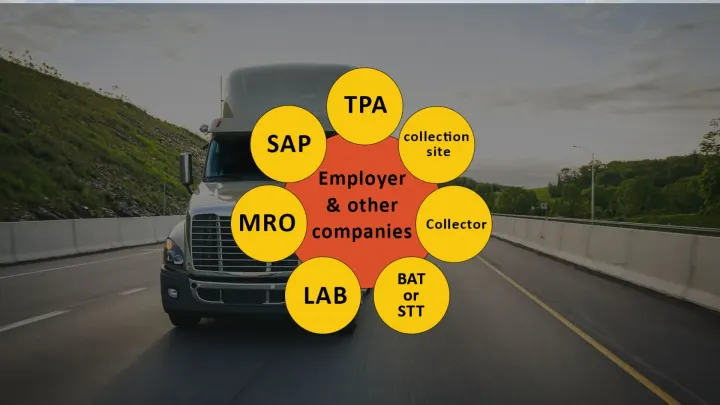
The transportation industry operates under strict safety regulations designed to protect drivers, employers, and the public. One of the most important compliance requirements for companies regulated by the Department of Transportation (DOT) is maintaining a compliant drug and alcohol testing program. Employers must ensure that safety-sensitive employees complete the required tests while meeting federal regulations established under 49 CFR Part 40 and the Federal Motor Carrier Safety Administration (FMCSA).
Managing these responsibilities can quickly become overwhelming, especially for small businesses, owner-operators, and growing fleets. Employers must coordinate testing, maintain records, manage random selections, communicate with laboratories, work with Medical Review Officers (MROs), and prepare for audits. Missing even one requirement can lead to costly penalties, failed audits, or compliance violations.
This is why many employers rely on a Third-Party Administrator (TPA) or a Consortium/Third-Party Administrator (C/TPA). These organizations specialize in managing DOT drug and alcohol testing programs, helping employers remain compliant while reducing administrative burdens. Whether you operate a single commercial vehicle or manage a nationwide fleet, understanding the key factors for choosing a qualified C/TPA helps ensure your testing program runs efficiently.
What Is a TPA?
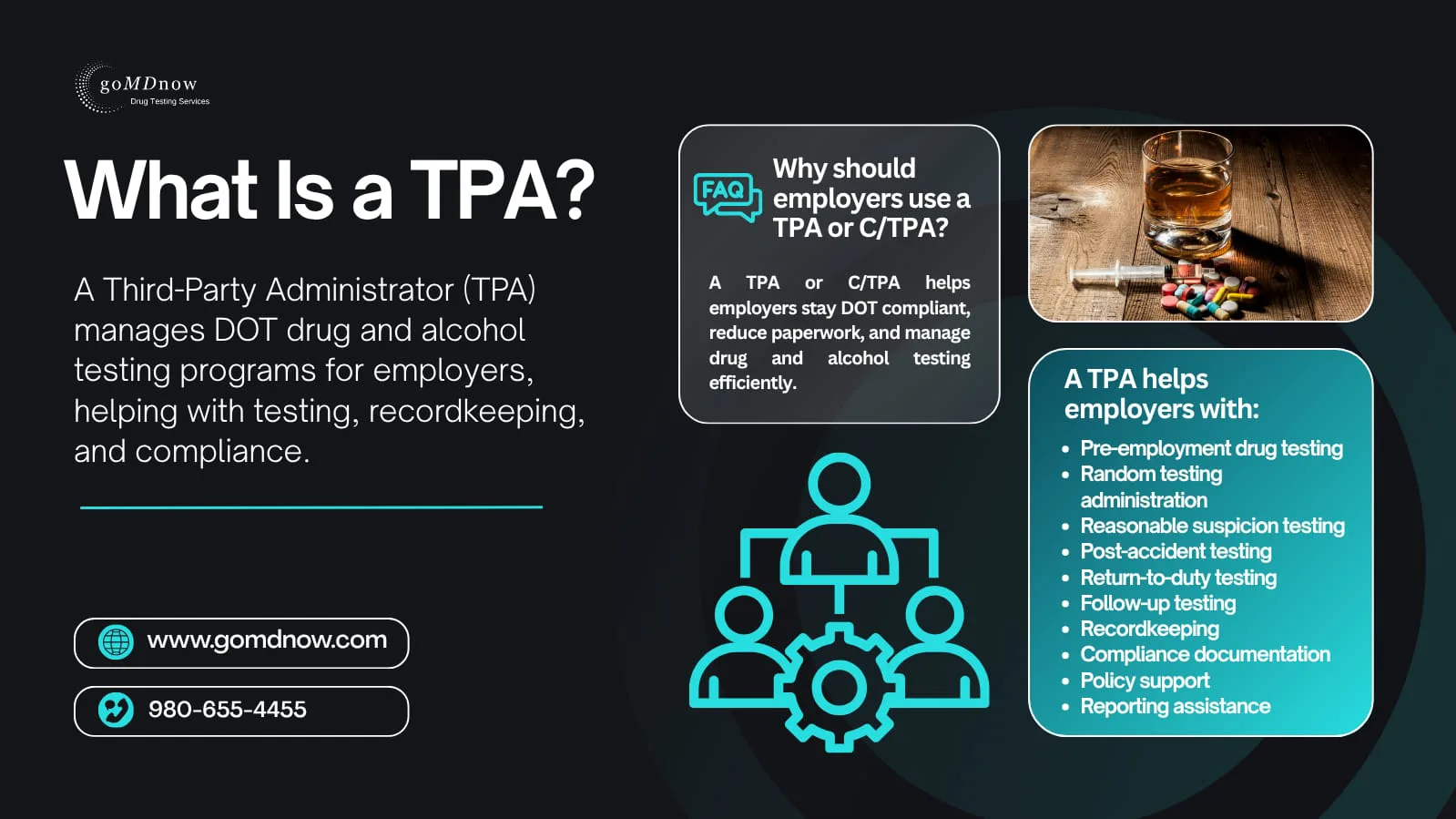
A Third-Party Administrator (TPA) is an organization that manages drug and alcohol testing programs on behalf of employers. Instead of assigning compliance responsibilities to internal staff, employers outsource these tasks to professionals who understand DOT regulations and testing procedures.
A TPA coordinates the many moving parts involved in a compliant testing program. This includes scheduling required tests, maintaining documentation, communicating with collection sites, laboratories, and Medical Review Officers, and ensuring testing is completed according to federal guidelines.
A TPA helps employers with:
- Pre-employment drug testing
- Random testing administration
- Reasonable suspicion testing
- Post-accident testing
- Return-to-duty testing
- Follow-up testing
- Recordkeeping
- Compliance documentation
- Policy support
- Reporting assistance By managing these responsibilities, a TPA allows employers to focus on their business while remaining compliant with DOT regulations.
What Is a C/TPA?
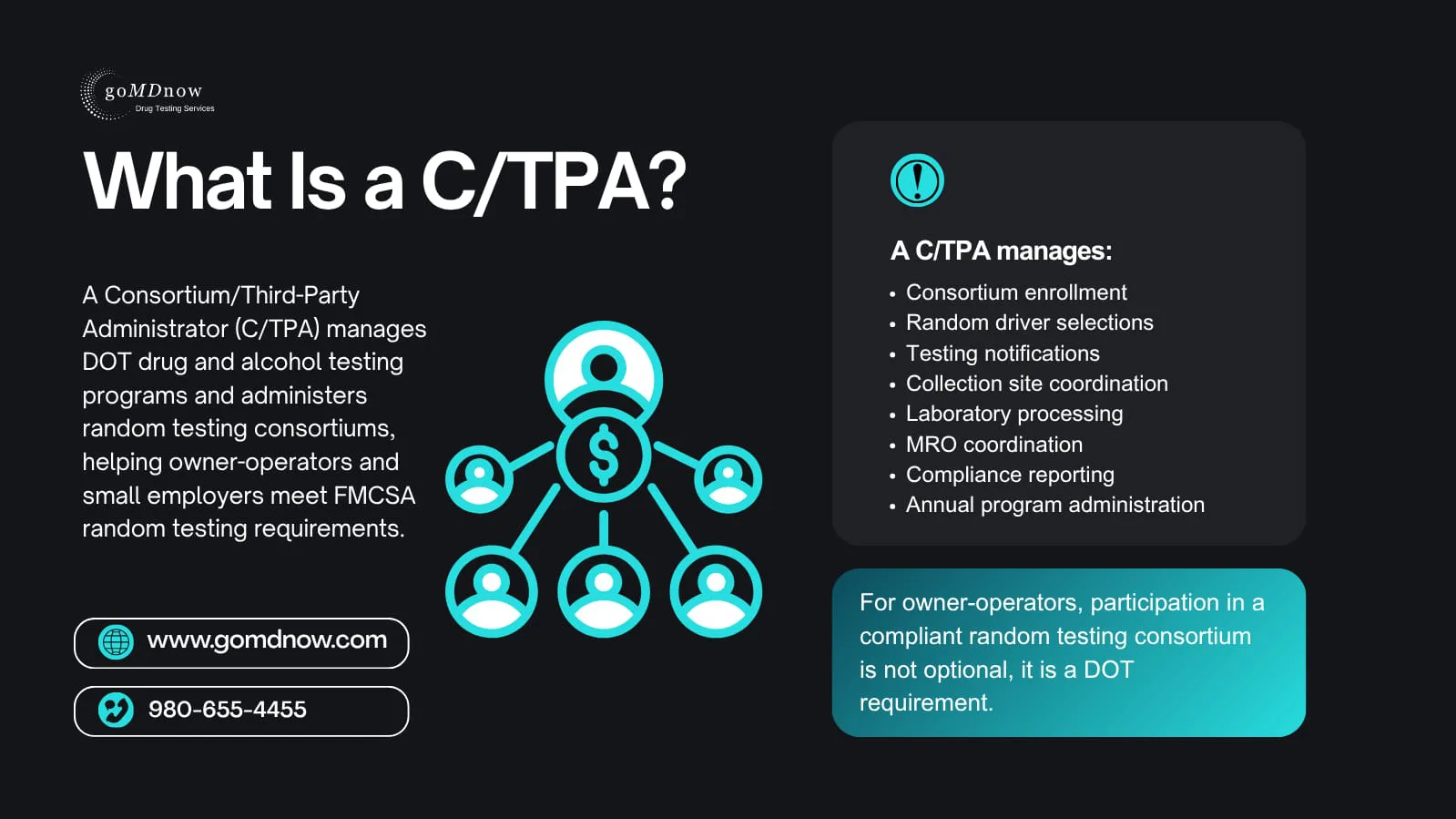
A Consortium/Third-Party Administrator (C/TPA) performs all the functions of a traditional TPA but also manages DOT random testing consortiums.
A consortium is a group of multiple employers combined into one random testing pool. This approach is particularly beneficial for owner-operators and small businesses that do not have enough employees to administer an effective standalone program. Our comparison of consortium and stand-alone random testing pools explains the distinction.
Through a consortium, drivers are selected for testing using scientifically valid random selection methods that satisfy FMCSA requirements.
A C/TPA manages:
- Consortium enrollment
- Random driver selections
- Testing notifications
- Collection site coordination
- Laboratory processing
- MRO coordination
- Compliance reporting
- Annual program administration For owner-operators, participation in a compliant random testing consortium is not optional, it is a DOT requirement.
Difference Between a TPA and a C/TPA
Although these terms are often used interchangeably, there is an important distinction.
A TPA primarily manages drug and alcohol testing services for employers. A C/TPA provides the same services while also administering DOT random testing consortiums for employers who need to participate in a shared random testing pool.
For many trucking companies and owner-operators, a C/TPA is the preferred solution because it combines compliance management with consortium administration in one service.
Why Is There a Need for a TPA or C/TPA?
DOT compliance involves much more than scheduling an occasional drug test. Employers must consistently follow federal procedures throughout the year. A TPA or C/TPA simplifies this process by providing professional oversight and ensuring every compliance requirement is properly managed.
1. Ensures DOT Compliance
DOT regulations are detailed and constantly evolving. Employers are responsible for complying with testing rules related to hiring, random testing, post-accident situations, reasonable suspicion, return-to-duty procedures, and follow-up testing.
A TPA monitors these requirements and helps employers remain compliant without having to interpret complex regulations themselves.
2. Manages Random Drug and Alcohol Testing
Random testing is one of the most important parts of a DOT compliance program. Every random selection must be scientifically valid, confidential, and properly documented.
A C/TPA manages the entire process by:
- Conducting random selections
- Notifying employers
- Scheduling testing
- Maintaining documentation
- Tracking completion
- Preparing compliance records This significantly reduces the employer's workload while ensuring federal requirements are met.
3. Supports Owner-Operators Unlike larger companies, owner-operators cannot independently administer their own DOT random testing program. Federal regulations require them to participate in a compliant random testing consortium.
A C/TPA provides owner-operators with everything needed to remain compliant, including consortium enrollment, random selections, testing coordination, and documentation.
4. Reduces Administrative Burden Managing a DOT testing program requires extensive administrative work. Employers must coordinate with laboratories, collection sites, Medical Review Officers, employees, and regulatory agencies.
A TPA takes over these responsibilities, saving valuable time, and allowing employers to concentrate on daily business operations instead of paperwork.
5. Maintains Accurate Records
DOT regulations require employers to retain testing records for specific periods depending on the type of document.
A TPA helps organize:
- Drug test results
- Alcohol test records
- Custody and Control Forms (CCFs)
- Random testing documentation
- Training records
- Employee acknowledgments
- Compliance reports Well-organized records simplify audits and inspections.
6. Coordinates Nationwide Testing Commercial drivers frequently travel across multiple states. A C/TPA provides access to a nationwide network of collection sites, allowing drivers to complete required testing wherever they are located.
This flexibility reduces delays and keeps operations moving efficiently.
7. Provides Medical Review Officer Coordination Drug testing results requiring further evaluation must be reviewed by a certified Medical Review Officer (MRO).
A TPA coordinates communication between laboratories, MROs, and employers, ensuring that every verified result follows federal procedures before being reported. The employer's internal contact also needs to understand the duties of a Designated Employer Representative.
8. Helps Employers Prepare for DOT Audits A DOT audit can occur at any time. Employers must be prepared to produce testing records, random selection of documentation, policies, and compliance reports.
A C/TPA helps employers maintain audit-ready documentation, making inspections less stressful and reducing the likelihood of violations.
9. Reduces Compliance Risks Many compliance violations occur because employers unintentionally overlook important requirements. Common mistakes include missed random tests, incomplete documentation, outdated policies, or incorrect record retention.
Working with an experienced TPA significantly reduces these risks by ensuring each requirement is properly managed throughout the year.
10. Saves Time and Resources Building an in-house compliance department requires training, software, administrative staff, and ongoing regulatory education. For many employers, outsourcing these responsibilities is more efficient and cost-effective.
A TPA provides professional expertise without requiring employers to manage every compliance detail themselves.
Benefits of Using a TPA or C/TPA
Partnering with a professional TPA or C/TPA offers several advantages beyond meeting DOT requirements. It helps employers streamline operations, improve efficiency, and reduce the risk of costly compliance issues. Whether you manage a single commercial driver or an entire fleet, outsourcing your testing program allows your team to focus on daily operations instead of regulatory paperwork.
Some of the key benefits include:
- Simplified DOT compliance management
- Reduced administrative workload
- Professionally managed random testing
- Access to nationwide collection sites
- Organized recordkeeping and documentation
- MRO and laboratory coordination
- Improved audit readiness
- Lower risk of compliance violations
- Ongoing regulatory support
- Time and cost savings These benefits make a TPA or C/TPA a valuable partner for businesses operating under DOT regulations.
Who Should Use a TPA or C/TPA?
Although any DOT-regulated employer can benefit from professional compliance management, some businesses rely on these services more than others.
A TPA or C/TPA is ideal for:
- Owner-operators
- Small trucking companies
- Medium and large transportation fleets
- Bus companies
- Passenger transportation providers
- Logistics and freight companies
- Construction companies with CDL drivers
- Government contractors
- Employers with safety-sensitive employees Businesses with limited administrative staff often find that outsourcing compliance saves both time and resources while improving accuracy.
Common Compliance Mistakes a C/TPA Helps Prevent
Many DOT violations are not intentional because employers misunderstand regulations or overlook administrative requirements. Even a small error can result in fines, failed audits, or enforcement actions.
A qualified C/TPA helps prevent common mistakes such as:
Missing Random Drug Tests Random testing must be conducted throughout the calendar year using a scientifically valid selection process. Delayed or missed tests can place an employer out of compliance.
Poor Recordkeeping Missing or incomplete documentation is one of the most common audit findings. Employers must maintain testing records for the required retention periods and ensure they are readily available during inspections.
Incorrect Testing Procedures Each DOT testing situation-pre-employment, random, post-accident, reasonable suspicion, return-to-duty, and follow-up-has specific regulatory requirements. Using the wrong procedure can invalidate the testing process.
Missed Reporting Requirements Certain violations and return-to-duty events require reporting under DOT regulations. A C/TPA helps ensure these reporting obligations are completed correctly and on time.
Outdated Policies DOT regulations may change over time. Employers who fail to update their drug and alcohol testing policies risk non-compliance. A TPA helps keep policies aligned with current federal requirements.
How a C/TPA Supports DOT Audits
DOT audits can be stressful for employers who manage compliance internally. During an audit, employers may be asked to provide records showing that every aspect of their drug and alcohol testing program complies with federal regulations.
A C/TPA helps employers prepare by maintaining organized records and supporting documentation, including:
- Random testing selection records
- Drug and alcohol test results
- Custody and Control Forms (CCFs)
- Employee testing history
- Consortium enrollment records
- Compliance reports
- Policy documentation
- Record retention files Having these records readily available can make the audit process faster and more efficient while demonstrating that the employer maintains a compliant testing program.
How goMDnow Helps Employers Stay Compliant
goMDnow provides comprehensive TPA and C/TPA services designed to simplify DOT drug and alcohol testing for employers of all sizes. Whether you're an owner-operator or manage a growing fleet, goMDnow offers the tools and expertise needed to maintain compliance with DOT and FMCSA regulations.
goMDnow services include:
- DOT consortium enrollment
- Random drug and alcohol testing management
- Nationwide collection site access
- Electronic Custody and Control Forms (eCCF)
- Medical Review Officer (MRO) coordination
- Compliance monitoring and reporting
- Record management
- Owner-operator compliance support
- Audit-ready documentation
- Customer support from experienced compliance specialists By handling the administrative and regulatory aspects of your testing program, goMDnow allows employers to focus on running their business with confidence.
Choosing the Right TPA or C/TPA
Not every provider offers the same level of service. Selecting an experienced TPA or C/TPA can make a significant difference in maintaining compliance and avoiding costly mistakes.
When evaluating a provider, look for:
- Experience with DOT and FMCSA regulations
- Nationwide testing network
- Reliable customer support
- Electronic record management
- Random testing administration
- MRO coordination
- Audit assistance
- Compliance monitoring
- Transparent pricing
- Scalable services for businesses of all sizes Choosing a trusted compliance partner helps ensure your testing program remains accurate, efficient, and fully compliant.
Conclusion
A Third-Party Administrator (TPA) or Consortium/Third-Party Administrator (C/TPA) plays a vital role in helping DOT-regulated employers manage drug and alcohol testing programs. From coordinating random testing and maintaining records to supporting audits and ensuring regulatory compliance, these organizations simplify complex administrative responsibilities.
For owner-operators, participation in a DOT-compliant consortium is a federal requirement, while trucking companies and other safety-sensitive employers' benefit from professional compliance management that reduces workload and minimizes the risk of violations.
Partnering with an experienced provider like goMDnow gives employers access to expert guidance, nationwide testing resources, organized documentation, and ongoing compliance support. By outsourcing these responsibilities, businesses can protect their operations, remain compliant with FMCSA regulations, and focus on delivering safe and reliable transportation services.
Frequently Asked Questions (FAQs)
1. What does a TPA do?
A TPA manages DOT drug and alcohol testing programs, including scheduling tests, maintaining records, coordinating with laboratories and MROs, and supporting compliance.
2. What is the difference between a TPA and a C/TPA?
A TPA manages testing programs, while a C/TPA also administers DOT random testing consortiums for employers and owner-operators.
3. Do owner-operators need a C/TPA?
Yes. Owner-operators must participate in a DOT-compliant random testing consortium managed by a qualified C/TPA.
4. How does a C/TPA help during a DOT audit?
A C/TPA maintains organized records, compliance reports, testing documentation, and other required files, making it easier to respond to DOT audits.
5. Why should employers use a TPA or C/TPA?
A TPA or C/TPA simplifies compliance, reduces administrative work, helps prevent violations, and ensures DOT drug and alcohol testing programs meet federal regulations.
For help selecting or scheduling a compliant test, review testing options and rates or contact goMDnow.