
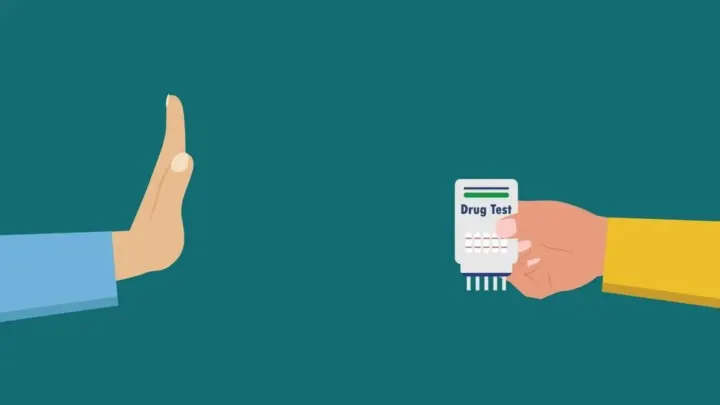
Drug and alcohol testing is a critical part of workplace safety, especially in industries regulated by the U.S. Department of Transportation (DOT). Employees performing safetysensitive duties, such as commercial truck drivers, bus operators, pipeline workers, railroad employees, and aviation personnel, must comply with strict drug and alcohol testing regulations.
While many employees understand the importance of testing, some mistakenly believe that refusing a drug test is better than failing one. Refusing a drug test often carries the same consequences as testing positively, and in many situations, it can significantly affect a person's career.
Understanding what constitutes a refusal, the consequences involved, and the steps required to return to work can help both employers and employees remain compliant with DOT regulations.
What Does Refusing a Drug Test Mean?
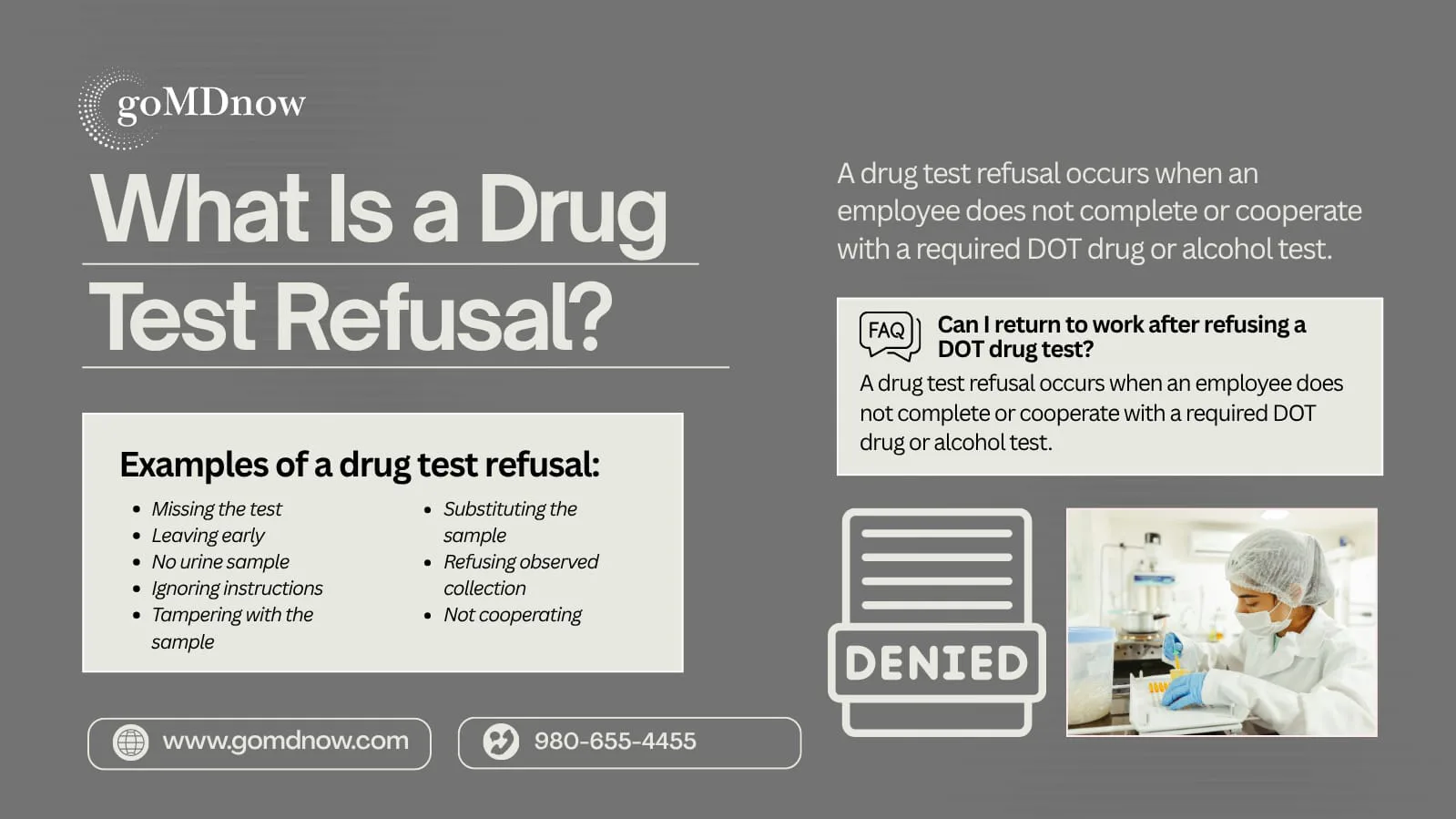
A drug test refusal occurs when an employee fails to cooperate with the testing process in a way that prevents the completion of a required drug or alcohol test.
Refusal isn't limited to verbally saying "no." DOT regulations recognize several actions that may be considered a refusal to test.
These actions may include:
- Refusing to appear for a scheduled drug or alcohol test
- Leaving the testing site before the process is complete
- Failing to provide a urine specimen without a valid medical explanation
- Declining to follow the collector's instructions
- Tampering with or adulterating a specimen
- Substituting a specimen
- Refusing an observed collection when required
- Failing to complete the testing process
- Not cooperating during the collection procedure Because every testing step is carefully documented, collectors and Medical Review Officers (MROs) can identify behaviors that qualify as a refusal under DOT regulations.
DOT Regulations Regarding Test Refusals
DOT drug and alcohol testing procedures are governed by 49 CFR Part 40, which outlines the collection process, laboratory testing, Medical Review Officer review, and refusal determinations. The regulations are designed to protect the integrity of the testing process. Since safetysensitive employees are responsible for public safety, the DOT treats refusals very seriously. Under federal regulations, refusing a required DOT drug or alcohol test is generally treated the same as receiving a verified positive result; see what happens after a failed DOT test.
Common Situations That Count as a Refusal
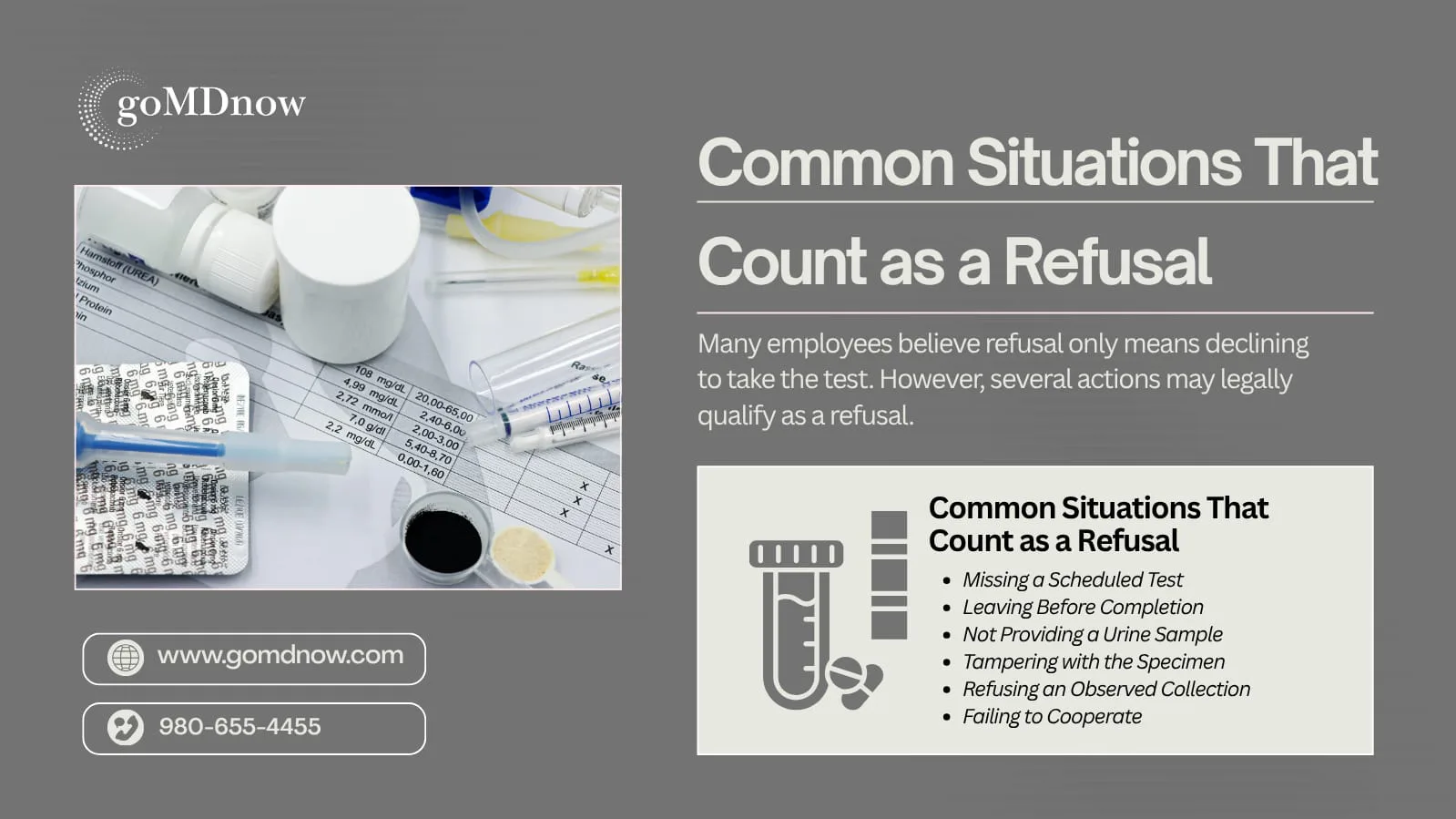
Many employees believe refusal only means declining to take the test. However, several actions may legally qualify for a refusal.
1. Failing to Report for Testing
When an employer directs an employee to complete a required drug or alcohol test, the employee must report within the instructed timeframe. Ignoring the notification or intentionally delaying the test may be considered a refusal.
2. Leaving Before Completing the Test
Once the collection process begins, employees must remain until the test is completed. Leaving the collection site before completion may be reported as a refusal.
3. Not Providing a Urine Sample
If an employee cannot provide enough urine, DOT procedures require a "shy bladder" process, allowing additional time and fluids. Simply refusing to continue without a valid medical explanation may result in a refusal determination.
4. Tampering with the Specimen
Attempting to alter a specimen is one of the most serious testing violations. Examples include:
- Adding chemicals
- Using synthetic urine
- Switching specimens
- Diluting the sample intentionally Laboratories perform specimen validity testing to identify tampering.
5. Refusing an Observed Collection
Certain situations require directly observed urine collections. If an observed collection is required and the employee refuses, the incident is considered a refusal.
6. Failing to Cooperate
Employees must cooperate throughout the testing process. Examples include:
- Refusing instructions
- Disrupting the collection
- Preventing the collector from completing required procedures
Consequences of Refusing a DOT Drug Test
A refusal to test can have immediate and long-term professional consequences.
Immediate Removal from Safety-Sensitive Duties
The first consequence is removal from safety-sensitive work. Employers cannot allow employees with a refusal of determination to continue performing DOT-regulated functions. This protects the workplace and public safety.
Return-to-Duty Process Is Required
Employees cannot simply retake another drug test and return to work. Instead, they must complete the entire Return-to-Duty (RTD) process, including:
- Substance Abuse Professional (SAP) evaluation
- Education and/or treatment recommendations
- Successful completion of the SAP program
- Return-to-duty drug test
- Employer approval
- Follow-up testing plan This process can take weeks or months depending on the SAP's recommendations.
Employment Consequences
Many employers have zero-tolerance drug testing policies. A refusal may result in:
- Suspension
- Termination
- Loss of employment opportunities
- Difficulty obtaining future DOT-regulated jobs Employers often review previous violations during hiring.
FMCSA Clearinghouse Reporting
For CDL drivers regulated by FMCSA, drug test refusals are entered into the FMCSA Drug & Alcohol Clearinghouse. Employers are required to review Clearinghouse records before hiring drivers for safetysensitive positions. A recorded refusal remains visible until the Return-to-Duty process has been successfully completed.
Career Impact
- A refusal may affect:
- Future employment
- Professional reputation
- Driver qualification status
- Company insurance considerations Many employers are reluctant to hire applicants with unresolved DOT violations.
Is Refusing Better Than Failing?
No. Many employees mistakenly believe refusing avoids a positive result. Under DOT regulations, both situations generally lead to similar consequences, including:
- Removal from safety-sensitive duties
- SAP evaluation
- Return-to-Duty requirements
- Follow-up testing In many cases, refusing offers no advantage and may complicate employment even further.
Can an Employee Ever Refuse Medical Reasons?
Yes-but only under limited circumstances. For example, if an employee cannot provide sufficient urine because of a legitimate medical condition, the Medical Review Officer evaluates the situation. Medical documentation may be required before determining whether the situation qualifies as a refusal. Simply claiming a medical issue without evaluation is not sufficient.
Employer Responsibilities After a Refusal
Employers have important responsibilities under DOT regulations.
These include:
- Immediately removing the employee from safety-sensitive duties
- Documenting the refusal
- Following applicable DOT procedures
- Providing information regarding the SAP process
- Maintaining required records
- Reporting to the FMCSA Clearinghouse when applicable
Proper documentation helps ensure regulatory compliance.
Employee Responsibilities
Employees should:
- Report promptly for scheduled tests
- Bring valid identification
- Follow all collector instructions
- Complete the testing process
- Cooperate fully
- Ask questions if unsure about procedures
Understanding the process helps prevent accidental refusals.
How the Return-to-Duty Process Works
Drivers can review what they need to know about Return-to-Duty before beginning these required steps.
Employees with a refusal of determination must complete several required steps before returning to DOT-regulated work.
Step 1: SAP Evaluation
A qualified Substance Abuse Professional evaluates the employee.
Step 2: Education or Treatment
The SAP recommends appropriate education, counseling, or treatment.
Step 3: Follow-Up Evaluation
The SAP determines whether the employee has successfully completed recommendations.
Step 4: Return-to-Duty Test
The employee must pass a directly observed Return-to-Duty drug test before returning to safety-sensitive duties.
Step 5: Follow-Up Testing
The employee remains subject to unannounced follow-up testing for a period determined by the SAP.
Tips to Avoid a Drug Test Refusal
Employees can avoid unnecessary complications by following a few simple practices.
- Report immediately when notified.
- Bring proper identification.
- Follow all testing instructions carefully.
- Remain at the collection site until completion.
- Cooperate with the collector.
- Never attempt to tamper with a specimen.
- Inform the collector of any legitimate medical issues.
- Ask questions if you do not understand the process.
Preparation and cooperation can prevent costly mistakes.
Why DOT Compliance Matters
DOT drug testing programs are designed to:
- Improve roadway safety
- Reduce workplace accidents
- Protect employers
- Ensure regulatory compliance
- Maintain public confidence in transportation industries
Strict enforcement helps ensure that employees performing safety-sensitive work are fit for duty.
How goMDnow Helps Employers Stay Compliant
Managing DOT drug testing requirements can be complex, especially for owner-operators and small fleets. GoMDnow simplifies compliance by offering comprehensive DOT drug and alcohol testing solutions, including:
- DOT Consortium enrollment
- Random drug and alcohol testing management
- Electronic Custody and Control Forms (eCCF)
- Access to thousands of nationwide collection sites
- SAMHSA-certified laboratory testing
- Medical Review Officer (MRO) services
- FMCSA Clearinghouse support
- Return-to-Duty and Follow-Up testing assistance
- Compliance record management
Partnering with an experienced third-party administrator helps employers reduce administrative burdens while maintaining full DOT compliance.
Conclusion
Refusing a drug test is a serious DOT violation with consequences that can affect employment, compliance status, and future career opportunities. Since a refusal is generally treated the same as a positive drug test, employees should fully cooperate with every step of the testing process.
Employers also play a critical role by ensuring testing procedures are conducted according to federal regulations and by maintaining accurate compliance records. Understanding DOT rules helps prevent costly mistakes and promotes safer workplaces for everyone.
Whether you're an employer managing a DOT testing program or a safety-sensitive employee, staying informed about refusal regulations is essential for maintaining compliance and protecting your professional future.
FAQs
1. Is refusing a DOT drug test the same as failing one?
Yes. Under DOT regulations, a refusal to test is generally treated the same as a verified positive drug test.
2. Can I return to work after refusing a DOT drug test?
Yes, but only after completing the required Return-to-Duty process with a qualified SAP and passing a Return-to-Duty test.
3. What actions are considered a drug test refusal?
Examples include failing to appear for testing, leaving before completion, refusing to provide a specimen, tampering with a sample, or not following collection instructions.
4. Does a drug test refusal affect future employment?
Yes. A refusal can impact hiring decisions, especially for DOT-regulated positions, until all Return-to-Duty requirements are completed.
5. How can employers stay compliant with DOT drug testing regulations?
Employers can maintain compliance by following DOT procedures, keeping accurate records, using qualified testing providers, and partnering with experienced compliance services like goMDnow.
For help selecting or scheduling a compliant test, review testing options and rates or contact goMDnow.