
Substance abuse continues to affect millions of working adults. According to the National Survey on Drug Use and Health (NSDUH), nearly 19.4 million adults aged 18 and older struggle with substance use disorders and more than 70% of them are employed either full-time or part-time. Workplace substance misuse isn't just a safety issue it's a hidden business risk affecting productivity, compliance, and employee well-being. A structured drug-free workplace policy helps organizations prevent incidents before they happen. From increased workplace accidents to rising healthcare costs and reduced productivity, the impact is measurable. Implementing a drug-free workplace program is not about punishment it is about prevention, protection, and performance. Learn more about identifying and addressing drug abuse in the workplace.
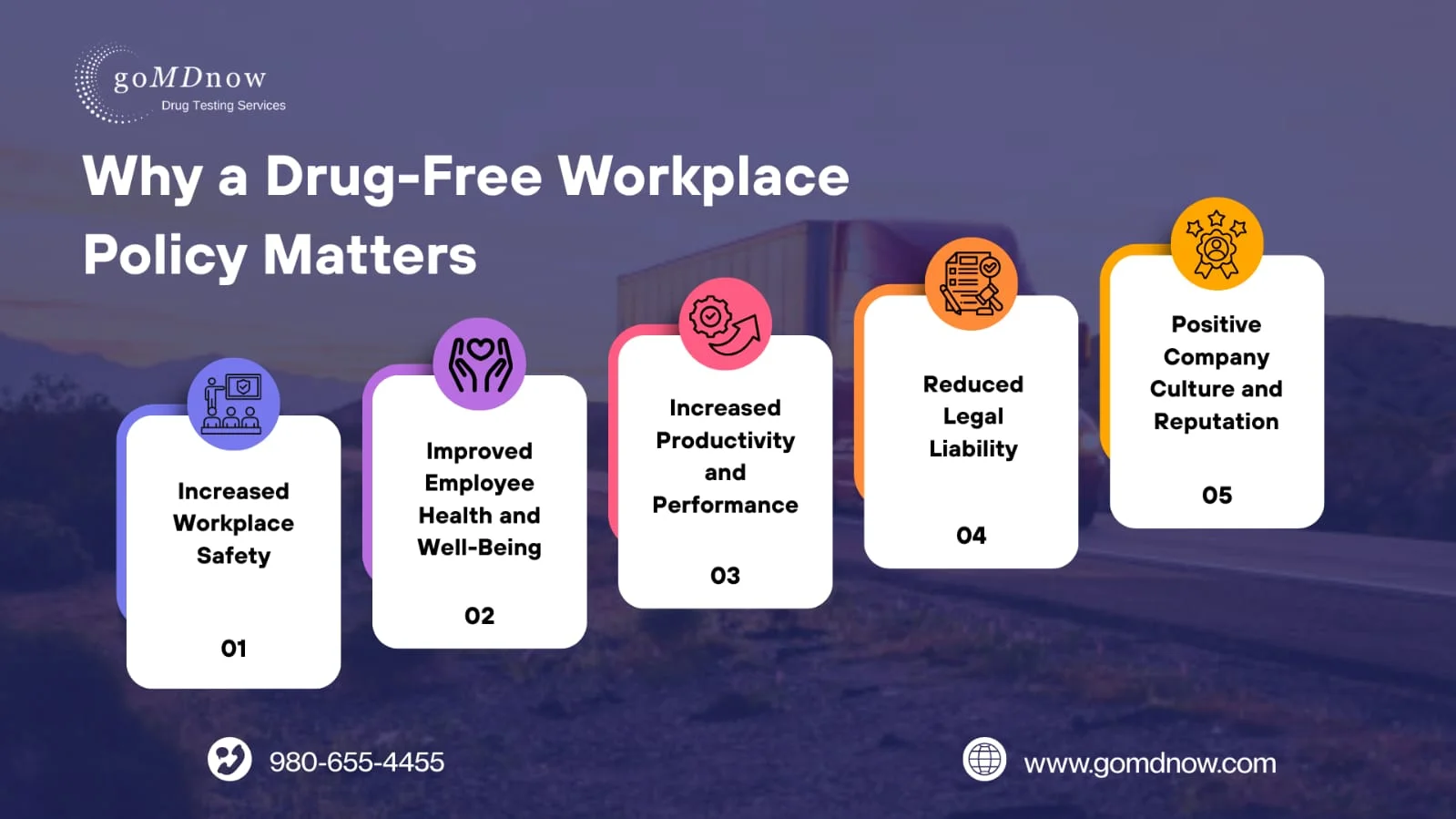
Why a Drug-Free Workplace Policy Matters
A well-structured drug-free workplace policy sets clear expectations, establishes procedures, and protects the company legally. Let's examine the key reasons every employer should prioritize one.
1. Increased Workplace Safety
Workplace safety is the most critical reason to implement a drug-free policy. Employees under the influence of drugs or alcohol may experience:
- Impaired judgment
- Slower reaction times
- Reduced coordination
- Poor decision-making
In safety-sensitive industries such as transportation, construction, healthcare, manufacturing, and logistics, these impairments can lead to serious accidents, injuries, or even fatalities.
For employers regulated under the U.S. Department of Transportation (DOT), compliance with federal drug and alcohol regulations is mandatory. Agencies like the Federal Motor Carrier Safety Administration (FMCSA) enforce strict testing requirements for CDL drivers and safety-sensitive employees.
By maintaining a drug-free workplace program, businesses reduce accident risks, lower workers' compensation claims, and protect both employees and the public.
2. Improved Employee Health and Well-Being
Substance abuse is not only a safety issue it is also a health issue. Drug and alcohol misuse can contribute to:
- Addiction disorders
- Mental health conditions
- Chronic illnesses
- Increased absenteeism
- Decreased morale
A structured workplace drug policy encourages healthy behaviors and demonstrates that the organization values employee well-being. Many companies pair drug testing programs with Employee Assistance Programs (EAPs) to provide confidential counseling and support services. Understanding drug withdrawal symptoms can help employers better support employees seeking recovery.
A healthy workforce is more engaged, motivated, and loyal. When employees feel supported rather than targeted, compliance improves and stigma decreases.
3. Increased Productivity and Performance
Substance misuse has a direct impact on business performance. Employees struggling with addiction often show:
- Frequent absence
- Tardiness
- Lower productivity
- Poor work quality
- Increased turnover
These issues affect team dynamics and operational efficiency.
A zero-tolerance drug policy workplace (when appropriately structured and legally compliant) sends a clear message about professional standards. Employees are more likely to remain focused and accountable when expectations are transparent.
Organizations that implement random drug testing in the workplace often report measurable improvements in performance metrics, attendance, and overall morale.
4. Reduced Legal Liability
Employers can face significant legal exposure if an impaired employee causes harm. If an accident occurs and the employee tests positive for drugs or alcohol, the employer may face:
- Negligence claims
- Increased insurance premiums
- Regulatory penalties
- Reputational damage
By implementing pre-employment drug testing, random drug testing, post-accident drug testing, and reasonable suspicion drug testing, employers demonstrate due diligence.
Proper documentation, policy communication, and federally compliant procedures significantly reduce liability risks. Regulatory compliance is especially critical for DOT-regulated industries.
A professionally drafted drug-free workplace policy is not just a safety measure it is a legal safeguard.
5. Positive Company Culture and Reputation
Company culture directly influences recruitment and retention. A workplace that prioritizes safety, health, and accountability attracts high-quality employees. Clear policies reduce ambiguity and workplace conflict. When expectations are transparent and consistently enforced, trust increases.
A strong drug-free workplace program communicates that the organization values professionalism and employee well-being. Learn why every workplace needs a drug testing policy. In competitive industries, this reputation matters.
Essential Drug Testing Procedures and Policies
1. Pre-Employment Drug Testing
Conducted before a candidate begins safety-sensitive duties. This helps prevent high-risk hires and protects workplace safety from day one.
2. Random Drug Testing
Employees are selected randomly throughout the year using a random testing consortium. This acts as both a deterrent and a compliance requirement in DOT-regulated industries.
3. Post-Accident Drug Testing
Required after certain workplace incidents to determine whether substance use contributed to the event. Understand what DOT violations can result from failure to test after an accident.
4. Reasonable Suspicion Drug Testing
Initiated when a trained supervisor observes behavior indicating possible impairment. Supervisors must be trained to identify signs of substance use, and reasonable suspicion testing must follow documented procedures.
5. Return-to-Duty and Follow-Up Testing
For employees who previously violated drug and alcohol regulations and are returning to safety-sensitive functions. The follow-up testing process is a critical bridge to employee recovery and reinstatement.
Key Elements of an Effective Drug-Free Workplace Policy
A comprehensive policy should include:
- Clear definitions of prohibited substances
- Testing procedures and timelines
- Employee rights and responsibilities
- Confidentiality guidelines
- Disciplinary actions (termination, suspension, counseling)
- Compliance with federal and state regulations
- Documentation and record-keeping procedures
Communication is critical. Employees must receive written copies of the policy and acknowledge understanding. Supervisor training for reasonable suspicion identification is also essential. It is equally important to understand common drug testing myths that can lead to policy misunderstandings.
Compliance with DOT and FMCSA Regulations
For employers regulated under DOT drug and alcohol regulations, compliance is mandatory not optional. The Federal Motor Carrier Safety Administration requires strict adherence to drug and alcohol testing protocols under 49 CFR Part 382 and Part 40. Understanding DOT rules and regulations is the first step toward building a compliant program.
Non-compliance can result in:
- Heavy fines
- Audit failures learn what to expect during a DOT safety audit
- Loss of operating authority
- Reputational harm
Having a professionally structured policy ensures all federally mandated drug testing procedures are properly implemented. Many employers rely on a C/TPA to manage their program and stay audit-ready.
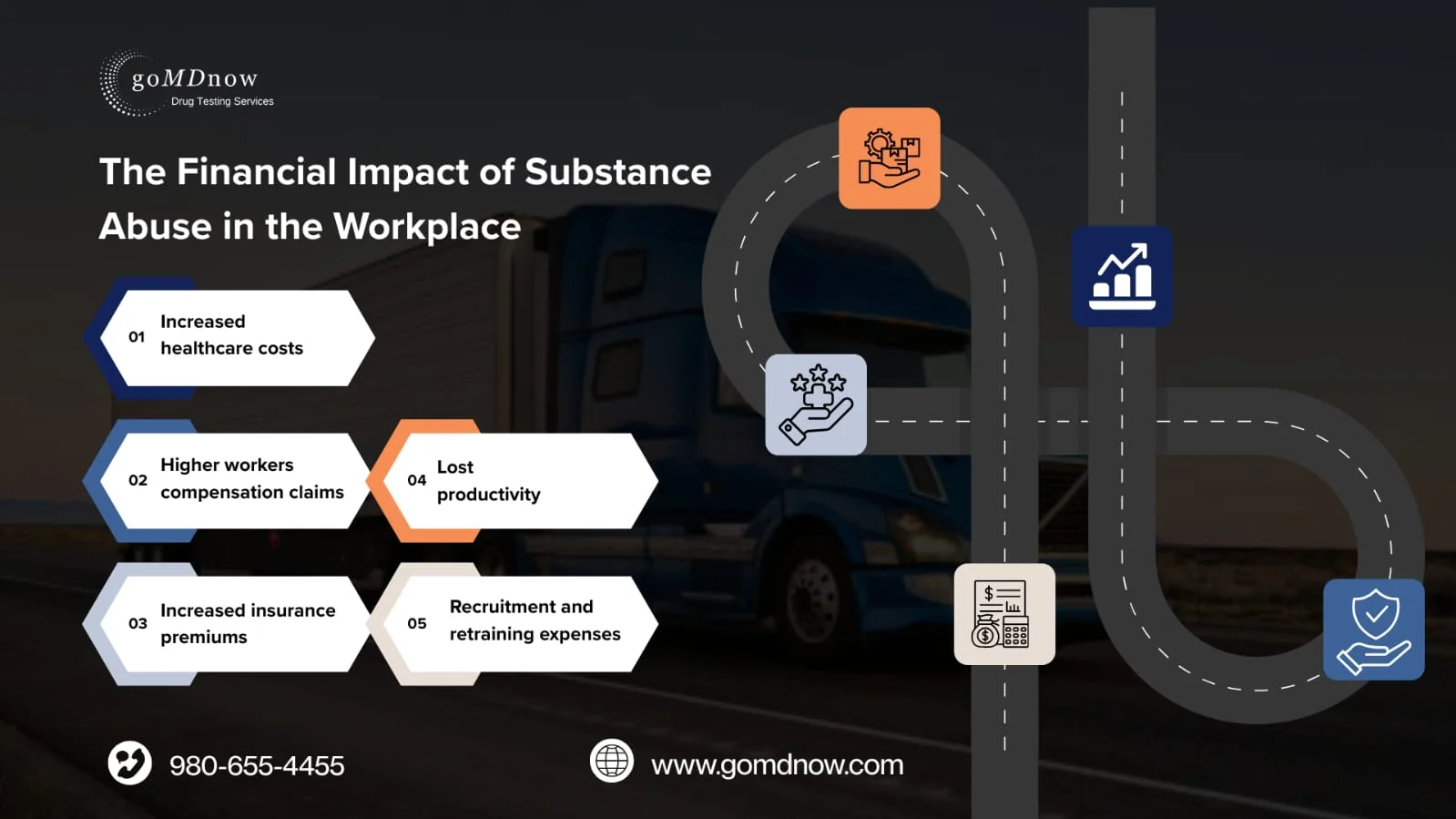
The Financial Impact of Substance Abuse in the Workplace
Beyond safety and compliance, substance abuse is costly. It contributes to:
- Increased healthcare costs
- Higher workers compensation claims
- Increased insurance premiums
- Lost productivity
- Recruitment and retraining expenses
A proactive drug-free workplace policy is significantly less expensive than responding to accidents, lawsuits, or compliance violations. Prevention is always more cost-effective than correction. To understand the full financial picture, review how much a DOT drug test costs compared to the cost of non-compliance.
How to Implement a Drug-Free Workplace Policy
Creating a drug-free workplace policy is not just about compliance it is about building a structured, defensible, and operationally effective system that protects your organization. Implementing a drug-free workplace policy requires a structured and compliance-focused approach to ensure safety, accountability, and legal protection.
- Draft a Clear Written Policy Define prohibited substances using the DOT 5-panel drug test standards as your baseline.
- Communicate the Policy to Employees Ensure all staff understand testing procedures, consequences, and their rights, including rules around prescription drug use.
- Provide Supervisor Training Train supervisors to identify impairment signs and properly document observations for reasonable suspicion testing.
- Choose a Qualified Drug Testing Provider Select a SAMHSA-certified lab and certified collection sites for accurate, legally defensible results.
- Conduct Regular Policy Reviews Review annually and update based on regulatory changes and DOT compliance best practices.
How goMDnow Supports Employers
At goMDnow, we understand that maintaining a drug-free workplace requires more than just random testing. It requires:
- Legally compliant policy development
- Clear documentation including proper DOT chain of custody procedures
- Supervisor training guidance
- Proper testing procedures including DOT observed collection protocols
- Regulatory alignment with DOT and non-DOT requirements
- Risk management strategy using a Designated Employer Representative (DER)
We provide comprehensive drug-free workplace policy-making services for businesses of all sizes and industries. Whether you are a small company implementing your first policy or a DOT-regulated employer strengthening compliance, goMDnow helps ensure your program is structured, compliant, and effective.
Our goal is simple: protect your workforce, reduce liability, and promote a safe and productive work environment. Discover why goMDnow is the best choice for drug and alcohol testing.
Frequently Asked Questions (FAQs)
What is the difference between a C/TPA and a drug testing clinic?
A Consortium/Third-Party Administrator (C/TPA) manages workplace drug and alcohol testing programs, including compliance oversight, recordkeeping, and random testing pools. A drug testing clinic mainly performs specimen collection and testing services.
Do DOT-regulated employers need a C/TPA?
Many employers regulated by the use C/TPAs to help maintain compliance, documentation, and reporting requirements, although it is not always mandatory.
Can a drug testing clinic handle DOT compliance?
Most clinics focus only on specimen collection and laboratory testing. Compliance management, policy administration, audit preparation, and random program management are typically handled by a C/TPA.
Who oversees DOT drug and alcohol testing regulations?
Agencies such as the enforce drug and alcohol testing regulations for safety-sensitive transportation employees.
When should a company use both a C/TPA and a clinic?
Employers often use a C/TPA for compliance management while partnering with certified clinics for sample collection to ensure both regulatory compliance and convenient testing access.
Is a C/TPA helpful for non-DOT workplaces?
Yes. Many non-DOT employers use C/TPAs to streamline workplace testing programs, maintain records, and improve safety and compliance practices.
Conclusion
A drug-free workplace policy is not just a regulatory requirement it is a strategic investment in safety, productivity, and long-term business success. Substance abuse affects millions of working adults, and its consequences can be severe. From workplace accidents and legal exposure to decreased productivity and higher healthcare costs, the risks are real. By implementing structured drug testing procedures including pre-employment drug testing, random drug testing, post-accident drug testing, and reasonable suspicion drug testing employers create safer, healthier, and more accountable work environments.
Partnering with goMDnow ensures your drug-free workplace program is compliant, comprehensive, and designed to protect both your employees and your organization. Explore our full range of drug testing services in simple steps.
If you are ready to strengthen workplace safety and compliance, goMDnow is here to help you build a policy that supports performance, protection, and peace of mind. Sign up for our consortium today and take the first step toward a safer, fully compliant workplace.