
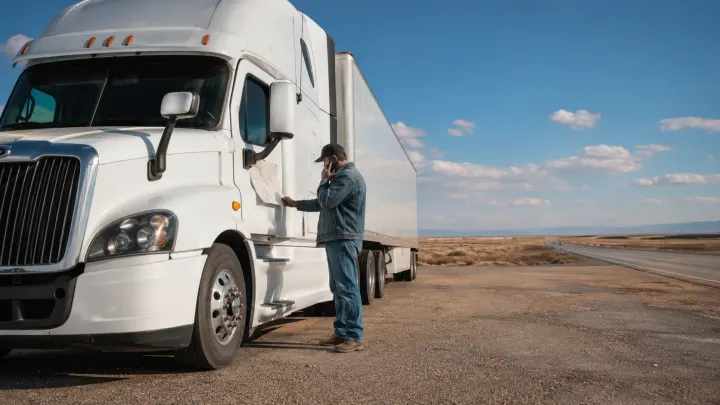
For commercial drivers, being selected for a DOT random drug test does not mean the driver has to return to their home state before completing the test. Truck drivers frequently cross state lines for deliveries, pickups, and long-haul routes, so it is common for a driver to be away from their normal terminal when a random testing selection is made.
Under FMCSA random testing requirements, a selected driver must generally complete the test during the applicable selection period. Once the driver is notified of the selection, the driver must proceed to the collection site as soon as possible. Employers and consortium/third-party administrators (C/TPAs) should have procedures that allow drivers to complete testing while traveling rather than simply ignoring the selection.
What Is a DOT Random Drug Test?
A DOT random drug test is an unannounced drug or alcohol test required for employees who perform safety-sensitive transportation functions covered by DOT regulations. For FMCSA-regulated motor carriers, covered CDL drivers must be included in a DOT random testing program. Random selections must be made throughout the year, and each driver must have an equal chance of being selected.
Random testing is designed to discourage drug and alcohol use among safety-sensitive employees because drivers cannot predict when they may be selected. For 2026, FMCSA random testing rates remain at 50% for drugs and 10% for alcohol. Learn how frequently random drug and alcohol testing is required under DOT regulations.
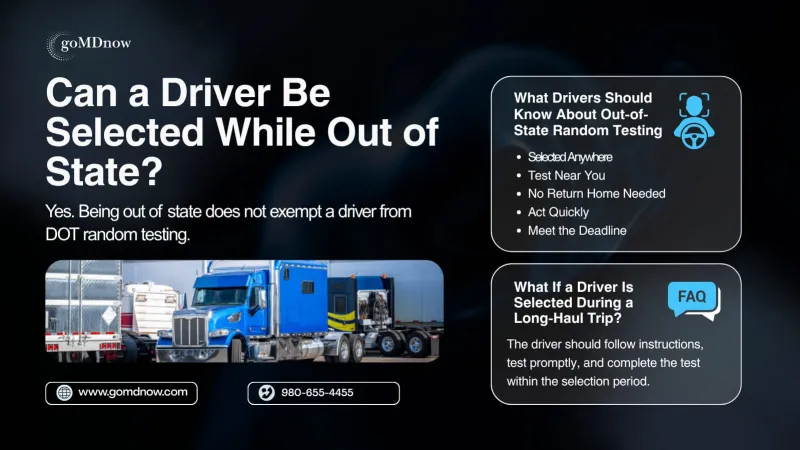
Can a Driver Be Selected While Out of State?
Yes. A driver does not become exempt from the DOT random testing requirement simply because they are traveling in another state.
For example, a driver based in Texas making a delivery in Ohio when their employer or C/TPA randomly selects them for a drug test may be able to complete the test at an appropriate collection site in Ohio rather than waiting until they return to Texas. This is especially important for long-haul drivers because waiting several days or weeks until they return home could cause the test to fall outside the required selection period — itself a compliance violation.
What Should the Driver Do After Being Selected?
The first step is to contact the employer, Designated Employer Representative (DER), or C/TPA according to the company's testing procedures. The driver should provide their current location and follow the instructions provided for completing the test.
In general, the process looks like this:
- The driver is randomly selected
- The employer or C/TPA notifies the driver
- The driver provides their current location if needed
- The employer or C/TPA identifies an appropriate collection site
- The driver proceeds to the collection site as soon as instructed
- The driver completes the required DOT drug and/or alcohol test using the proper chain of custody documentation
- The testing documentation is completed and retained as required
Does the Driver Have to Return to Their Home State?
Usually, no. There is generally no reason for a driver to travel back to their home state simply to complete a DOT random test if an appropriate collection site is available where the driver is currently located. A driver traveling from California to New York may be selected while in Pennsylvania — the employer or C/TPA can arrange for the driver to complete the test at an appropriate location in Pennsylvania rather than requiring the driver to return to California.
The key issue is not the driver's home state. The key issue is completing the required test within the applicable selection period and following the proper DOT testing procedures. Access to a nationwide collection site network makes this straightforward for most long-haul routes.
How Quickly Must the Driver Take the Test?
Once notified, the driver should proceed to the collection site immediately, consistent with the employer's instructions and applicable DOT requirements. Random testing is intended to remain unannounced — allowing a driver to postpone a test simply because they are traveling undermines the purpose of the program.
Important timing nuance: Under 49 CFR 382.305, random selections are made within selection periods — most FMCSA programs use calendar quarters. If a driver is selected in Q1 but the test is not completed until Q2, that is a compliance violation even if the annual test count is ultimately met. The test must be completed within the same selection period, not simply the same calendar year. This is why employers should never tell a driver to "wait until you get home" without a specific documented reason.
Alcohol testing timing: Random alcohol tests carry an additional timing restriction. Alcohol tests can only be conducted while the driver is performing safety-sensitive functions, just before performing them, or just after. A random alcohol test cannot be administered to an off-duty driver — even if they are simply between loads. Employers and DERs should verify the driver's duty status before issuing a random alcohol test order.
What If There Is No Collection Site Nearby?
Sometimes a driver may be in a remote location where a collection site is not immediately accessible. In that situation, the driver should contact the employer or DER immediately rather than deciding independently to delay the test.
FMCSA provides guidance for situations involving unforeseeable obstacles at a collection site — such as a closed facility, unavailable collector, or emergency. The driver should immediately contact the DER for instructions regarding an alternative collection site. The obstacle does not automatically eliminate the employer's responsibility to ensure the required test is completed. This is why having a compliant random testing consortium with nationwide collection site access matters.
What If the Driver Is on Vacation or Otherwise Unavailable?
Being temporarily away does not automatically mean the driver should be removed from the DOT random testing pool. FMCSA guidance states that an employee should generally remain in the random pool when there is a reasonable expectation that the employee will return to work. If a driver is on vacation, sick leave, or another temporary absence and is selected, the employer should follow its established procedures and applicable DOT requirements. The circumstances should be properly documented.
Can an Alternate Driver Be Selected?
Yes — but an alternate selection is not simply a convenient replacement for a driver who happens to be out of state. FMCSA allows an alternate driver to be selected when the originally selected driver will be unavailable for testing for the entire selection period because of circumstances such as a long-term absence, illness, injury, vacation, or another qualifying circumstance. The employer or C/TPA should document why the alternate driver was selected.
Out of state does not automatically mean unavailable. A driver working in another state may still be able to complete a DOT random drug test at a nearby collection site. Companies should not automatically replace a selected driver simply because the driver is traveling.
What Happens If the Driver Misses the Random Test?
Missing a random test can create a serious compliance issue. A driver who has been notified of a required random test should not ignore the notification, continue driving, or wait until the next selection cycle. If the test is not completed within the selection period, the motor carrier may be out of compliance. FMCSA best practices emphasize that operational difficulties should not excuse a selected employee from testing.
The consequences of a missed test may be treated similarly to a refusal to test — which carries the same consequences as a confirmed positive under DOT regulations, including removal from safety-sensitive duties and Clearinghouse reporting. See what qualifies as a DOT violation and the consequences that follow.
What Should Trucking Companies Do?
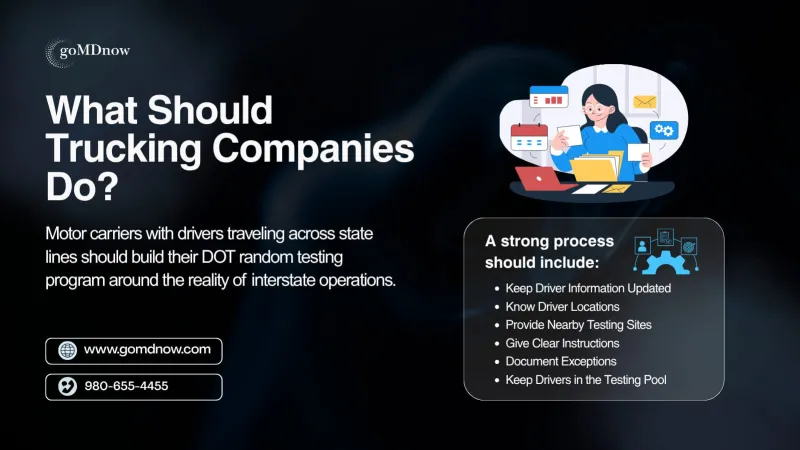
Motor carriers with drivers traveling across state lines should build their DOT random testing program around the reality of interstate operations. A strong process should include:
- Maintain Accurate Driver Information — keep current contact information and driver status so selected drivers can be reached quickly
- Know Where Drivers Are Working — when practical, employers should be able to determine the driver's current operating location after selection
- Use Accessible Collection Sites — a nationwide collection network makes it easier to direct drivers to appropriate testing facilities while away from their home terminal
- Give Clear Instructions — drivers should know who to contact after receiving a selection notification and where they are expected to report. The DER must be reachable at all times across all shifts
- Document Unusual Circumstances — if a selected driver cannot complete testing because of a legitimate circumstance, document what happened and follow applicable FMCSA guidance
- Track Selection Period Deadlines — confirm each test is completed within the correct quarterly or selection period, not just counted toward the annual total
- Do Not Remove Drivers from the Pool Without a Reason — temporary travel, vacation, or illness does not automatically justify removal from the random testing pool
How goMDnow Helps with Nationwide Random Testing
Managing DOT random drug testing becomes challenging when drivers operate across multiple states. goMDnow helps trucking companies, owner-operators, and employers manage their drug and alcohol testing requirements with nationwide testing access and compliance-focused services. A nationwide testing network makes it easier for a selected driver to locate an appropriate collection site while traveling without returning to the home terminal.
Explore our drug testing pricing, learn about our random testing consortium enrollment, or contact us today to build a program designed for interstate operations.
Final Takeaway
Being out of state when selected for a DOT random drug test does not excuse a CDL driver from testing. For most traveling drivers, the practical solution is to complete the test at an appropriate collection site near their current location. The driver should respond promptly after notification, follow the employer or C/TPA's instructions, and complete the test within the applicable selection period — not just the calendar year.
For trucking companies, having a reliable DOT random testing program, nationwide collection access, accurate driver information, and clear procedures for unavailable drivers can help reduce compliance problems and avoid the violations that follow missed selections.
Frequently Asked Questions
1. Can a CDL driver take a DOT random test in another state?
Yes. A driver who is traveling can generally complete the required test at an appropriate collection site in the state where they are located, rather than returning to their home state.
2. What if a driver is selected while on a long-haul trip?
The driver should follow the employer's or C/TPA's instructions and proceed to an appropriate collection site as soon as possible. The test must be completed during the applicable selection period — not just the same calendar year.
3. Can an employer replace an out-of-state driver with another driver?
Not automatically. An alternate may be appropriate only when the originally selected driver will be unavailable for the entire selection period because of a long-term absence, vacation, illness, injury, or another qualifying situation.
4. What if the nearest collection site is closed?
The driver should immediately contact the DER or employer for instructions. An unforeseeable obstacle at a collection site does not eliminate the employer's responsibility to ensure the test is completed.
5. Can a driver refuse a random test because they are out of state?
No. Being out of state is not a reason to ignore a random testing notification. The driver should communicate with the employer or DER and follow the instructions provided. Refusing or missing a test without documentation may be treated as a refusal to test — with the same consequences as a confirmed positive result.