
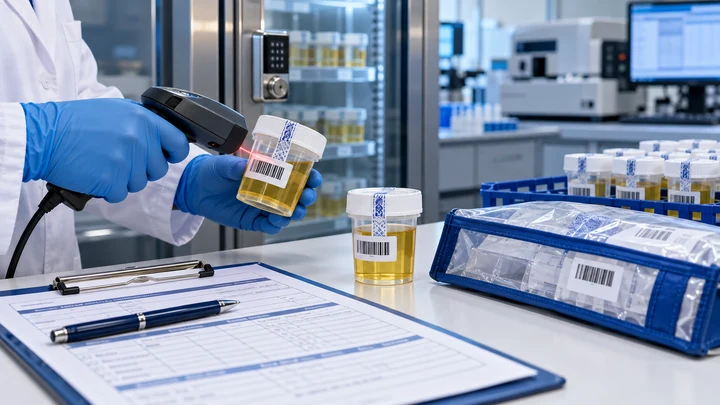
Drug testing laboratories play an important role in maintaining the accuracy and reliability of drug test results. Every specimen must be handled carefully from the moment it is collected until the result is reported. Even a small mistake during collection, transportation, storage, or testing can affect the testing process.
Specimen integrity is especially important for employers, safety-sensitive industries, and Department of Transportation (DOT)-regulated drug testing programs. Proper procedures help protect specimens from contamination, tampering, mix-ups, and unauthorized access.
Understanding how drug testing laboratories protect specimen integrity can help employers, drivers, and individuals understand what happens to a specimen after collection and why laboratory procedures matter.
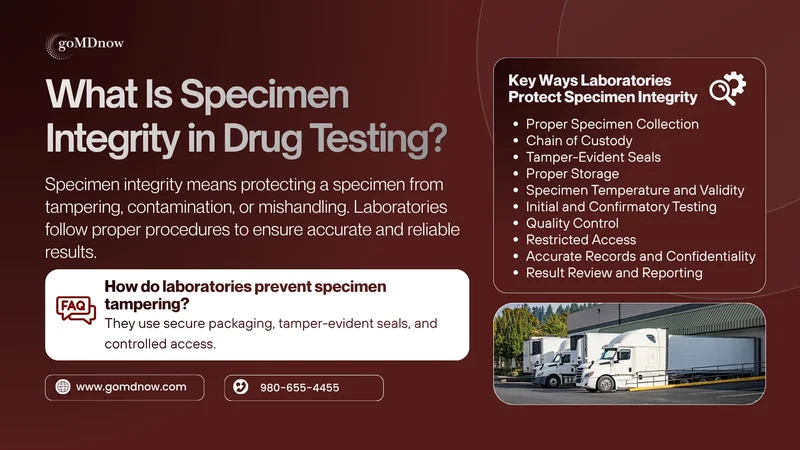
What Is Specimen Integrity in Drug Testing?
Specimen integrity refers to maintaining a specimen's identity, condition, and security throughout the drug testing process. It helps ensure that the specimen tested in the laboratory belongs to the correct donor and has not been altered, contaminated, or improperly handled.
In drug testing, laboratories commonly analyze urine specimens, while other testing programs may use hair or oral fluid. Each specimen type requires appropriate collection, handling, storage, and testing procedures.
For DOT-regulated urine drug testing, federal regulations establish specific requirements for specimen collection, transportation, laboratory analysis, and reporting.
Maintaining specimen integrity helps laboratories produce reliable results and supports confidence in the drug testing process.
1. Following Proper Specimen Collection Procedures
Specimen integrity begins at the collection site, before the specimen reaches the laboratory. Collection personnel must follow established procedures to help prevent contamination, substitution, and identification errors.
For DOT urine drug testing, collectors follow the procedures outlined in 49 CFR Part 40. These procedures include verifying the donor's identity, preparing the collection area, providing the appropriate collection materials, and completing the required documentation.
Collectors must also follow applicable requirements for checking the specimen's temperature and identifying circumstances that may require additional collection procedures.
Proper collection procedures help ensure that the specimen is suitable for testing and that its origin can be verified.
2. Using Chain of Custody Documentation
Chain of custody documentation records the handling and transfer of a specimen throughout the testing process. It helps establish who collected the specimen, when it was collected, and how it moved between authorized parties.
In DOT drug testing, the Federal Drug Testing Custody and Control Form (CCF) is used to document the collection and transfer process. Electronic custody and control forms (eCCFs) can also be used when applicable requirements are met.
The documentation helps connect the donor, specimen, collection site, and laboratory records.
If a discrepancy is identified, authorized personnel can review the documentation to understand where the issue occurred. Accurate chain of custody records also helps reduce the risk of specimen mix-ups and administrative errors.
3. Securing Specimens with Tamper-Evident Seals
Laboratories and collection personnel use specimen containers, packaging, and security seals to help protect specimens from unauthorized access or tampering. For DOT urine collections, the required seals are applied to the specimen bottles as part of the collection process. The donor is generally asked to initial the seals to confirm that they were applied in their presence.
When specimens arrive at the laboratory, authorized personnel inspect the packaging and seals for signs of damage, tampering, or other irregularities.
If a specimen arrives with a broken seal, an identification problem, or another significant discrepancy, the laboratory follows applicable procedures to determine whether the specimen can be tested and how the issue must be handled.
Tamper-evident packaging helps reveal potential interference and supports specimen security during transportation.
4. Maintaining Proper Storage Conditions
Proper storage helps preserve specimen quality before and during laboratory testing. Storage requirements vary depending on the specimen type, the testing method, and the applicable procedures.
Laboratories follow established protocols for specimen storage, including appropriate temperature conditions and restrictions on access.
For urine drug testing, laboratories use validated procedures to maintain specimen stability and protect samples from conditions that could affect the analysis. If a specimen must be stored for additional testing, a review, or another authorized purpose, the laboratory follows the applicable storage and retention requirements.
Maintaining suitable storage conditions helps prevent specimen deterioration and supports reliable testing.
5. Monitoring Specimen Temperature and Validity
Specimen validity testing helps identify characteristics that may indicate a specimen has been substituted, adulterated, diluted, or otherwise compromised.
For DOT urine collections, the collector checks the specimen temperature within the required time after the donor provides it. The temperature check helps identify specimens that may not be consistent with a freshly collected urine specimen. Laboratories may also conduct specimen validity tests as required by the applicable testing program. These can include checks for creatinine, specific gravity, pH, and certain adulterants.
The results help determine whether the specimen meets the applicable validity criteria.
A specimen's validity issue does not automatically establish why the specimen has an unusual characteristic. The finding must be evaluated according to the relevant procedures and reporting requirements.
6. Using Initial and Confirmatory Testing
Drug testing laboratories use established analytical methods to identify drugs and their metabolites in specimens. Depending on the testing program, the process may include an initial screening test followed by confirmatory testing when required.
Initial testing helps identify specimens that require further analysis. If a specimen produces a non-negative initial result, confirmatory testing uses a different analytical method to determine whether a specific drug or metabolite is present.
Techniques such as gas chromatography-mass spectrometry (GC-MS) and liquid chromatography-tandem mass spectrometry (LC-MS/MS) may be used for confirmation.
Confirmatory testing helps distinguish an initial screening result from a verified analytical finding. Laboratories must follow the applicable testing guidelines, cutoff concentrations, and quality control procedures.
These steps help reduce the risk of reporting an incorrect result based solely on an initial screening test.
7. Using Quality Control and Laboratory Equipment Checks
Laboratories follow quality control procedures to verify that testing methods and equipment are working correctly.
Quality-control measures may include:
- Control samples: Used to check whether the testing process is performing as expected.
- Equipment calibration: Helps ensure instruments produce accurate and consistent measurements.
- Method validation: Establishes that a testing method performs appropriately for its intended purpose.
- Proficiency testing: Evaluates laboratory performance using samples with known or independently established results.
- Routine maintenance: Helps identify equipment problems that could affect testing.
Laboratory personnel review quality-control results according to established acceptance criteria. If a control result falls outside the permitted range, the laboratory investigates the issue and takes appropriate corrective action before releasing affected results.
These measures help identify analytical problems and maintain consistent testing performance.
8. Restricting Access to Specimens and Laboratory Areas
Physical security is another important part of specimen integrity. Laboratories use controlled access to protect specimens, testing equipment, and confidential records.
Access to restricted areas is limited to authorized personnel. Laboratories may use identification badges, access logs, locked storage areas, and visitor escort procedures.
Under applicable federal requirements, laboratories must maintain security measures that prevent unauthorized individuals from handling specimens or accessing testing and record storage areas.
Security procedures also help protect specimens while they are awaiting analysis, undergoing additional testing, or being retained after results are reported.
Limiting access reduces opportunities for unauthorized handling and supports the accountability of laboratory personnel.
9. Maintaining Accurate Records and Confidentiality
Accurate records allow laboratories to track specimens, document testing activities, and support the reporting process. Laboratory records may include specimen identification information, chain of custody documentation, analytical results, quality-control records, and details of any additional testing.
For DOT-regulated testing, laboratories must follow applicable federal requirements for specimen retention and documentation. Certain specimens with positive, adulterated, substituted, or invalid results must be retained for at least one year under 49 CFR § 40.84. Additional retention may be required when a proper written request is received.
Confidentiality is equally important. Drug testing records should be accessible only to authorized individuals for legitimate purposes. Laboratories and other parties involved in the testing process must follow applicable privacy, security, and disclosure requirements.
Protecting records helps prevent unauthorized disclosure and supports the responsible handling of sensitive employee information.
10. Reviewing and Reporting Results Correctly
Specimen integrity does not end when laboratory analysis is complete. Results must also be documented and reported through the appropriate process.
For DOT drug testing, the laboratory reports its findings to the designated Medical Review Officer (MRO). The MRO reviews laboratory results and conducts the required verification process before communicating the verified result to the appropriate parties.
If a laboratory identifies a specimen's problem, such as an invalid result or evidence of adulteration, the finding must be handled according to the applicable federal procedures.
A laboratory finding alone does not necessarily establish that a donor intentionally tampered with a specimen. The MRO and other authorized personnel follow the relevant requirements to determine the appropriate outcome.
This review process helps ensure that laboratory findings are interpreted and reported correctly rather than treated as automatic conclusions about an individual's actions.
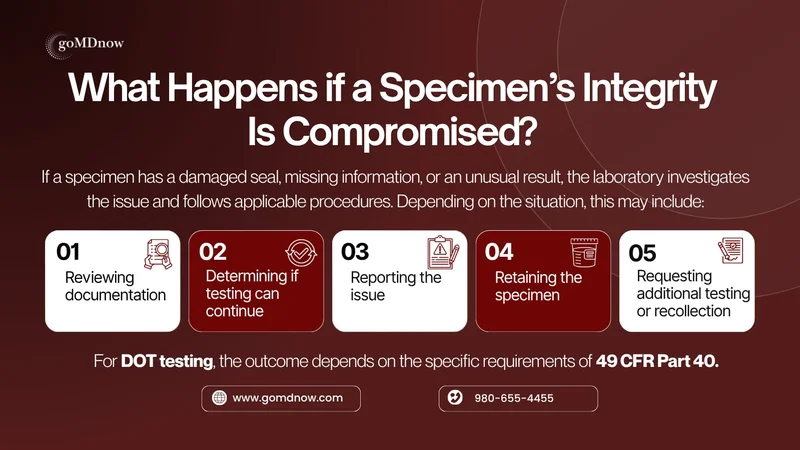
What Happens if a Specimen's Integrity Is Compromised?
If a laboratory identifies a specimen with a damaged seal, missing information, an identification discrepancy, or an unusual validity result, it follows established procedures to determine the next steps.
Depending on the issue, the laboratory may:
- Investigate the discrepancy and review the accompanying documentation.
- Determine whether the specimen meets the requirements for testing.
- Report the appropriate result or specimen problem.
- Retain the specimen when required.
- Follow applicable procedures for additional testing or recollection.
For DOT testing, the outcome depends on the specific circumstances and the requirements of 49 CFR Part 40. Not every irregularity automatically means that a test must be canceled, and not every unusual specimen characteristic proves intentional tampering.
Following the correct procedures helps protect both the accuracy of the testing process and the rights of the individual being tested.
Why Specimen Integrity Matters for Employers and Drivers
Specimen integrity supports reliable drug testing results and helps employers make decisions based on properly handled and analyzed specimens.
For employers, it helps maintain confidence in workplace drug testing programs and supports compliance with applicable regulations.
For commercial drivers, proper specimen handling helps ensure that testing follows established procedures, and that results are supported by appropriate documentation and laboratory analysis.
DOT-regulated employers should work with qualified collection providers, appropriately certified laboratories, and experienced third-party administrators (TPAs) to help maintain compliance. Employers should also ensure that their drug testing programs follow current federal requirements and that employees understand the testing process.
How goMDnow Supports Drug Testing Compliance
goMDnow helps employers and commercial drivers manage drug testing requirements through its drug testing services and consortium programs.
For DOT-regulated employers and owner-operators, understanding specimen collection, laboratory procedures, and result reporting is an important part of maintaining a compliant drug testing program.
Working with an experienced drug testing provider can help simplify the process, from arranging a collection to coordinating the required testing and reporting procedures.
Whether you need DOT drug testing, pre-employment testing, or random testing program support, goMDnow can help you navigate your drug testing needs.
Contact goMDnow to learn more about our drug testing services and compliance solutions.
Frequently Asked Questions
1. What does specimen integrity mean in drug testing?
Specimen integrity means maintaining a specimen's identity, condition, and security from collection through testing and final disposition.
2. How do laboratories prevent specimen tampering?
Laboratories use tamper-evident seals, secure packaging, controlled access, chain of custody documentation, and specimen inspection procedures.
3. What is a chain of custody form?
A chain of custody form documents the collection, identification, handling, and transfer of a specimen throughout the drug testing process.
4. Can a damaged specimen seal affect a drug test?
Yes. A damaged or missing seal may create an integrity concern. The laboratory follows applicable procedures to determine how the specimen must be handled.
5. How long do DOT laboratories keep drug test specimens?
Under 49 CFR § 40.84, certain specimens reported as positive, adulterated, substituted, or invalid must be retained for at least one year, subject to applicable storage and additional retention requirements.
Conclusion
Drug testing laboratories protect specimen integrity through secure collection and transportation procedures, chain of custody documentation, tamper-evident seals, appropriate storage, specimen validity testing, quality-control measures, and restricted access.
These safeguards help laboratories maintain specimen identity, detect potential irregularities, and produce reliable analytical results.
For DOT-regulated drug testing, following the requirements of 49 CFR Part 40 is essential. Employers and drivers should understand these procedures and work with qualified providers to help ensure that drug testing is handled accurately, securely, and consistently.