
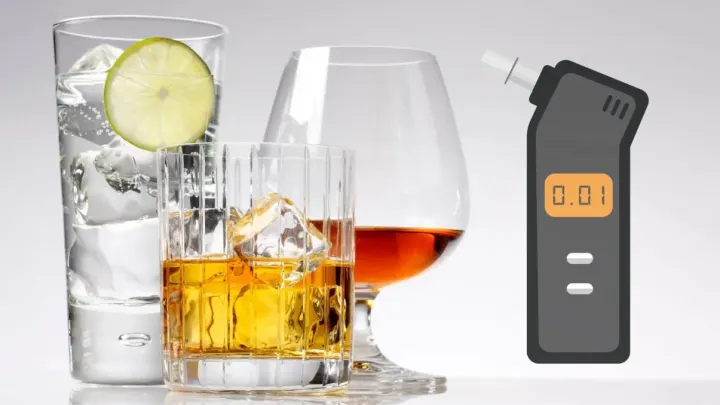
A breath alcohol test is one of the most widely used tools for verifying alcohol levels in drivers and safety-sensitive employees. At goMDnow, these tests support DOT alcohol testing, workplace compliance, and FMCSA-regulated industries. Breath tests provide fast, accurate readings, but several factors can influence how reliable the results are.
In this updated guide, you’ll learn what BAC means, why breath testing is essential, the legal limits, and the factors that can impact results. This article includes DOT-compliant terminology, updated regulatory details, and goMDnow-approved information for employers and CDL drivers.
What is BAC? (Blood Alcohol Concentration)
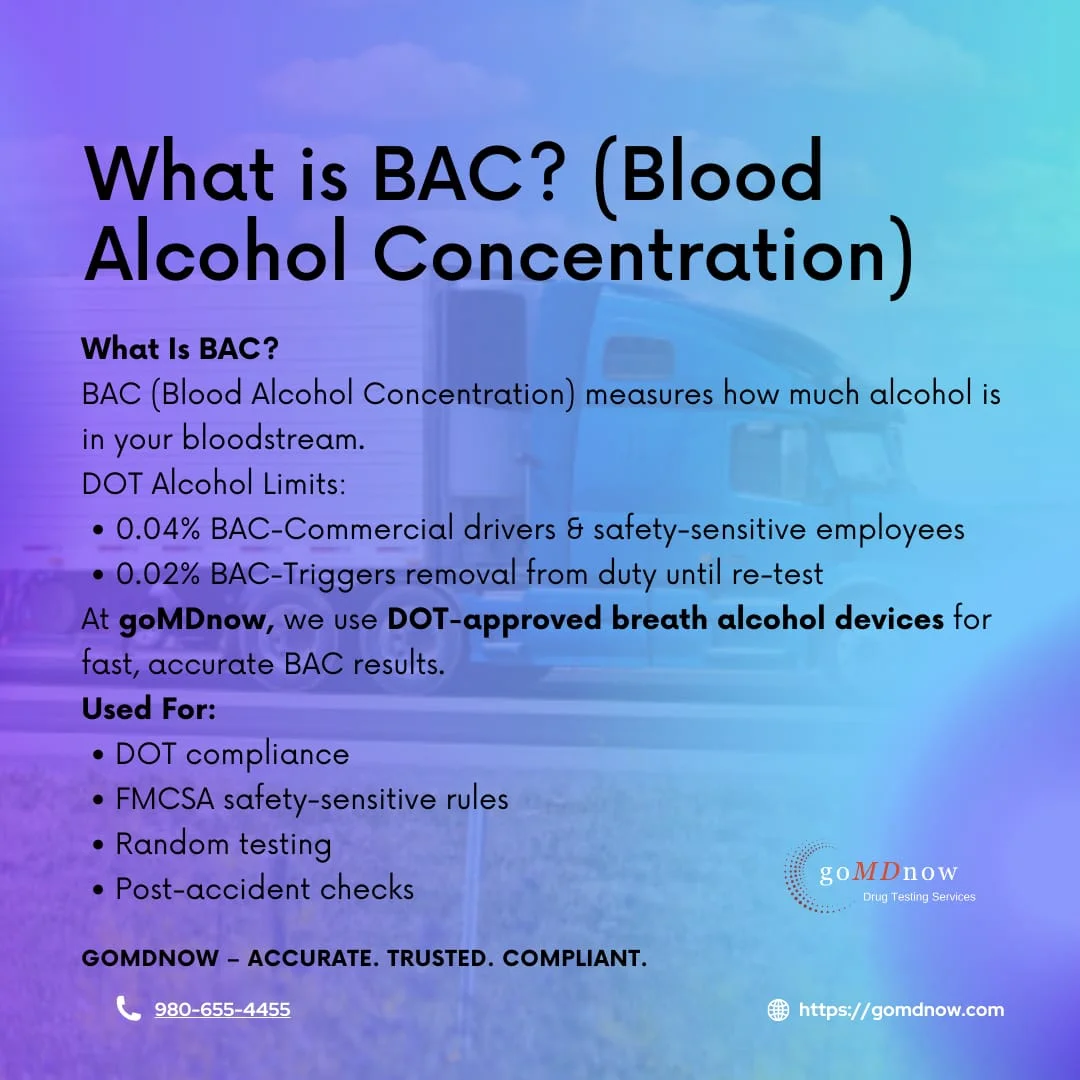
Blood Alcohol Concentration (BAC) measures the amount of alcohol in a person's bloodstream. A BAC of 0.08% means 0.08 grams of alcohol per 100 ml of blood.
At goMDnow, BAC is measured using DOT-approved evidential breath testing (EBT) devices, as required under 49 CFR Part 40. These analyzers convert alcohol in exhaled breath into an electronic signal that reflects a person’s alcohol level. This is crucial for:
- DOT alcohol test compliance
- FMCSA safety-sensitive regulations
- Random testing programs
- Post-accident evaluations
With goMDnow professional C/TPA services, companies stay compliant and audit-ready.
Why is a Breath Alcohol Test Used?
Breath alcohol testing is essential in industries regulated by DOT and workplaces that prioritize safety. At goMDnow, the test is commonly used for:
- DOT Compliance & FMCSA Requirements
DOT-regulated employers must keep workers below legal alcohol limits.
goMDnow DOT consortium services help companies maintain compliance easily. - Workplace Safety
A breath alcohol test helps prevent accidents in high-risk jobs such as trucking, construction, logistics, and transportation. - Random Alcohol Testing
goMDnow manages fair random testing for employers through C/TPA programs, ensuring unbiased selection. - Post-Accident and Reasonable Suspicion
When incidents occur, goMDnow alcohol testing helps determine if alcohol contributed to the event. - Fast & Reliable Results
goMDnow uses certified Breathalyzer machines that deliver instant and accurate readings.
Legal BAC Limits for Alcohol Testing
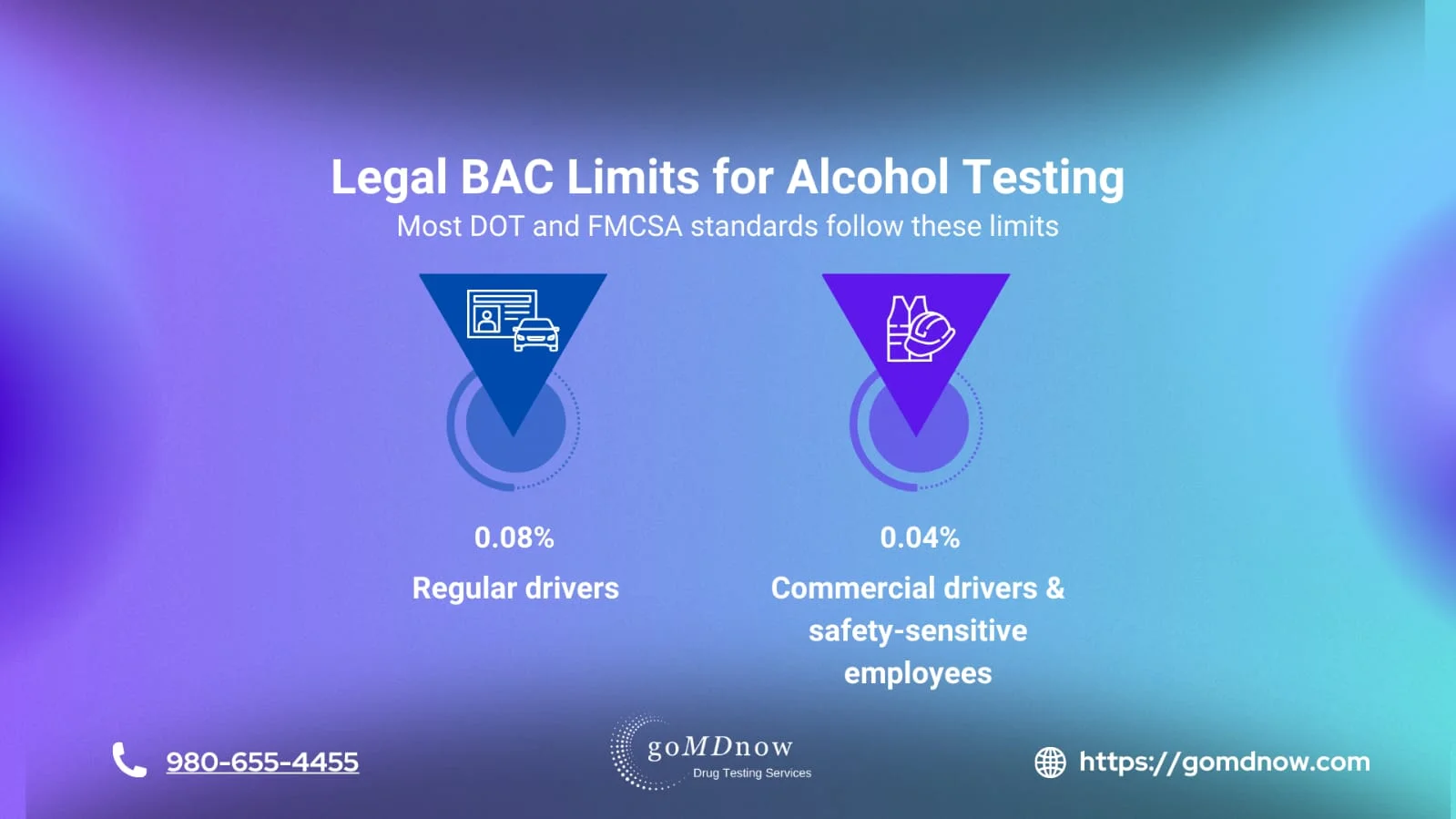
Most DOT and FMCSA standards follow:
- 0.08% for regular drivers
- 0.04% for commercial drivers and safety-sensitive employees
goMDnow ensures every test follows 49 CFR Part 40, which outlines the federal procedures for drug and alcohol testing, and FMCSA Part 382, which defines the rules and responsibilities for alcohol and controlled substance testing of commercial drivers. By following these mandatory federal regulations, goMDnow helps employers remain audit ready, avoid DOT violations, and maintain the highest level of safety and accuracy in every alcohol test.
Factors That Affect a Breath Alcohol Test
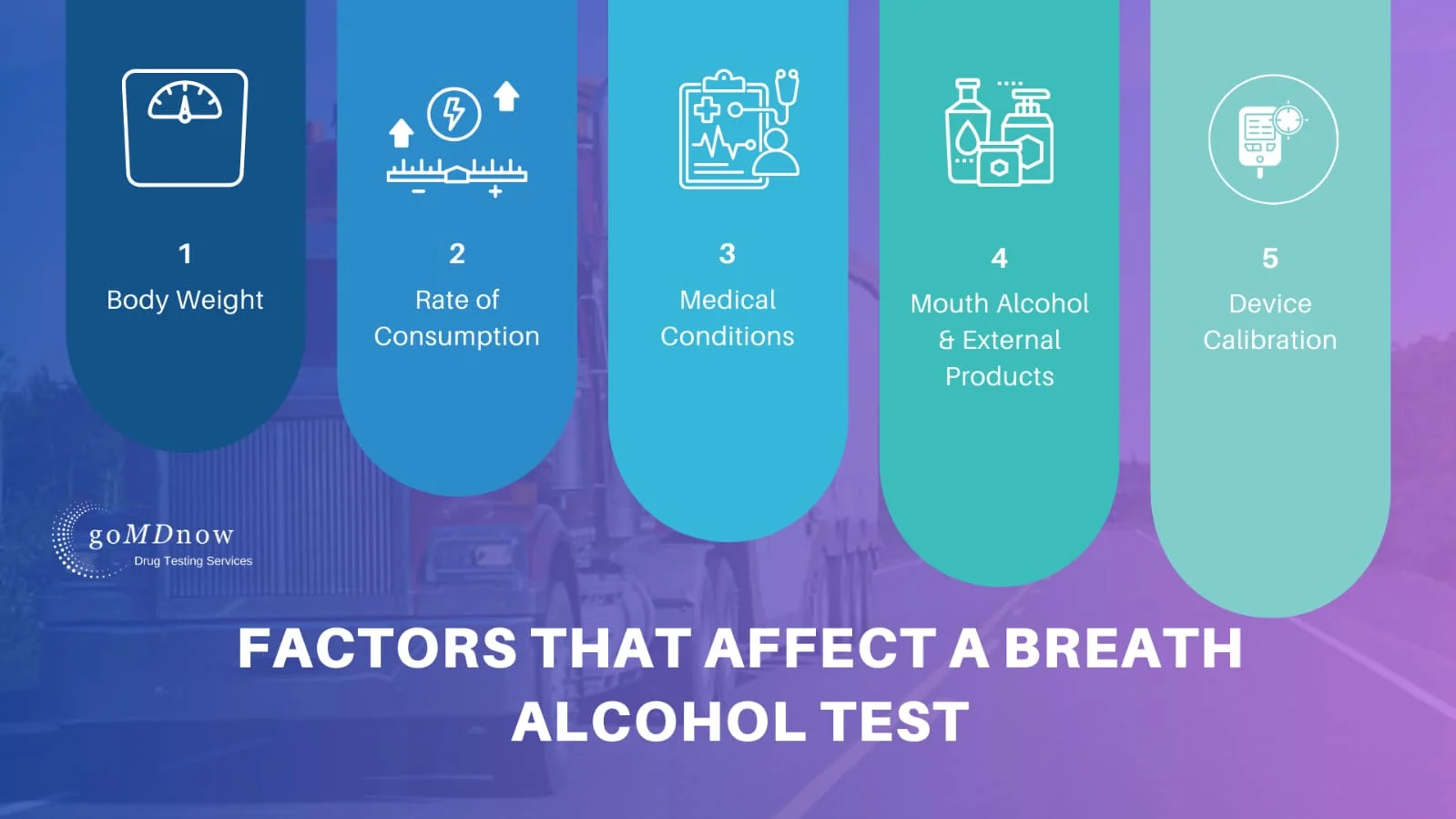
These factors can make or break the accuracy of a breath alcohol test. goMDnow follows strict rules to eliminate errors, but natural body differences still matter.
1. Body Weight
People with lower body weight typically show higher BAC after drinking the same amount.
goMDnow devices measure deep-lung air, providing the most reliable reading possible.
2. Gender
Women tend to reach a higher BAC faster because of:
- Less body water
- More body fat
- Slower alcohol metabolism
This is why goMDnow ensures standardized testing conditions for everyone.
3. Rate of Consumption
Drinking quickly spikes BAC. Drinking slowly gives the body more time to metabolize alcohol.
goMDnow testing process includes a mandatory wait period to avoid surface alcohol affecting results.
4. Medical Conditions
Conditions that can influence BAC accuracy include:
- Liver disease, which can impair alcohol metabolism and lead to higher blood alcohol levels.
- Diabetes, where elevated ketone levels may interfere with breath testing devices.
- Acid reflux, which can cause alcohol vapors to enter the mouth and produce falsely elevated readings.
- Kidney disorders, which may affect alcohol elimination and impact BAC measurements.
5. Mouth Alcohol & External Products
Breath test readings can be affected by:
- Mouthwash, which may leave residual alcohol in the oral cavity.
- Breathe spray, containing alcohol that can affect measurements.
- Medicated syrups, some of which have alcohol content.
- Vomiting, which can introduce alcohol vapors into the mouth.
- Gum or mints with alcohol, potentially causing falsely elevated results.
That’s why goMDnow enforces a strict 15–20 minute observation period before the test.
6. Device Calibration
A breath analyzer must be regularly maintained and calibrated.
goMDnow uses:
- DOT-approved devices, meeting federal standards for reliability.
- Certified calibration, performed regularly to maintain measurement accuracy.
- Technicians trained under 49 CFR Part 40, ensuring proper testing procedures and compliance.
This ensures zero testing errors.
7. Testing Procedure & Human Error
Talking, eating, or improper blowing technique can affect the result.
goMDnow eliminates these risks with:
- Professional BAT (Breath Alcohol Technician) training, to maintain expertise and compliance
- Standardized step-by-step testing, to ensure consistency and accuracy
- Accurate documentation, of all test results and observations
- Strict chain-of-custody procedures, to protect the integrity of samples and results
Read about:
Six Tips to Prepare for a Drug and Alcohol Test
Standard alcohol cut off level
Conclusion: goMDnow Keeps You Compliant
Breath alcohol testing plays a major role in safety, accuracy, and DOT compliance. However, many factors body weight, gender, drinking speed, medical conditions, mouth alcohol, and device calibration can impact a test. Understanding these factors helps employers and drivers stay safe and informed.
At goMDnow, we provide:
- DOT-compliant breathe alcohol testing
- Full C/TPA and DOT consortium services
- Random testing management
- Workplace drug and alcohol testing programs
- Compliance solutions to prevent DOT violations
Whether you’re an employer, a commercial driver, or a safety-sensitive worker, goMDnow ensures accurate results, fast service, and complete DOT compliance. Visit goMDnow to explore our testing services and choose the right plan for your workplace.