
Owner-operators are the backbone of the trucking industry. Across the United States, independent drivers help move freight, deliver essential goods, and keep supply chains running smoothly. While owning your own truck offers freedom and business opportunities, it also comes with serious responsibilities. One of the most important things is understanding the DOT Owner-Operator Program and following all required regulations.
The Department of Transportation (DOT) and the Federal Motor Carrier Safety Administration (FMCSA) have established rules to ensure safety on the road. These regulations apply not only to large fleets, but also to independent truck drivers operating under their own authority or leased to a carrier.
From drug and alcohol testing to Hours of Service, vehicle inspections, and compliance records, owner-operators must stay informed and organized. Knowing the rules of the road helps protect your license, your business, and your future.
What Is the DOT Owner-Operator Program?
The DOT Owner-Operator Program refers to the federal compliance requirements that apply to truck drivers who own and operate their own commercial vehicles. Unlike company drivers, owner-operators often wear multiple hats. You may be the driver, business owner, dispatcher, and compliance manager always.
That means you are responsible for meeting the same standards expected of larger trucking companies. Depending on your operation, this may include:
- DOT drug and alcohol testing compliance
- Driver qualification records
- FMCSA Clearinghouse responsibilities
- Hours of Service (HOS) tracking
- Vehicle inspections and maintenance
- Safety documentation
- Insurance and registration updates
Failing to meet these obligations can lead to fines, delays, or even suspension of operating authority. Review the most costly compliance failures trucking companies make to understand where most violations originate.
Who Must Follow DOT Regulations?
If you operate a Commercial Motor Vehicle (CMV), federal DOT regulations may apply. In many cases, owner-operators are covered if they:
- Operate a vehicle with a Gross Vehicle Weight Rating (GVWR) of 26,001 pounds or more
- Transport freight across state lines
- Carry hazardous materials requiring placards
- Transport 16 or more passengers including the driver
- Work in safety-sensitive transportation roles
Even if you only drive locally, some state-specific rules may still apply. It is important to know whether you fall under interstate or intrastate regulations.
DOT Drug and Alcohol Testing Requirements
One of the most critical areas of compliance for owner-operators is DOT drug and alcohol testing. Drivers who perform safety-sensitive functions must meet the testing standards outlined in 49 CFR Part 40 and FMCSA regulations.
Because owner-operators cannot randomly test themselves, they must join a DOT-compliant consortium or third-party administrator (TPA).
Required DOT Testing Types
Owner-operators may be subject to:
- Pre-employment drug testing before operating in a safety-sensitive role
- Random drug and alcohol testing through a consortium pool at the 2026 FMCSA rate of 50% for drugs and 10% for alcohol
- Post-accident testing after qualifying incidents
- Reasonable suspicion testing when applicable
- Return-to-duty testing after violations
- Follow-up testing as directed by an SAP process
Missing a required test or failing to participate in a random testing program can create serious compliance problems. Understand how frequently random drug and alcohol testing is required throughout the year.
Why Consortium Enrollment Matters
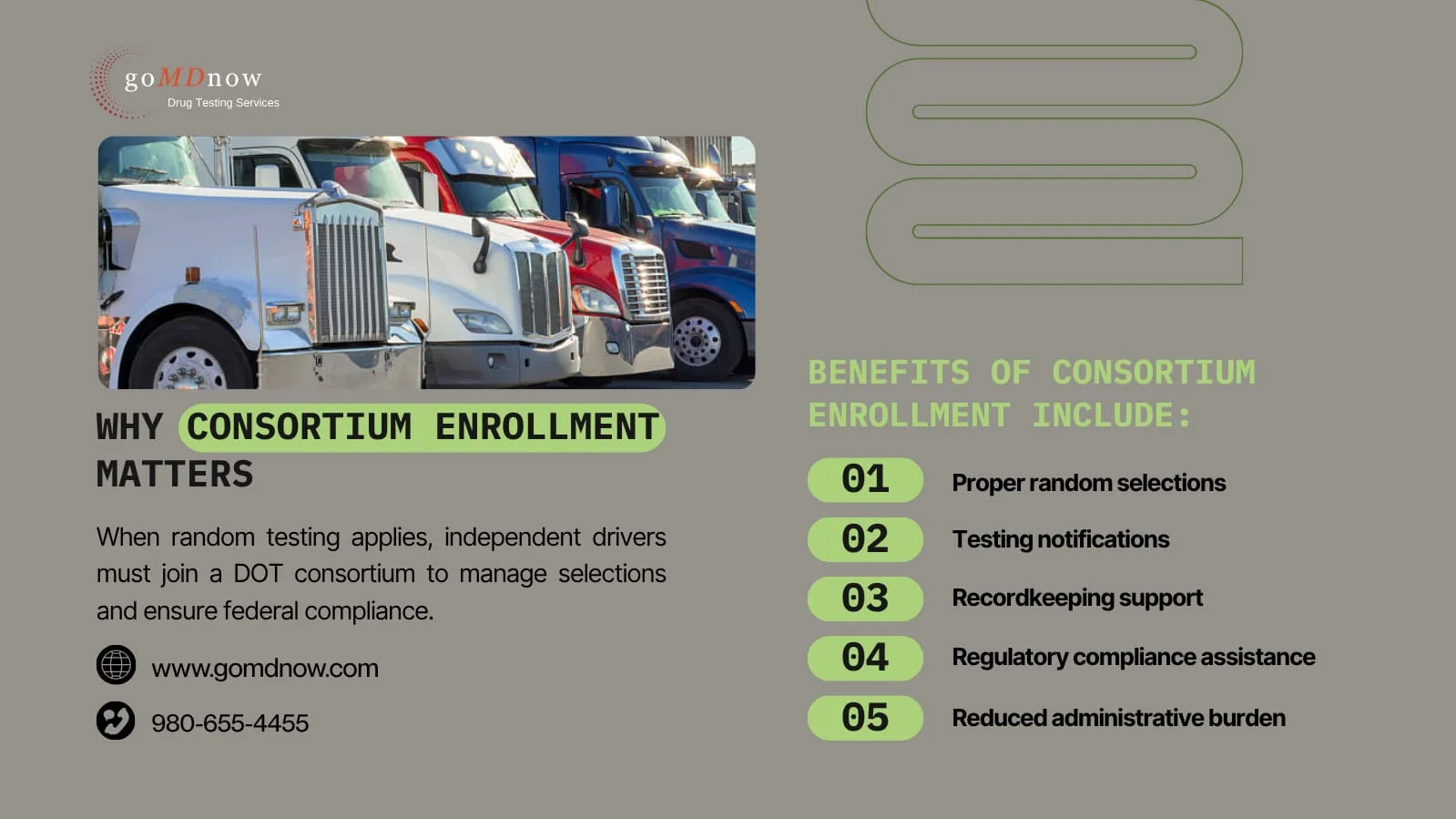
For independent drivers, joining a DOT consortium is not optional when random testing applies. A consortium manages the random selection process and ensures testing is handled according to federal rules.
Benefits of consortium enrollment include:
- Proper random selections compliant with FMCSA rates
- Testing notifications
- Recordkeeping support
- Regulatory compliance assistance
- Reduced administrative burden
Working with a trusted provider helps owner-operators stay focused on the road while maintaining compliance. Learn more about joining a DOT random testing consortium and understand the difference between a random testing pool vs. stand-alone pool.
FMCSA Clearinghouse Responsibilities
The FMCSA Drug & Alcohol Clearinghouse is a secure online database that tracks drug and alcohol program violations for CDL drivers. Owner-operators must manage their Clearinghouse obligations as both employer and driver when applicable.
Common Responsibilities Include:
- Registering an account
- Running required queries before hiring any CDL driver
- Maintaining annual checks
- Reporting violations when required
- Completing return-to-duty steps if necessary
Ignoring Clearinghouse rules can delay operations and create penalties. As of November 18, 2024, unresolved Clearinghouse violations now trigger automatic CDL downgrades through full SDLA integration. Learn about common Clearinghouse violations and how to stay compliant.
Hours of Service Rules for Owner-Operators
Fatigue is a major safety concern in trucking. That is why owner-operators must follow Hours of Service (HOS) rules designed to limit excessive driving time. Most drivers are also required to use an Electronic Logging Device (ELD) unless exempt.
Common HOS Limits Include:
- Up to 11 hours driving after 10 consecutive hours off duty
- 14-hour on-duty driving window
- 30-minute break requirement in certain cases
- 60/70-hour weekly limits depending on schedule
Accurate logs are essential. HOS violations can result in fines, roadside issues, or out-of-service orders. Note: In early 2026, FMCSA launched two pilot programs studying increased flexibility in driving window rules including a pause option for the 14-hour window and expanded sleeper berth split options. Owner-operators should monitor FMCSA updates for developments from these programs.
Driver Qualification File Requirements
Many owner-operators must maintain a Driver Qualification File (DQF) containing important documents that verify they are qualified to operate commercially.
Typical records may include:
- Valid Commercial Driver's License (CDL)
- Medical Examiner's Certificate note that as of January 10, 2026, motor carriers must verify CDL driver medical certifications exclusively through Motor Vehicle Records (MVRs). The temporary paper MEC waiver has expired. Medical examiners now submit results electronically to the FMCSA National Registry
- Motor Vehicle Record (MVR) reviews
- Annual compliance reviews
- Employment history where required
- Road test or equivalent qualification records
Keeping these files current and organized is critical during DOT safety audits or inspections.
Vehicle Inspection and Maintenance Compliance
Your truck is more than equipment it is your business. DOT rules require owner-operators to keep vehicles safe and roadworthy.
Key Maintenance Requirements Include:
- Pre-trip inspections
- Post-trip defect reporting when needed
- Annual DOT inspections
- Brake, tire, and lighting checks
- Preventive maintenance scheduling
- Repair documentation
Regular maintenance reduces downtime, prevents breakdowns, and helps avoid violations during roadside inspections.
Common Compliance Mistakes Owner-Operators Make
Many owner-operators work hard but still run into avoidable issues. Common mistakes include:
- Not joining a random testing consortium
- Missing testing notifications
- Expired medical certificates now must be verified through MVR, not paper MEC
- Incomplete qualification files
- Poor maintenance records
- Incorrect ELD logs
- Missing annual Clearinghouse checks
- Ignoring DOT updates
These errors can lead to costly disruptions and enforcement action. See what qualifies as a DOT violation and the penalties that follow.
How to Stay Compliant as an Independent Driver
Running your own trucking business requires discipline. The best owner-operators treat compliance as part of daily operations.
Smart Compliance Tips:
- Keep digital and paper records organized
- Set reminders for license and medical expirations and monitor MVR for medical certification status
- Respond immediately to test notifications
- Review ELD logs regularly
- Inspect equipment before every trip
- Use reliable compliance partners
- Stay informed about regulation changes
Consistency helps reduce risk and protects your reputation. Review how trucking companies stay DOT compliant for a broader compliance checklist.
The Business Value of Compliance
Some drivers see compliance as paperwork, but it is much more than that. Following DOT rules can improve business performance.
Benefits of Strong Compliance:
- Fewer fines and penalties
- Less downtime
- Better safety record
- Improved shipper confidence
- Easier contract opportunities
- Long-term business stability
A professional compliance system can become a competitive advantage.
Why goMDnow Is a Trusted Partner for Owner-Operators
At goMDnow, we understand the challenges independent truck drivers face. Managing freight, schedules, maintenance, and regulations alone can be overwhelming. Our goal is to simplify DOT compliance so owner-operators can focus on driving and growing their business.
goMDnow Services Include:
- DOT drug and alcohol testing programs
- Consortium enrollment and management
- Random testing administration
- Nationwide testing support through our extensive collection site network
- Fast and accurate reporting
- Compliance guidance for owner-operators
- Reliable customer support
Whether you are starting out or already established, goMDnow provides dependable solutions built for the trucking industry. Learn more about why every owner-operator needs a TPA or C/TPA and explore our drug testing pricing.
Preparing for the Future as an Owner-Operator
The trucking industry continues to evolve with new technologies, updated regulations, and higher safety expectations. Successful owner-operators stay adaptable.
That means:
- Embracing digital compliance tools
- Keeping documentation ready
- Investing in truck maintenance
- Using professional testing services
- Building a reputation for reliability
The more prepared you are, the stronger your business becomes.
FAQs
1. Do owner-operators need DOT drug testing?
Yes. If subject to FMCSA regulations, owner-operators must participate in a compliant testing program including the DOT 5-panel urine drug test for all required testing events.
2. Can an owner-operator run their own random testing?
No. They must join a DOT-approved consortium or TPA. The 2026 FMCSA random drug testing rate is 50% for drugs and 10% for alcohol.
3. Is Clearinghouse registration required?
Yes, for CDL drivers covered by FMCSA drug and alcohol rules. Owner-operators must register and manage queries as both employer and driver.
4. Do owner-operators need ELD logs?
Most do, unless they qualify for a specific exemption such as the short-haul or older vehicle exemption.
5. How can goMDnow help?
goMDnow offers consortium enrollment, DOT testing, reporting, and compliance support for independent owner-operators. Contact us to get started.
Final Thoughts
The DOT Owner-Operator Program is a vital part of operating legally and safely as an independent truck driver. While the responsibilities can seem complex, they are manageable with the right systems and support.
From drug testing and Clearinghouse compliance to Hours of Service and vehicle maintenance, every requirement plays a role in protecting drivers and the public.
If you want to stay compliant, avoid delays, and run a stronger business, partner with professionals who understand the industry. goMDnow is your trusted source for DOT testing and owner-operator compliance solutions.