
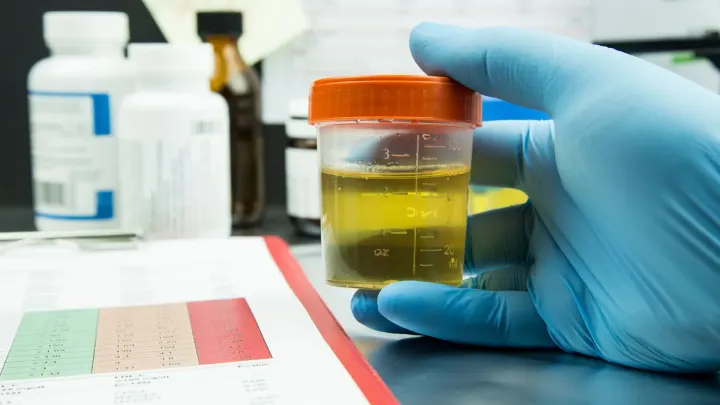
The DOT urine drug test is a mandatory requirement for safety-sensitive employees regulated by the U.S. Department of Transportation (DOT). Whether you're a commercial driver, employer, owner-operator, or part of a DOT-regulated workforce, understanding how the testing process works helps you stay compliant and avoid unnecessary delays or violations.
Unlike many workplace drug tests, DOT urine testing follows strict federal procedures established to ensure accuracy, fairness, and specimen integrity. Every step-from identity verification to laboratory analysis is carefully monitored.
In this guide, you'll learn everything you need to know about DOT urine testing, including how it works, what substances are tested, when testing is required, and common myths that often confuse drivers.
What Is a DOT of Urine Test?
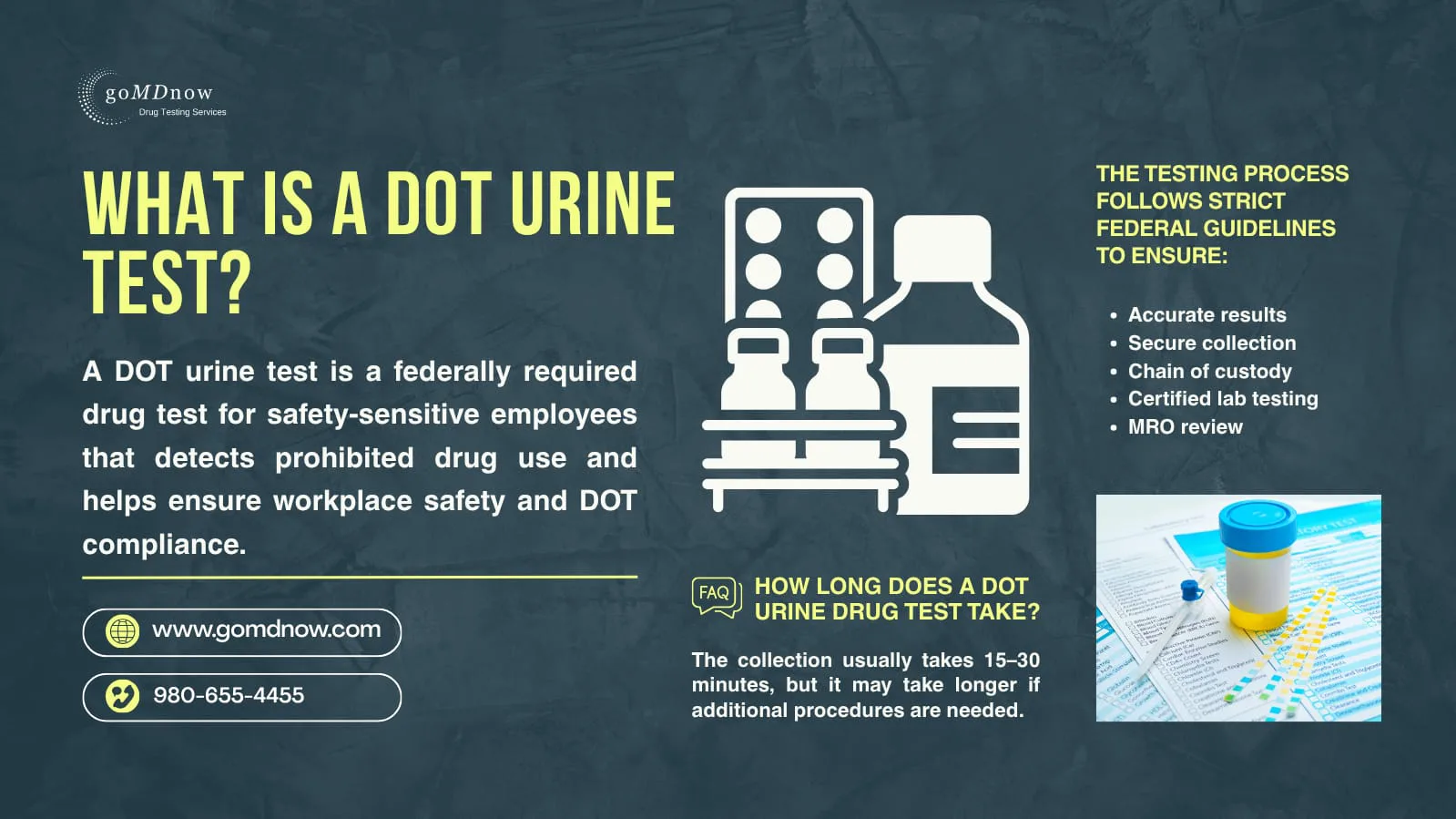
A DOT urine test is a federally regulated drug screening required for employees performing safety-sensitive duties under DOT agencies such as the Federal Motor Carrier Safety Administration (FMCSA).
The test detects the use of prohibited drugs that could impair an employee's ability to safely operate commercial vehicles or perform other regulated job functions.
The testing process follows strict federal guidelines to ensure:
- Accurate results
- Secure specimen collection
- Chain of custody documentation
- Certified laboratory testing
- Medical Review Officer (MRO) verification
Who Must Take a DOT Urine Test?
DOT urine testing applies to employees working in safety-sensitive positions, including:
- Commercial truck drivers (CDL holders)
- Bus drivers
- Transit operators
- Railroad employees
- Pipeline workers
- Aviation personnel
- Maritime employees Employers regulated by the DOT are legally required to maintain a compliant drug testing program.
When Is DOT Urine Testing Required?
DOT urine drug testing is required under several circumstances. 1. Pre-Employment Testing Applicants must pass a DOT drug test before performing safety-sensitive work.
2. Random Testing Employees are selected through a scientifically random process throughout the year.
3. Reasonable Suspicion Testing Testing may be required if a trained supervisor observes signs of drug use or impairment.
4. Post-Accident Testing Following certain accidents, DOT regulations require drug testing based on specific reporting criteria.
5. Return-to-Duty Testing Employees who previously violated DOT drug and alcohol regulations must complete a return-to-duty test before resuming safety-sensitive duties.
6. Follow-Up Testing Additional unannounced testing is required after returning to work as directed by a Substance Abuse Professional (SAP).
What Drugs Does a DOT Urine Test Detect?
The DOT urine drug test screens for five categories of drugs (commonly called the DOT 5panel test):
- Marijuana (THC)
- Cocaine
- Amphetamines
- Opioids
- Phencyclidine (PCP) The testing panel follows federal DOT regulations and does not include alcohol testing, which is performed separately using breath or saliva methods when required.
How Does the DOT Urine Test Process Work?
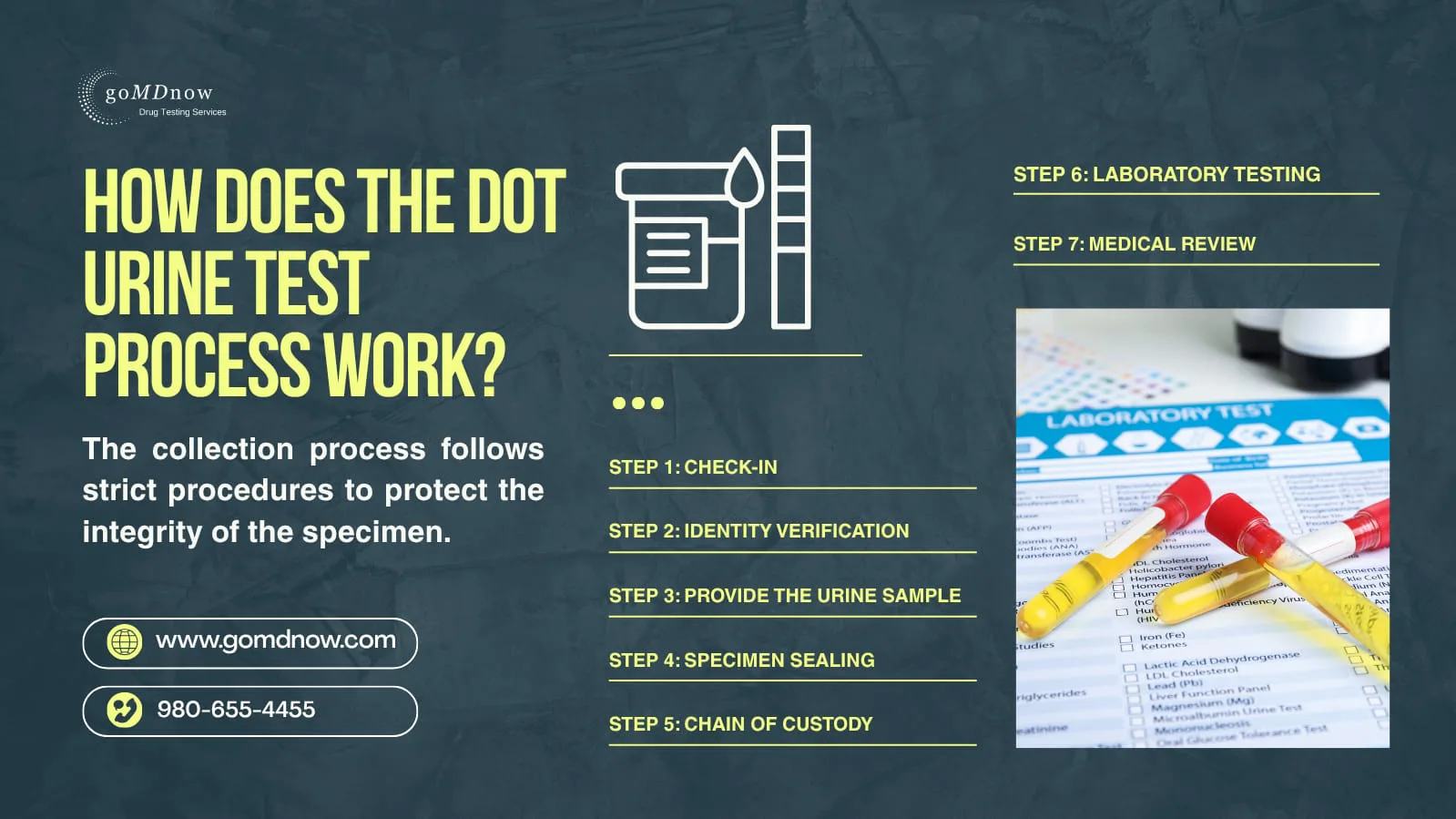
The collection process follows strict procedures to protect the integrity of the specimen. Step 1: Check-In The employee presents a valid government-issued photo ID.
Step 2: Identity Verification The collector verifies the individual's identity and completes the required paperwork.
Step 3: Provide the Urine Sample The donor provides a urine specimen in a secure collection area following DOT collection procedures.
Step 4: Specimen Sealing The specimen is divided into two bottles (primary and split specimen), sealed, and labeled in the employee's presence.
Step 5: Chain of Custody Both the collector and donor verify the information and complete the Federal Custody and Control Form (CCF).
Step 6: Laboratory Testing A certified laboratory analyzes the specimen using federally approved testing methods.
Step 7: Medical Review If a result is non-negative, a Medical Review Officer (MRO) contacts the donor to determine whether there is a legitimate medical explanation before reporting the final verified result.
How Long Does It Take to Get DOT Urine Test Results?
Result times may vary depending on laboratory processing. Typical turnaround times:
- Negative results: 1-3 business days
- Non-negative results: Several additional days due to confirmation testing and MRO
review
Can Prescription Medications Affect the Test?
Yes. Certain prescription medications may trigger an initial screening result. Our guide to prescription medication and workplace testing explains why a positive laboratory screening does not automatically mean a DOT violation. The Medical Review Officer reviews:
- Valid prescriptions
- Medical documentation
- Laboratory findings Only after the review is the final verified result reported.
Can You Fail a DOT Urine Test by Drinking Too Much Water?
Drinking excessive amounts of water before testing may dilute the urine specimen. A diluted specimen may require additional testing depending on DOT regulations and employer policies. The best approach is to stay normally hydrated rather than attempting to alter the specimen.
What Happens If You Refuse a DOT Urine Test?
Refusing to test is treated the same as a positive drug test under DOT regulations. Some situations also require a DOT observed collection. Examples of refusal include:
- Failing to appear for testing
- Leaving before completing the process
- Refusing to provide a specimen
- Tampering with the specimen
- Not following collector instructions A refusal can immediately remove an employee from safety-sensitive duties.
Common DOT Urine Test Myths
Myth 1: Drinking lots of water will help you pass. False. Excessive water may only dilute the specimen and could require additional testing.
Myth 2: Home remedies can beat a DOT drug test. False. Certified laboratories use advanced testing methods designed to detect adulteration, tampering, and attempts involving synthetic urine.
Myth 3: Prescription medication automatically causes a failed test. False. The Medical Review Officer reviews legitimate prescriptions before verifying results.
Myth 4: DOT tests are the same as non-DOT workplace drug tests. False. DOT testing follows federal regulations with stricter collection, documentation, and laboratory procedures.
Myth 5: Every accident requires DOT drug testing. False. DOT post-accident testing depends on specific regulatory requirements and accident circumstances.
Tips for a Smooth DOT Urine Test
- To avoid delays during the testing process:
- Bring a valid photo ID.
- Arrive on time.
- Stay normally hydrated.
- Inform the MRO of valid prescription medications if contacted.
- Follow all collector instructions carefully.
- Never attempt to tamper with the specimen.
Why DOT Urine Testing Matters
DOT urine drug testing plays an important role in protecting drivers, employers, passengers, and the public. By identifying prohibited drug use among safety-sensitive employees, the program helps reduce accidents, improve workplace safety, and ensure compliance with federal transportation regulations. For employers, maintaining a compliant drug testing program also reduces legal risks and demonstrates a commitment to a safe working environment. For drivers, understanding the process helps eliminate uncertainty and ensures they know what to expect whenever testing is required.
Conclusion
DOT urine testing is more than just a regulatory requirement it's an essential part of maintaining transportation safety across the United States. From pre-employment screenings to random and post-accident testing, every step follows strict federal procedures designed to ensure fairness, accuracy, and reliability.
Whether you're a commercial driver or an employer managing a DOT-regulated workforce, understanding the testing process can help you stay compliant, avoid costly violations, and keep safety as the top priority.
FAQs
1. How long does a DOT urine drug test take?
The collection process usually takes 15-30 minutes, though it may take longer if additional collection procedures are required.
2. What drugs are included in a DOT urine test?
The DOT 5-panel urine test screens for marijuana (THC), cocaine, amphetamines, opioids, and PCP.
3. Can I take a DOT urine test while using prescription medication?
Yes. If the laboratory reports a non-negative result, the Medical Review Officer will review valid prescriptions before verifying the result.
4. What happens if my urine sample is diluted?
A diluted specimen may require another test depending on DOT regulations and employer policies.
5. Is DOT urine testing different from a regular workplace drug test?
Yes. DOT urine testing follows federal regulations with stricter collection procedures, chain of custody requirements, certified laboratory analysis, and Medical Review Officer review.
For help selecting or scheduling a compliant test, review testing options and rates or contact goMDnow.