
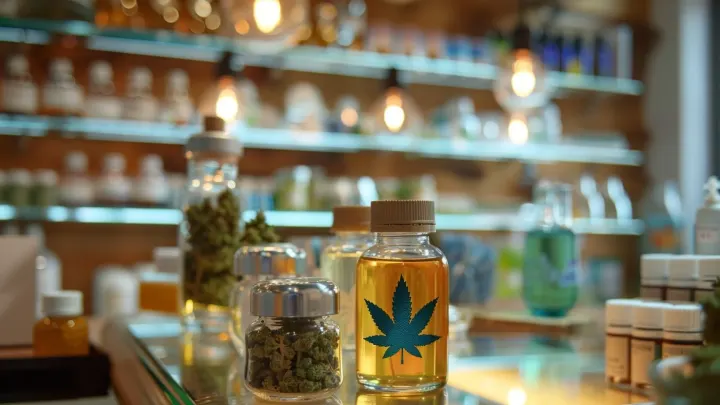
In recent years, marijuana legalization has expanded rapidly across many regions, especially in the United States. Several states have legalized cannabis for medical or recreational use, leading many people to believe that marijuana is no longer a drug or that it carries no risks. However, legalization does not change the fundamental nature of marijuana. It is still a psychoactive substance that affects the brain and body.
Understanding the difference between legality and safety is critical especially for CDL drivers, transportation employers, and anyone working in a safety-sensitive position. Even in places where marijuana is legal under state law, it can still impair judgment, reaction time, and cognitive abilities and it remains fully prohibited under federal DOT regulations.
What Is Marijuana?
Marijuana, also known as cannabis, is a plant that contains chemical compounds called cannabinoids. The most well-known compound is THC (tetrahydrocannabinol), which is responsible for the psychoactive effects or the "high" people experience.
When marijuana is consumed, THC interacts with receptors in the brain that affect mood, memory, coordination, and perception. This can lead to:
- Altered judgment
- Slower reaction times
- Impaired coordination
- Difficulty concentrating
While some people use marijuana for medical purposes such as pain relief or anxiety management, it still acts as a drug that affects mental and physical performance regardless of how it was obtained or whether it was legally permitted.
Legalization vs. Drug Classification
One of the biggest misconceptions about marijuana is that legalization means it is no longer considered a drug. In reality, legalization simply means that certain laws allow regulated use under specific conditions it does not change the substance's pharmacological effects.
Alcohol and tobacco are good comparisons. Both are legal substances, yet they are still classified as drugs because they affect the body and can lead to health risks or dependency. Marijuana works the same way legal status does not remove its psychoactive properties or its potential to impair performance.
This is why the DOT drug testing program continues to prohibit marijuana for safety-sensitive employees regardless of which state they live or work in.
How Long Does Marijuana (THC) Stay in Your System?
This is one of the most common questions from drivers and employees and one of the most misunderstood. The important distinction is that THC can remain detectable in your system long after any feeling of impairment has passed. A driver who used marijuana days ago may still test positive on a DOT drug test even if they feel completely sober.
Typical detection windows for THC:
- Urine (DOT standard): Up to 3 days for occasional users, 10–15 days for moderate users, and up to 30 days or longer for daily heavy users
- Hair follicle testing: Up to 90 days
- Saliva testing: 24–72 hours
- Blood testing: 1–2 days
For CDL drivers, the DOT uses urine testing exclusively. Learn more about how long marijuana stays in your system and what factors affect detection time.
CBD Products and Failed DOT Drug Tests
Many CDL drivers and employees assume that CBD (cannabidiol) products are safe to use because CBD itself is not psychoactive and is widely sold legally. This is a dangerous assumption.
CBD products including oils, gummies, and supplements are not regulated by the FDA for consistency or purity. Many products labeled as "THC-free" still contain trace amounts of THC. Because DOT urine testing measures THC metabolite levels against federally mandated cutoff thresholds, even small amounts of THC from CBD products can accumulate with regular use and trigger a positive result.
The FMCSA has explicitly stated that CBD use is not a valid defense for a positive DOT drug test. A failed test from CBD use carries the same consequences as any other positive result. This is one reason why understanding the causes of false positive drug tests is so important for CDL drivers.
The Impact of Marijuana on Workplace Safety
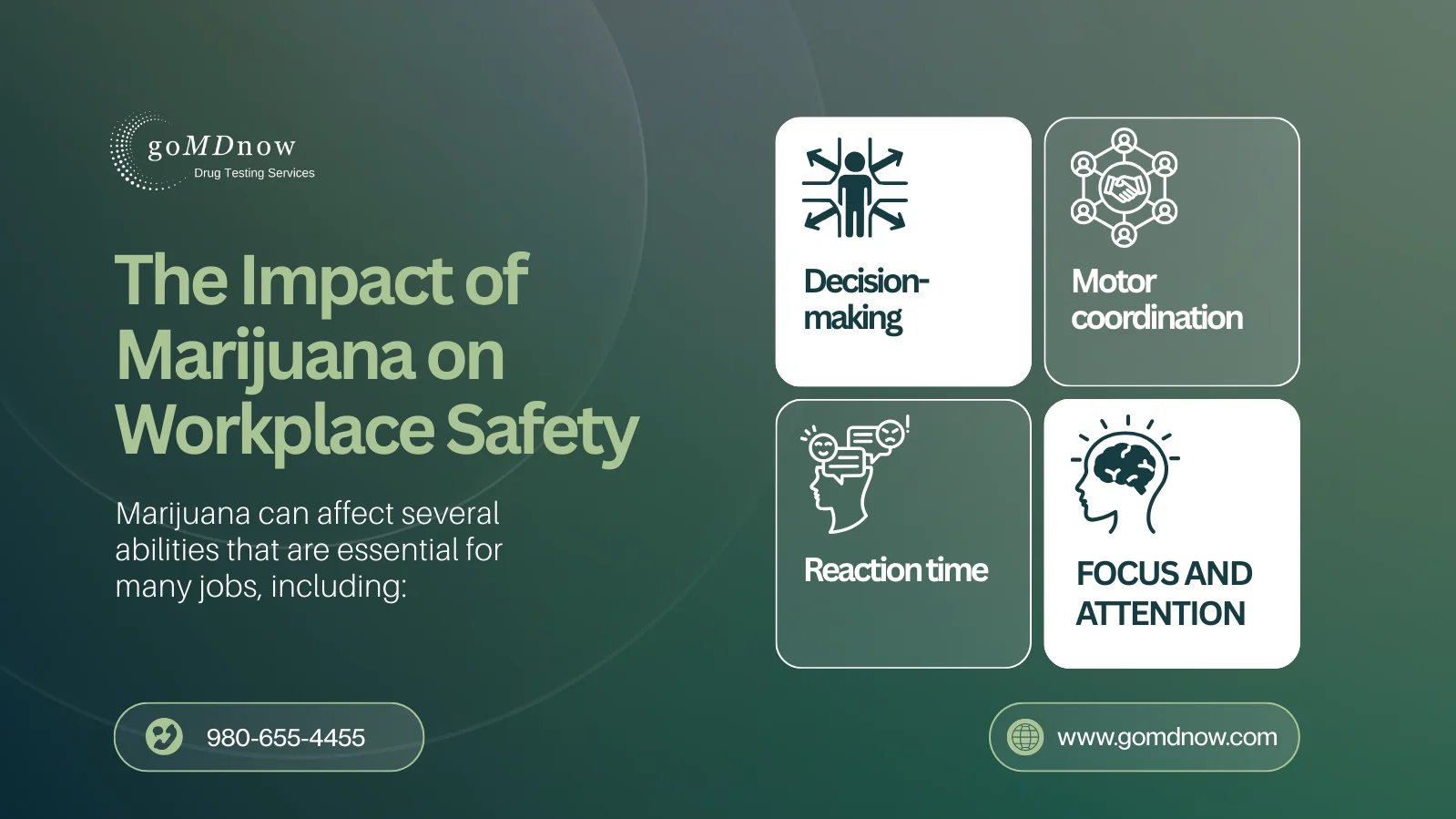
Workplace safety is one of the primary reasons many employers maintain strict drug testing policies, even in states where marijuana is legal. Marijuana can affect several abilities essential for many jobs, including:
- Decision-making
- Motor coordination
- Reaction time
- Focus and attention
In industries such as transportation, construction, healthcare, and manufacturing, impaired performance can lead to serious accidents or injuries. Commercial drivers operating heavy vehicles must remain fully alert at all times. Even small impairments can significantly increase the risk of accidents on public roads.
Because of these risks, federal regulations and many workplace policies continue to prohibit marijuana use for employees in safety-sensitive roles. Learn about why every workplace benefits from a structured drug testing program.
Federal Regulations and Marijuana Use
Although many states have legalized marijuana, it remains a Schedule I controlled substance under U.S. federal law. This creates a critical situation for CDL drivers and transportation employers federal law governs, not state law.
Employees regulated by the U.S. Department of Transportation (DOT) must comply with strict drug testing requirements regardless of the state in which they live or work.
Under DOT regulations:
- Marijuana use is prohibited for all safety-sensitive transportation employees
- A positive marijuana test is a DOT violation even if the drug was used legally under state law
- The violation must be reported to the FMCSA Drug and Alcohol Clearinghouse
- The driver must complete the full Return-to-Duty (RTD) process before resuming safety-sensitive duties
- As of November 18, 2024, unresolved Clearinghouse violations now trigger automatic CDL downgrades through full integration with State Driver Licensing Agencies (SDLAs) learn about how Clearinghouse violations lead to CDL downgrades
This means state legalization offers zero protection for CDL drivers under DOT jurisdiction.
Medical Marijuana and DOT Workplace Policies
Medical marijuana creates significant confusion for employees and employers. In many states, individuals with certain medical conditions can legally use cannabis with a doctor's recommendation. However, for DOT-regulated employees, a medical marijuana card provides no protection whatsoever.
Under federal DOT rules, there are no medical exemptions or accommodations for marijuana use. The Medical Review Officer (MRO) who reviews positive test results cannot accept a medical marijuana card as a legitimate medical explanation. A positive DOT test result remains a violation regardless of a state-issued medical authorization.
For non-DOT employers, the situation is more nuanced. Some employers may offer accommodations depending on state law and the nature of the role, but most continue to enforce drug-free policies when safety is involved. Learn how prescription medications and drug use affect CDL drivers.
Drug Testing in the Era of Marijuana Legalization
As marijuana laws change, drug testing remains an essential tool for employers particularly those with DOT obligations. Drug testing programs help organizations:
- Maintain workplace safety
- Reduce the risk of accidents
- Ensure regulatory compliance
- Promote a drug-free work environment
Common types of workplace drug testing include:
Pre-Employment Testing
Ensures new hires meet company drug-free workplace policies before starting work. For CDL drivers, passing a DOT pre-employment drug test is mandatory before performing any safety-sensitive function.
Random Drug Testing
Random testing deters ongoing drug use among employees in safety-sensitive roles. DOT employers must meet annual minimum random testing rate requirements. Many employers simplify this by enrolling in a DOT random testing consortium.
Post-Accident Testing
Employers must conduct testing after certain workplace accidents to determine whether substance use contributed to the incident. Learn about DOT post-accident drug testing requirements.
Return-to-Duty Testing
Employees who previously tested positive must pass an observed return-to-duty test and complete a mandatory follow-up testing program before resuming safety-sensitive duties.
Common Misconceptions About Marijuana Safety
The growing acceptance of marijuana has led to several dangerous misconceptions:
"It's natural, so it's harmless."
Many natural substances are pharmacologically active and carry health risks. The natural origin of cannabis does not reduce its psychoactive effects or its potential for impairment.
"I used it off-duty, so I'm fine."
THC metabolites remain in the body long after impairment has passed up to 30 days for heavy users. A DOT drug test does not measure current impairment; it measures the presence of metabolites. Off-duty use can still result in a failed test during work hours.
"My CBD product is THC-free."
As discussed above, many CBD products contain trace THC that can accumulate and trigger a positive DOT result. The FMCSA does not accept CBD use as a defense.
"My state legalized it, so my employer can't test me."
State law does not override federal DOT requirements. Even in fully legal states, CDL drivers remain subject to the full DOT 5-panel drug testing program.
"A medical card protects me."
Under DOT rules, it does not. There are no medical marijuana exemptions for safety-sensitive transportation employees.
Why Employers Still Care About Marijuana Use
Even in areas where marijuana is legal, employers have strong reasons to monitor drug use in the workplace:
- Workplace safety employees under the influence increase the risk of accidents and injuries
- Regulatory compliance industries regulated by federal agencies must follow strict drug testing requirements regardless of state law
- Productivity and performance drug use can affect concentration, reliability, and job performance
- Liability risks employers may face serious legal and financial consequences if an impaired worker causes an accident
- Insurance premiums carriers with drug-related violations face higher premiums and risk losing coverage
A qualified C/TPA or drug testing clinic can help employers build and manage a compliant testing program that addresses all of these concerns.
Frequently Asked Questions (FAQs)
1. Does marijuana legalization mean it is no longer a drug?
No. Legalization only means it is permitted under certain state laws. Marijuana still contains THC, a psychoactive compound that affects the brain and body. It remains a federal Schedule I controlled substance and is fully prohibited under DOT regulations.
2. Can employers still test for marijuana if it is legal in their state?
Yes. Many employers especially DOT-regulated ones continue to test for marijuana. State legalization does not override employer drug-free workplace policies or federal DOT requirements.
3. Is marijuana allowed under DOT drug testing rules?
No. Under DOT regulations, marijuana use is prohibited for all safety-sensitive employees regardless of state law or medical authorization. A positive result is a violation that must be reported to the FMCSA Clearinghouse.
4. Can I use marijuana off-duty as a CDL driver?
Legally under state law in some states but it remains a federal DOT violation. THC metabolites can stay in your urine for up to 30 days, meaning off-duty use can still result in a failed DOT drug test during work hours. There is no recognized "off-duty" defense under federal DOT rules.
5. Does a medical marijuana card protect CDL drivers from a positive DOT test?
No. Federal DOT rules do not recognize medical marijuana exemptions. A valid state medical card provides zero protection. A positive DOT marijuana test is a violation regardless of how the marijuana was obtained or authorized.
6. Can CBD products cause a failed DOT drug test?
Yes. Many CBD products contain trace THC that can accumulate with regular use and exceed DOT cutoff levels. The FMCSA does not accept CBD use as a defense for a positive result. CDL drivers should avoid all CBD products to eliminate this risk.
7. What happens to a CDL driver who tests positive for marijuana?
The violation is reported to the FMCSA Clearinghouse, the driver is immediately removed from safety-sensitive duties, and the CDL may be downgraded. The driver must complete a full Return-to-Duty process including SAP evaluation, treatment, and follow-up testing before returning to work.
Final Thoughts
Marijuana legalization has changed public perception, but it has not changed the fact that marijuana is still a drug that affects the brain and body. For CDL drivers and safety-sensitive transportation employees, the federal position is clear and unchanged marijuana is prohibited, medical cards provide no protection, CBD products carry real risk, and violations have serious career consequences including Clearinghouse reporting and CDL downgrades.
As marijuana laws continue to evolve at the state level, understanding the gap between state legalization and federal DOT compliance is essential for every driver and employer in the transportation industry. Staying proactive about compliance is the only reliable defense against costly violations.
goMDnow provides nationwide DOT and non-DOT drug testing services to help employers maintain safe and compliant workplaces. Explore our drug testing pricing, find a testing center near you, or contact us today.