
Drug and alcohol testing is an important part of maintaining a safe, healthy, and productive workplace. Whether you're taking a pre-employment drug test, random drug screening, DOT drug and alcohol test, post-accident test, or return-to-duty (RTD) test, knowing how to prepare can make the experience much less stressful.
Many employees feel anxious when they receive notice of a drug or alcohol test because they are unsure what to expect. However, the testing process is straightforward when you understand the requirements and follow the proper steps. Being prepared helps prevent delays, reduce stress, and ensures your test is completed accurately.
Employers conduct workplace drug and alcohol testing to promote safety, comply with federal and state regulations, and reduce the risk of accidents caused by substance misuse. In safety-sensitive industries such as transportation, healthcare, construction, manufacturing, aviation, and logistics, testing is often a legal requirement rather than simply a company policy.
The key to successful testing experience is preparation. Bringing the correct documents, following collection instructions, staying properly hydrated, and understanding the type of test you'll take can make the process quick and hassle-free.
In this guide, we'll discuss six practical tips to help you prepare for a drug and alcohol test while ensuring compliance with workplace policies and DOT regulations.
Why Drug and Alcohol Testing Is Important
Drug and alcohol testing protect both employees and employers by creating a safer work environment. Employees who perform safety-sensitive duties must be physically and mentally fit to carry out their responsibilities. Substance misuse can impair judgment, slow reaction time, and increase the likelihood of workplace accidents.
Testing programs help employers:
- Maintain workplace safety
- Meet DOT and FMCSA compliance requirements
- Reduce workplace accidents and injuries
- Promote a drug-free work environment
- Protect employees, customers, and the public
- Improve productivity and accountability
Common reasons for workplace drug testing include:
- Pre-employment testing
- Random drug testing
- Reasonable suspicion testing
- Post-accident testing
- Return-to-duty testing
- Follow-up testing
Regardless of the reason for your test, proper preparation can help ensure a smooth experience.
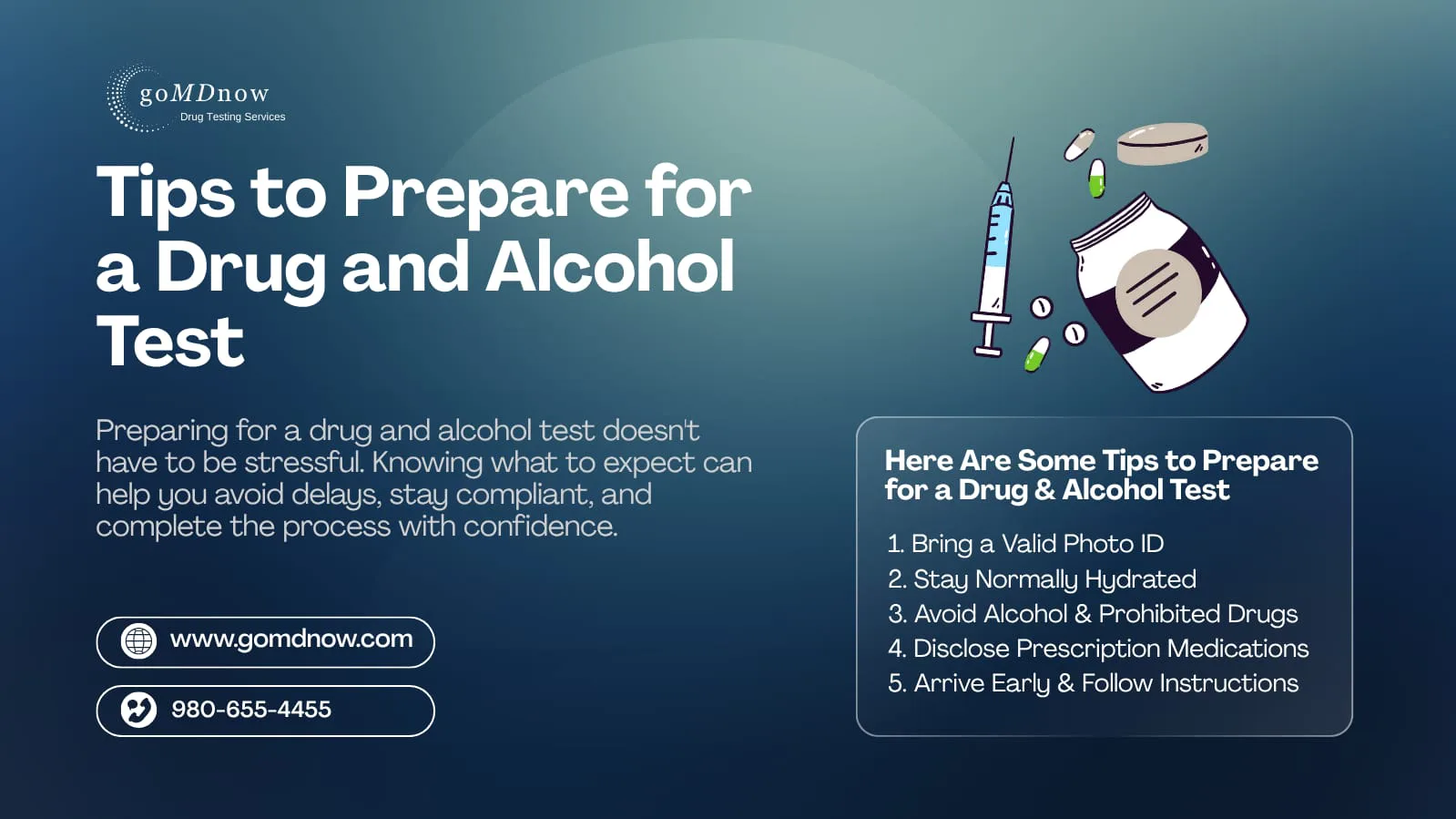
Tip 1: Bring a Valid Government-Issued Photo ID
One of the most common reasons drug tests are delayed is arriving without proper identification.
Every certified collection site must verify your identity before collecting a specimen. Without a valid government-issued photo ID, the collector cannot complete the testing process.
Accepted forms of identification generally include:
- Driver's license
- Passport
- State-issued ID card
- Military identification
Before leaving home, make sure your identification is current and not expired.
If your employer has provided testing authorization forms, appointment information, or registration documents, bring those with you as well. Having everything ready before your appointment saves time and helps the check-in process move efficiently.
It's also recommended to arrive at least 10-15 minutes early. Early arrival gives you enough time to complete paperwork, ask questions, and understand the collection process without feeling rushed.
Being organized demonstrates professionalism and helps ensure your testing appointment starts on time.
Tip 2: Stay Hydrated-But Don't Drink Too Much Water
Hydration is important, especially if you're taking a urine drug test. Since you'll need to provide a urine specimen, drinking a normal amount of water before your appointment can make the process easier.
However, many people mistakenly believe that drinking excessive amounts of water will improve their results. This is a myth; learn more about hydration, dilution, and urine test accuracy.
Overhydration can dilute your urine specimen, making it difficult for laboratory professionals to analyze properly. A diluted sample may require repeat testing, causing delays for both you and your employer.
Instead, follow these simple guidelines:
- Drink water normally throughout the day.
- Avoid consuming excessive fluids immediately before your appointment.
- Don't attempt to manipulate or alter your specimen.
- Eat normally unless instructed otherwise
Proper hydration helps ensure you can provide a specimen while maintaining the quality required for accurate laboratory testing.
Remember, laboratories routinely perform specimen validity testing to detect dilution or tampering. The best approach is simply to stay normally hydrated.
Tip 3: Avoid Alcohol and Prohibited Drugs Before Your Test
While this may seem obvious, it's one of the most important preparation tips.
Drug and alcohol tests are specifically designed to detect prohibited substances that may affect an employee's ability to perform their job safely.
Before your scheduled appointment, avoid consuming:
- Alcohol
- Marijuana (for DOT-regulated employees, regardless of state laws)
- Cocaine
- Methamphetamine
- Heroin
- Unauthorized opioids
- Other prohibited drugs
Many websites advertise detox drinks, cleansing products, or home remedies that claim to help individuals "beat" for a drug test. These products are unreliable and may even increase suspicion during specimen validity testing.
Modern laboratories use advanced technology to identify adulterated, substituted, or diluted samples. Attempting to alter a specimen can lead to invalid results, additional testing, or disciplinary action depending on employer policy.
The safest and most effective approach is to participate honestly and follow all testing procedures exactly as instructed.
Tip 4: Inform the Collector About Prescription Medications
If you're taking prescription medication, there's usually no need to stop taking it before your drug test unless instructed by your healthcare provider. Review how prescription drugs are handled in workplace testing.
Some legitimate medications can affect laboratory results. If necessary, inform the collector or provide prescription documentation when requested.
If a laboratory reports a non-negative result, a Medical Review Officer (MRO) will review the findings. The MRO may contact you to verify your prescription before reporting the result to your employer.
Examples of medications that may require verification include:
- ADHD medications
- Prescription pain medications
- Anxiety medications
- Sleep medications
- Certain cough medicines
Providing accurate information helps ensure your results are interpreted fairly and correctly.
Tip 5: Arrive Early and Follow Every Instruction
One of the easiest ways to ensure a smooth testing experience is simply following instructions carefully.
Testing collectors are trained professionals who follow strict federal and workplace guidelines, including special DOT observed collection procedures when required.
When you arrive:
- Complete all paperwork accurately.
- Listen carefully to collection instructions.
- Cooperate with testing personnel.
- Leave unnecessary personal items outside the collection area when requested.
- Ask questions if something isn't clear. Avoid rushing through forms or ignoring instructions. Small mistakes can create unnecessary delays.
Professional cooperation helps protect the integrity of the testing process and allows your results to be processed efficiently.
Tip 6: Understand the Type of Drug or Alcohol Test
Knowing what type of test, you'll take can reduce anxiety and help you feel more prepared.
Common workplace testing methods include:
Urine Drug Test
The most common workplace drug screening method used to detect recent drug use.
Breath Alcohol Test
Measures alcohol concentration using a certified breath testing device.
Hair Drug Test
Detects drug use over a much longer detection window, often up to 90 days.
Oral Fluid (Saliva) Test
Uses a saliva specimen to detect recent drug use and is becoming increasingly common in workplace testing.
Each testing method follows specific collection procedures, but all are designed to ensure accurate and reliable results.
Understanding what to expect helps reduce uncertainty and makes the testing experience much easier.
Common Mistakes to Avoid
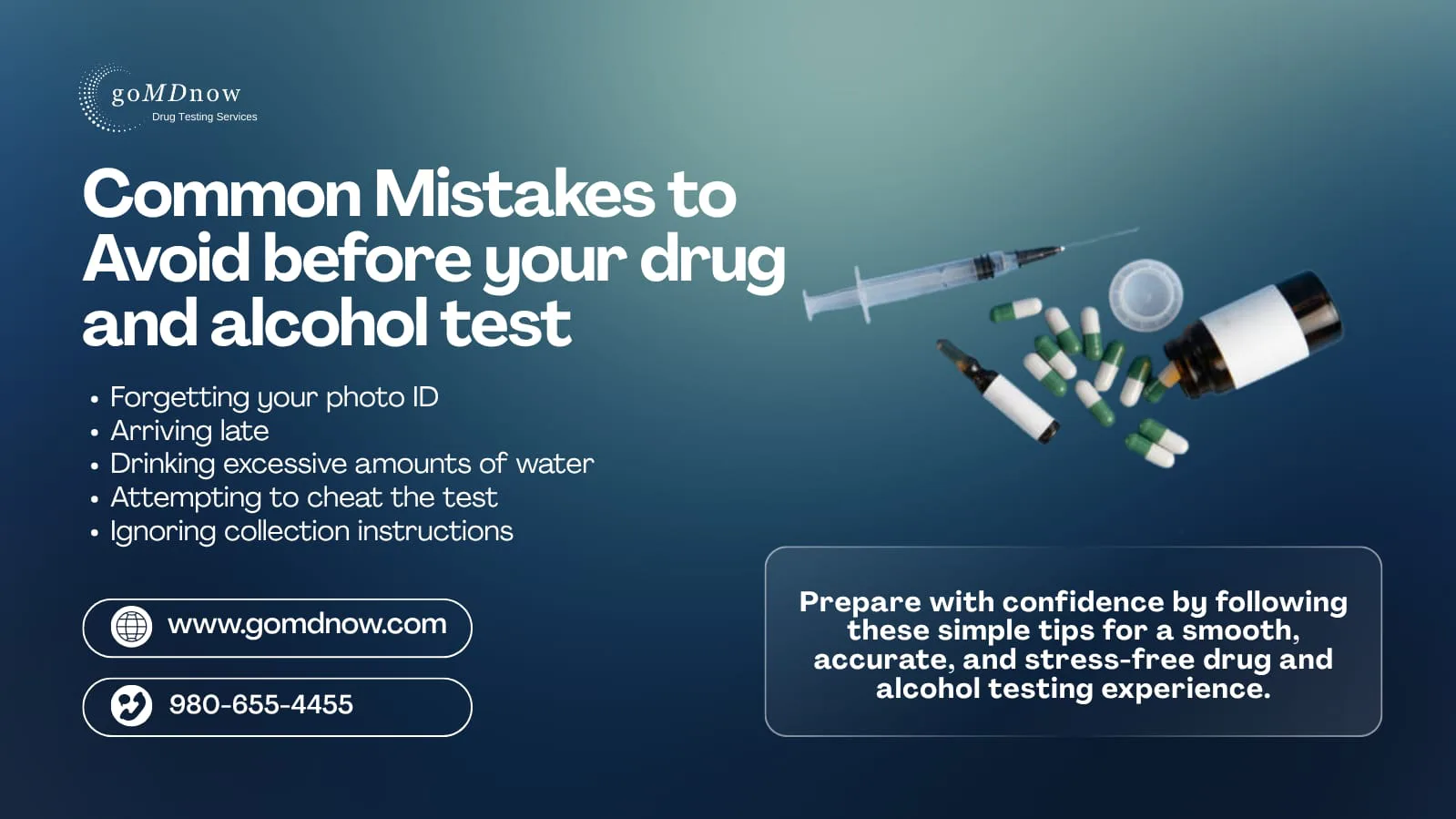
Avoid these common mistakes before your drug and alcohol test:
- Forgetting your photo ID
- Arriving late
- Drinking excessive amounts of water
- Attempting to cheat the test
- Ignoring collection instructions
- Failing to disclose legitimate prescription medications when appropriate
- Bringing prohibited items into the collection area
Avoiding these mistakes helps prevent unnecessary delays and repeat testing.
Benefits of Preparing for a Drug and Alcohol Test
Proper preparation offers several benefits for both employees and employers.
Benefits include:
- Faster testing process
- Reduced stress and anxiety
- Accurate laboratory results
- Fewer testing delays
- Compliance with workplace and DOT regulations
- Improved workplace safety
- Greater confidence during the testing process
Preparation also demonstrates professionalism and respect for workplace policies.
Final Thoughts
Preparing for a drug and alcohol test doesn't have to be stressful. By bringing valid identification, staying normally hydrated, avoiding alcohol and prohibited substances, informing the collector about legitimate prescription medications, arriving early, and understanding the testing process, you can ensure a smooth and efficient experience.
Whether you're taking a pre-employment drug screening, random workplace drug test, DOT drug and alcohol test, or return-to-duty evaluation, following these simple tips helps ensure accurate results while supporting workplace safety and regulatory compliance.
Being prepared benefits everyone involved-from employees and employers to the laboratories responsible for delivering reliable results.
Frequently Asked Questions (FAQs)
1. Can I drink water before a drug test?
Yes. Drink a normal amount of water before your appointment but avoid excessive amounts that could dilute your urine specimen.
2. What should I bring to my drug test?
Bring a valid government-issued photo ID and any testing authorization forms or paperwork provided by your employer.
3. Should I tell the collector about my prescription medications?
Yes. If appropriate, inform the collector and keep prescription documentation available. A Medical Review Officer (MRO) may verify legitimate prescriptions if necessary.
4. Can I eat before a workplace drug test?
In most cases, yes. Unless your employer provides different instructions, you may eat and drink normally before your appointment.
5. How long does it take to receive drug test results?
Negative results are often available within 1-3 business days, while non-negative results may take longer due to laboratory confirmation and Medical Review Officer review.
For help selecting or scheduling a compliant test, review testing options and rates or contact goMDnow.